Court to hear PIL on pollution of lake as restoration project kicks off on Feb 25
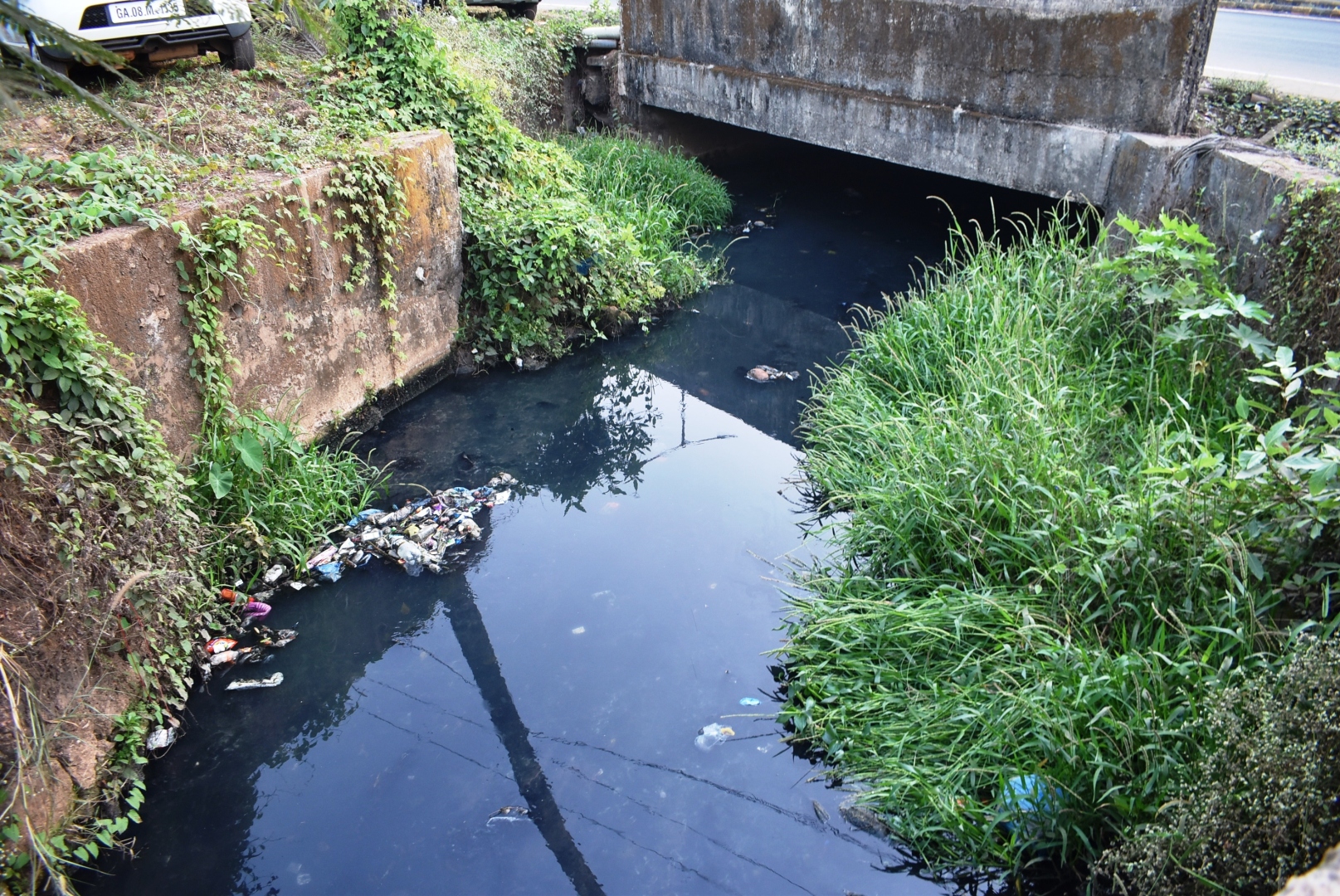
Contaminated water continues to flow into the Kudchadkar stormwater nullah which later enters the Salpem lake.
MARGAO
February 25 is a D-day for the once picturesque Salpem lake in Navelim village – devastated over the years by the rampant discharge of raw sewage into the water body from neighbouring Margao.
Reason: The government will finally take up the long-pending rejuvenation and development of the Salpem lake project on the morning of February 25, at an estimated cost of Rs five crore.
Around the same time, the High Court is expected to hear the Public Interest Litigation filed by Navelim citizen Prof Antonio Alvares, with a plea to stop the discharge of untreated sewage and wastewater from neighbouring Margao into the Salpem lake.
Spending Rs five crore on the development of the lake, sources say, may help rejuvenate the once picturesque water body. The work includes provisions for a sluice gate to facilitate irrigation of the fields, besides the development and beautification of a bund and pathway.
The moot question, however, remains unanswered – will these works in any way stop the flow of rampant discharge of sewage and wastewater into the water body from the commercial capital?
Pose this question to officials of the Water Resources Department (WRD), which is executing the rejuvenation of the Salpem lake project, and an apt reply comes that the issue of containing sewage flow falls within the domain of the Sewerage Infrastructure Development Corporation of Goa Ltd (SIDCGL), the PWD, sewerage, and the Margao Municipal Council. “The WRD’s brief is to restore the water bodies and help in the irrigation of fields. Containment of sewage and wastewater flow into the stormwater nullahs falls within the jurisdiction of the SIDCGL, PWD, and the Margao Municipal Council,” remarked a WRD official.
In fact, the WRD official sounded a word of caution that sewage flow into the Salpem lake will not stop unless and until the SIDCGL, PWD, sewerage, and the MMC work in tandem to connect the commercial establishments and households in the commercial capital to the underground sewage line.
After lying fallow for over three decades, the cultivation of paddy in Salpem lake has been revived in the last two years, thanks to the local farming community. The development and rejuvenation of the lake will further bring good news for the farmers, but they are waiting for the day when the Kudchadkar water nullah stops the discharge of sewage and wastewater from Margao.
Nullah cleared ahead of project launch
Ahead of the launching of the works for the rejuvenation of the Salpem lake, the Water Resources Department has cleaned up the water nullah passing through the lake by removing the waste from the water body and the vegetation on its banks.
Just metres away from the cleaned-up nullah, contaminated black-coloured water flowed unabated in the Kudchadkar stormwater nullah, which found its way to the Salpem lake water body, indicating that the issue of water contamination by sewage and wastewater discharge is far from over.
In fact, a close look at the Kudchadkar water nullah shows that while the Salpem nullah has been cleared of the waste and vegetation, waste and wastewater were flowing into the stormwater nullah at the Kudchadkar hospital culvert.
****
Margao civic body under HC lens over sewage action plan
MARGAO: On the eve of the Salpem lake contamination PIL case scheduled to come up for hearing in the High Court on Tuesday, a Margao Municipal official rushed to Panaji to brief the municipal lawyer on the status of the action initiated by the civic body to contain the flow of sewage and wastewater from the city into the Kudchadkar nullah, which finds its way into the Salpem lake.
The flurry of activity is attributed to the queries raised in the Court on the last date of hearing, wherein questions were raised over the action initiated by the civic body against the establishments discharging sewage and wastewater in the drains.
The Margao Municipal Council, Goa State Pollution Control Board, and the SIDCGL have all been directed at a previous hearing to file a status on the action taken report on the host of directions issued by the High Court.
While the GSPCB had closed down several shops because the establishments had no consent to operate, questions are being asked in city circles whether those establishments, which later obtained the consent to operate, have their premises connected to the sewerage line.
That’s not all. The PWD, Sewerage, at a meeting of the Core Committee headed by the Margao Municipal Chief Officer, suggested vacuum technology as a solution to areas such as the densely populated Malbhat and Gandhi Market, which have no underground sewerage line.
The fate of this proposed technology remains uncertain, and it is unclear whether the government has approved it. Without a proper treatment facility, sewage and wastewater from these areas continue to flow into Salpem lake.