Beyond its iconic sun-kissed beaches and vibrant spirit, Goa reveals another world waiting to be discovered. Tucked amidst its lush green landscapes are postcard-perfect villages and serene neighborhoods where life moves at a gentler pace. Roads meander beneath towering trees, tranquil waters reflect endless blue skies, and every corner invites you to pause and soak in the quiet charm around you. Defined by verdant fields, peaceful surroundings, historic churches, and heritage homes, this timeless beauty captures the true essence of Goa. In this series of articles on Goa’s villages, I have now reached the villages beginning with the letter M.
Commercial and Heritage city
Margão, also known as Madgaon, is one of Goa’s most important commercial and cultural centres. The name Margão is the Portuguese spelling, and its origin has long been debated. Some historians believe it evolved from Mahargao, meaning village of the Mahars, a weaving community, while others trace it to names such as Mharuganv/Maravile, meaning marvellous village. Before Portuguese rule, the town was known as Mathagrama, meaning the village of monasteries, due to the presence of nine temple schools or mathas.
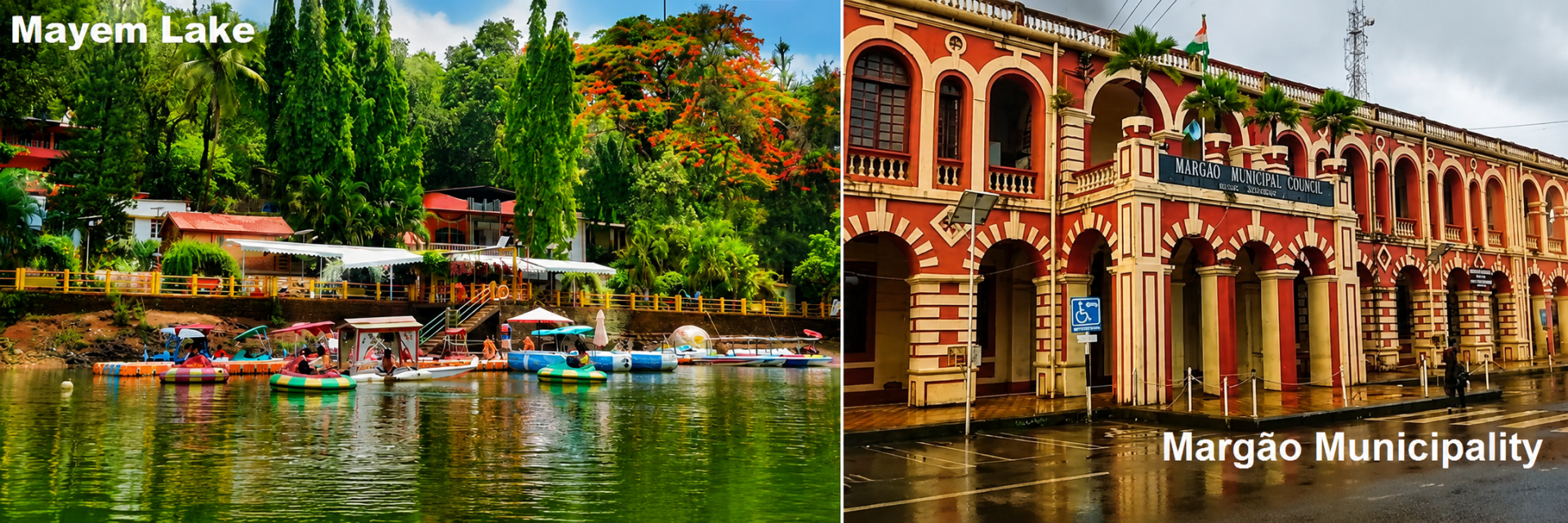
Margão evolved into a major commercial and administrative centre over the centuries. Its historic Praça Jorge Barreto, Municipal Garden, colonial-era buildings, and the iconic 1905 Câmara Municipal de Salcete (now the Margão Municipal Council building) remain key landmarks. The northern garden section was dedicated to Aga Khan IV, while the majestic Holy Spirit Church, built in 1675, stands as the town’s most celebrated monument. Other important churches include Grace Church, St. Sebastian Church, and the scenic Monte Hill Chapel. The town is equally renowned for its temples, including the revered Damodar Temple, Hari Mandir, Maruti Temple, the Saibaba Temple, and the Shiv Temple near Fatorda.
A remarkable heritage structure near the Holy Spirit Church is the famous House of Seven Gables, locally known as Sat Burzam Ghor. Built in 1790 by Inacio Sebastiao da Silva, emissary and secretary to the Portuguese Viceroy, the mansion once featured seven grand gables, though only three remain today. Another landmark is the Hospicio Hospital, founded on December 13, 1867, by Fr. Antonio Joao de Miranda, which emerged from compassion for poor and sick people lacking medical care. Formerly known as Hospicio do Sagrado Coração de Maria, it became one of Goa’s earliest charitable hospitals serving the needy. Comba is one of Margão’s oldest suburbs and a municipal ward renowned for its narrow lanes, traditional Goan homes, ornate balconies, and Portuguese-era architecture, which reflects Margão’s Catholic heritage.
Margao has produced several renowned personalities, including freedom fighter Tristão de Bragança Cunha, writer Valmiki Faleiro, historian Prajal Sakhardande, actor-singer Ben Evangelisto, Justice Eurico da Silva, and philanthropist Ramnath Kare, who contributed significantly to Goa’s cultural, literary, legal, and public life.
Madkai village
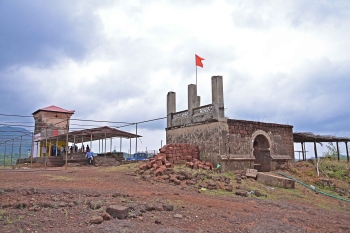
In South Goa, Madkai or Marçaim (spelled in Portuguese) is a serene and culturally rich village located in the Ponda taluka. Surrounded by lush greenery and traditional Goan landscapes, the area is known for its deep historical and religious significance. Madkai is home to the historic Madkai Hill, which once played a strategic role during conflicts between the Vijayanagar Empire and local rulers. The notable Battle of Madkai, believed to have taken place around 1380, involved the forces of Mahapradhan Mallapodeyar, the Vijayanagar Viceroy of Kanara, and a coalition of local Kshatriya chieftains led by the Kadambas, known as the Konkanigas.
The village is also renowned for its sacred temples, especially the revered Shri Mahalaxmi Temple and the famous Shree Navdurga Temple. The Navdurga Temple is particularly known for its unique idol of Goddess Navdurga, depicted with a distinctive tilted head. The temple attracts thousands of devotees during the annual Zatra of Goddess Navdurga, celebrated every year around November on Kartik Shukla Paksha Ashtami. This vibrant festival reflects the enduring spiritual traditions and cultural heritage of the region. The village is home to noted personalities such as cricketer Parag Madkaikar, freedom fighter Shamrao Madkaikar, and former minister Pandurang Madkaikar.
Lake village
Maem, also spelled Mahem or Mayem, is a quaint and picturesque village located about 5 km from Bicholim town, the village is renowned for its serene hills, lush greenery, and the scenic Mayem Lake, one of Goa’s most iconic inland tourist attractions. The origin of the name Maem is associated with several fascinating local narratives. One belief connects it to the village deity Mahamaya, while another traces it to the Portuguese-era word mhov, meaning honey. A third tradition suggests that the area was once known as Mayurvan or Peafowl’s Forest.
Maem gained environmental recognition in 2023 as the first village in Goa to create a biodiversity atlas mapping its rich flora and fauna. The initiative helps preserve the village’s ecological heritage and socio-cultural history dating back to the 12th century. The village and its surrounding areas are home to several important temples. Among the most prominent is the historic Shree Saptakoteshwar Temple located about 2.5 km from Mayem. The temple holds immense historical significance and was rebuilt by the Maratha ruler Chhatrapati Shivaji Maharaj in 1668. Another important shrine within the village is the Shri Kelbai Devi Mandir. Nearby temples such as the Laxmi Narayan Temple and the Shantadurga Pilankarin Devi Temple further enrich the spiritual and cultural heritage of the region.
Mainas
There are several places named Maina in Goa. One Maina, located near Quepem in South Goa, is known for its lush forests, natural springs, and scenic rural landscape. Another Maina in Curtorim, the Granary of Salcete, is famous for its vast agricultural lands, seven lakes, and the revered Khandi Khuris Chapel — the cross near the sluice gate — whose feast is celebrated on August 20 by the farming community. The nearby Maina–Raia wetland complex is an important freshwater habitat that supports migratory and resident water birds throughout the year, making it one of South Goa’s significant ecological zones.
To be continued...