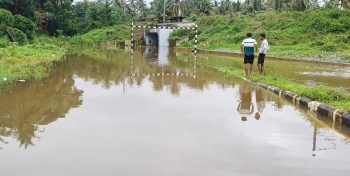
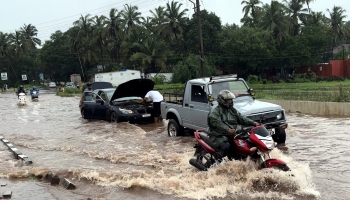
Goa enters the 2026 monsoon season with heightened vigilance, but questions remain about whether the State Disaster Management Authority (SDMA) can translate plans and promises into real resilience. Despite new funds, volunteers, and AI-driven ambitions, the State’s flood-prone capital and vulnerable rural pockets still face familiar risks
PANAJI
The rains are almost here, and once again the big question looms: is Goa ready to face their onslaught?
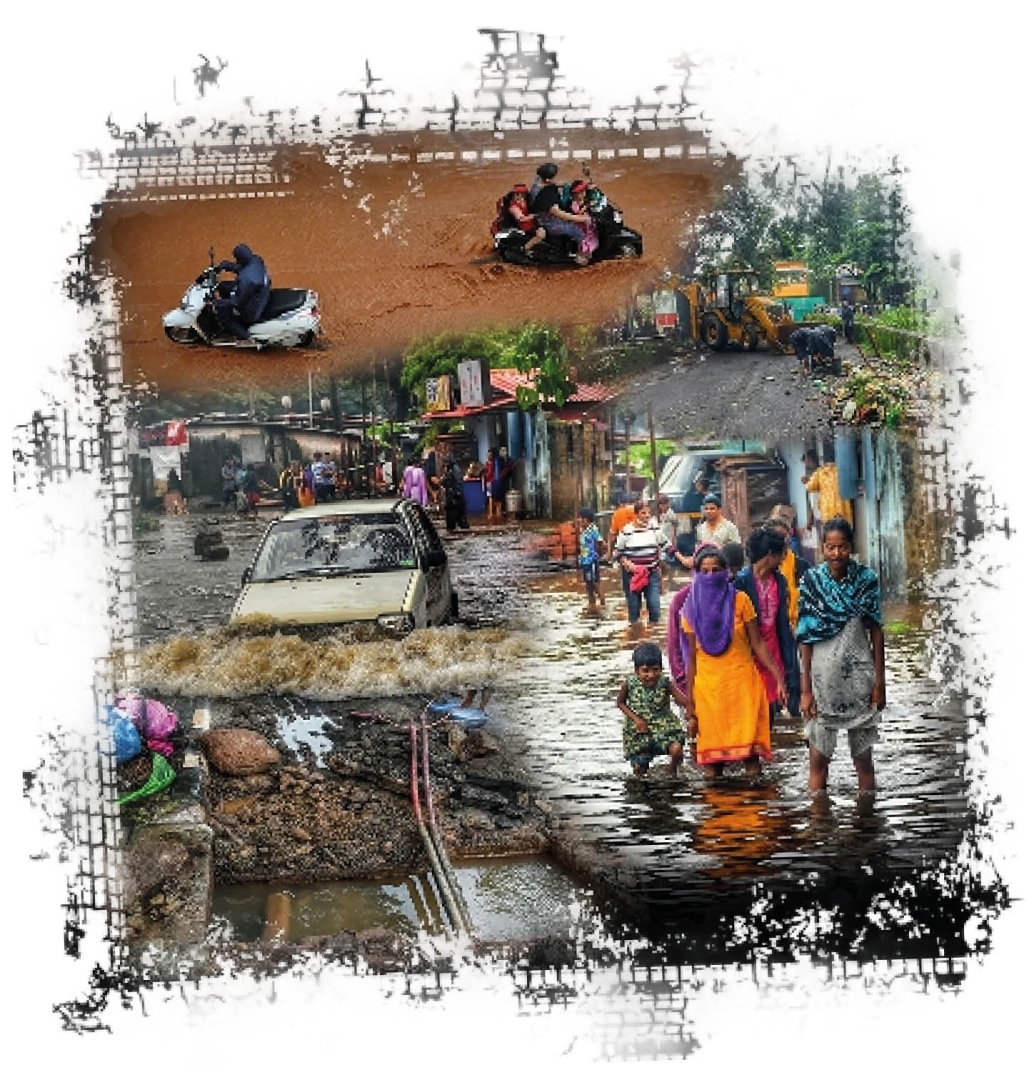
Every year, the monsoon brings two sides of the story. Farmers and the water table breathe easy. But for people in Panaji, Taleigao, St Cruz, Ribandar, Gurim and plenty of other places, it’s the season of flooded streets, broken roads, power cuts, and daily life in disarray.
This time, the State Disaster Management Authority (SDMA), led by Chief Minister Pramod Sawant, says the State is better prepared than ever.
On paper, there are bans, funds, and volunteers lined up. On the ground, there’s some visible work. But doubts continue to persist about whether the system can handle the kind of extreme weather that is now routine.
Chief Minister's take
At the start of this week, Sawant came out of an SDMA review meeting with a clear order: no road cutting during the monsoon.
“Several abandoned mining pits have already been fenced and fitted with warning boards to prevent mishaps. However, people are urged to avoid swimming in such water-filled pits and disused quarries because it is dangerous during the monsoon months,” he said.
The Public Works Department (PWD) had already put its annual ban in place from May 16 to October 31. Utility work has to be finished before April 30, with only rare extensions. Once a road is hot-mixed, no digging is allowed for five years unless it is an emergency.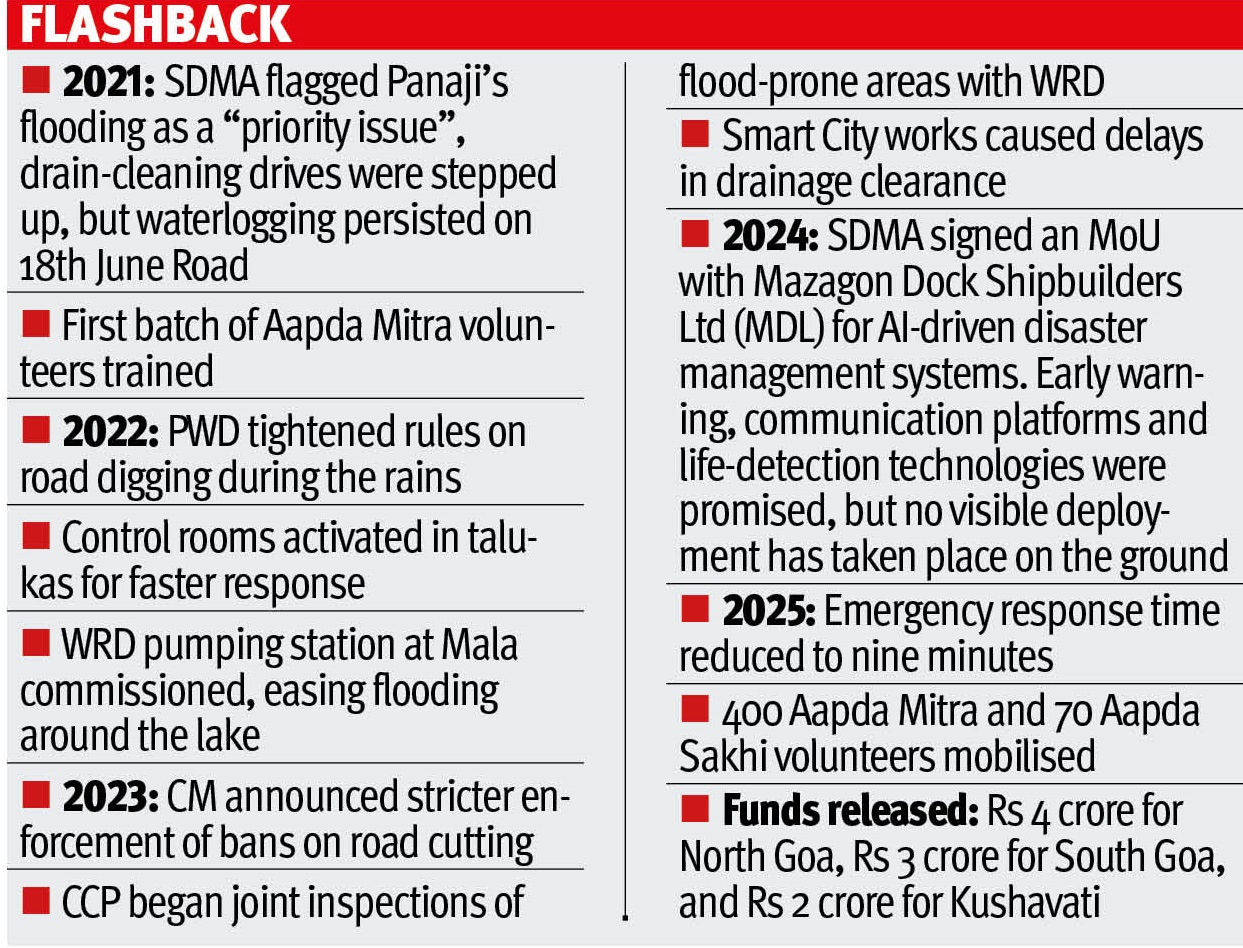 Money has also been pushed down to local bodies: Rs 4 crore for North Goa, Rs 3 crore for South Goa, and Rs 2 crore for Kushavati. Deputy Collectors got Rs 5 lakh each.
Control rooms are open in every taluka, ambulances are parked along highways, and the State says its average emergency response time is nine minutes, with the target of bringing it down to six minutes.
Volunteers and training
Preparedness isn’t just about equipment but also about people. Sawant said 172 personnel have been trained in disaster management. Alongside them, 400 'Aapda Mitra' and 70 'Aapda Sakhi' volunteers are ready to step in. They will get daily allowances and insurance cover while deployed.
“These volunteers are the first ones to reach villages and towns. They know the local conditions and can act faster than official teams,” a senior officer explained.
The Health Department, meanwhile, has also been asked to screen migrant labourers to avoid health issues during the rains.
Technology promises
Last year, Goa's SDMA (State Disaster Management Authority) signed a deal with Mazagon Dock Shipbuilders Ltd (MDL) to bring in AI-based disaster management systems.
The plan was to use early warning tools, better communication platforms, and life-detection technologies. Training was part of the package too, but so far, there is little to show for it.
“We hear about AI, but what we see are still manual pumps, control rooms, and volunteers,” said a seasoned fire-fighter with the Fire and Emergency Services, which normally is the first responder from the SDMA whenever disaster hits.
"The gap between what’s promised and what’s delivered is still wide," he said.
Panaji’s perennial flooding threat
The capital city is bracing for its usual trouble. Despite drain-cleaning drives, waterlogging on 18th June Road and MG Road is expected again.
Mayor Rohit Monserrate has been inspecting flood-prone spots like Miramar and Stella Maris Chapel. Alternate drainage is being planned there, and contractors have been told to clear the main stormwater outlets into the Mandovi before the rains hit.
In a post on social media, Monserrate rued that despite CCP teams working round the clock to clear blocked drains across Panaji, most of the clogs are caused by careless dumping of plastic bottles, juice boxes, and other waste.
"When drains get choked, it slows down the system during heavy rains and leads to waterlogging in several areas. It also puts extra pressure on our sanitation workers, who have to manually clean under tough and risky conditions. Proper waste disposal is critical to keep the city cleaner and the system more efficient," he said.
In Mala, residents got relief last year thanks to a pumping station that diverted water into Ourem Creek.
“As the lake gets filled up, the pumping station pumps water in large quantities into the creek,” an official explained.
Its performance will be watched closely again this season, he added.
Concerns in the countryside
Tree pruning is done in CCP areas, but work is still going on in Taleigao, St Cruz, and across many villages. Falling branches during storms often knock out power distribution and transmission infrastructure.
Drain cleaning and garbage clearance are happening, but overlapping works by different departments could cause delays.
Ribandar’s satellite market project, still unfinished, could add to the mess once the rains start.
In villages across Goa, the story is familiar. Local bodies have sent workers to clear nullahs and drains, but residents are not convinced.
“Every year we see the same cleaning drives. Yet, when the rains come, the water still enters our streets and homes,” said a St Cruz resident.
SDMA’s effectiveness
Revenue Secretary Sandip Jacques, who heads the SDMA, has not yet called a pre-monsoon technical meeting. Sources say concerns have been raised, but whether the authority will act faster than in past years is anyone’s guess.
Critics say the SDMA has often been reactive instead of proactive.
“We see meetings after floods, not before. No dry runs, drills or specific ground-level preparedness exercises are done,” said a former official who has often worked in nodal positions in the SDMA's chain in the past.
The MDL deal was supposed to change that, but without visible results, the promise of AI remains only a promise.
The bottom line
Goa’s preparedness this year is visible in bans, funds, volunteers, and control rooms. But the reliance on untested technology and the ongoing struggle with flooding raise doubts. The SDMA’s ability to deliver beyond paperwork will be tested when the first heavy showers hit both urban and rural Goa.
For now, the spotlight on Goa’s monsoon readiness remains the same familiar paradox: the State looks better prepared on paper than ever before, but the real test will come when the rains actually arrive.