Kicking off a state wide garbage analysis, Goa Waste Warriors will be on their toes for 21 days reaching out to homes, institutions and industries, surveying and profiling the generation of waste, and coming out with ways to tackle it
BHARATI PAWASKAR
Populated by 15 lakh people and visited by 80 lakh tourists a year including domestic and international, the state of Goa creates 20-40 tons of garbage per day and is heading speedily towards a garbage explosion in the near future. “The waste profile of Goa has changed tremendously over the years and it’s time to work hard to bring it to zero level, by implementing waste management in a wise way,” feels Praveen Paul, partner and director, marketing and commercial at Copperstone Consulting Partners, a firm that offers sustainable environmental solutions.
“The interesting part is that the profile of waste in Goa is not similar in all parts of this tiny state. The international tourists who mostly come down in the peak season are conscious about handling waste. They generally generate a significant amount of dry waste rather than wet waste unlike the domestic tourists who drop in at any time of the year. These are the ones who create both wet as well as dry waste which heaps into hundreds of tonnes per day along with the state population. It is this domestic lot that needs to be handled carefully when it comes to waste management,” explains Paul.
As part of the initiative to make Goa a zero-waste state, the Goa Waste Management Corporation (GWMC) - the nodal body for containing, managing, reducing and eradicating the waste and garbage within the state - has worked out a plan of conducting an analytical research across 12 talukas and 205 urban local bodies (panchayats and municipalities) wherein vital data will be collected about the kind of garbage generated by homes and institutions. “By institutions, we mean offices, clinics, hospitals, schools, colleges, hotels, restaurants, shops, marriage halls, and commercial hubs,” says Paul.
“This is ambitious project of mapping the entire waste footprint of the state of Goa and thereafter coming out with a unique waste management policy. Infrastructure Development Corporation (Karnataka) Limited (IDeCK) is finalised by the GWMC as the consultant partner. IDeCK has been operating in this area of environment, waste and smart city planning and policy framework for over 15 years,” says Subramani, vice president of IDeCK which is a joint venture of IDFC Foundation with government of Karnataka and HDFC Ltd.
“We are working hand in hand with Copperstone on this project of mapping the garbage profile of Goa and employed 100 waste warriors on this mission - of collecting data. All that the people of Goa have to do is to help make the campaign successful - by co-operating with these volunteers so that the state walks towards a cleaner and greener environment,” appeals Subramani.
This research project will aid the Goa government to create effective policies to manage the growing waste problem and deliver on a promise of Zero Waste Goa. Going by the name of warriors of waste, the volunteers have set the wheel to bring a change in the lives of 1.5 million people in Goa, along with the tourists who visit the state. The 21-day campaign has already begun from May 28 under which a total of 900 homes and 1000 institutions will be visited as part of the sample survey of garbage generation. “Route planning will also be carried out wherein the logistics of the garbage trucks employed by the panchayats or municipalities, will be tracked,” mentions Paul.
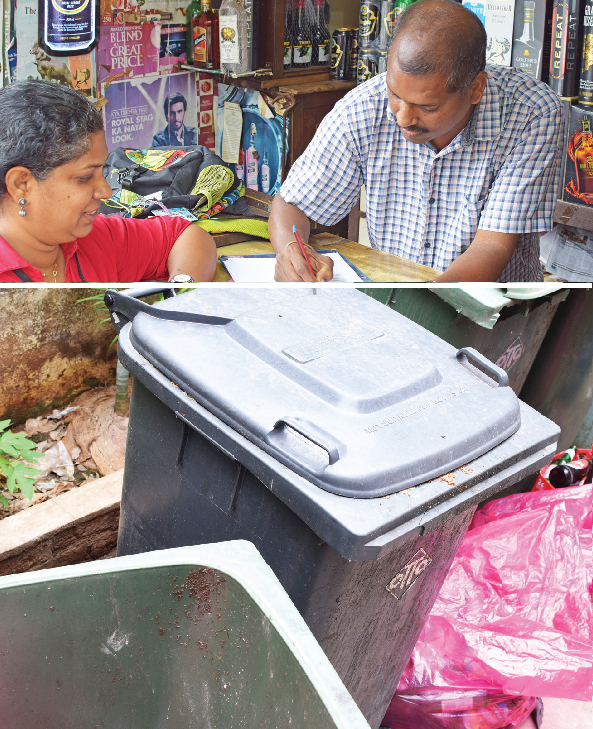
The volunteers will provide bags, cards and stickers to the people and establishments they visit. These garbage collection cards, three kinds of bags, and stickers like wet waste (leftover food, meat, vegetable), dry waste (plastic, paper, wood, cloth) and other (sanitary pads, blades, syringes, medicines etc) will help in the segregation of waste. The bags will be collected on a daily basis and contents checked and noted. The card will have the name and address of the person, dates and time of collection of garbage as well as the person’s signature.
“These cards will serve as our main data of the sample survey that will eventually lead our study of the type of waste that is generated in different homes and the ways to tackle it efficiently,” states Carlos Meneses, business head - Goa, Copperstone Consulting Partners.Meneses believes that it is high time that measures be put in place to tackle the garbage issues to avoid an enormous ecological problem in future.
“There should be a stringent policy in place to take care of the segregation of garbage at the point of generation and then to either recycle or dispose the waste on the same day of collection. Those who work towards curbing waste should be rewarded but those who create extra waste should be punished. Only then will this problem be solved,” observes Meneses.
What will be done after the data is collected by the warriors of waste? Sanjit Rodrigues, MD of GWMC explains. “The waste will be characterised and chemically analysed to get the near 100 per cent accurate profile of garbage generated in the state. This will then help us in drafting a model and innovative solutions for tackling the problems of disposal both in decentralised and centralised models. Further these solutions will be scalable, hassle free and cost efficient,” states Rodrigues.