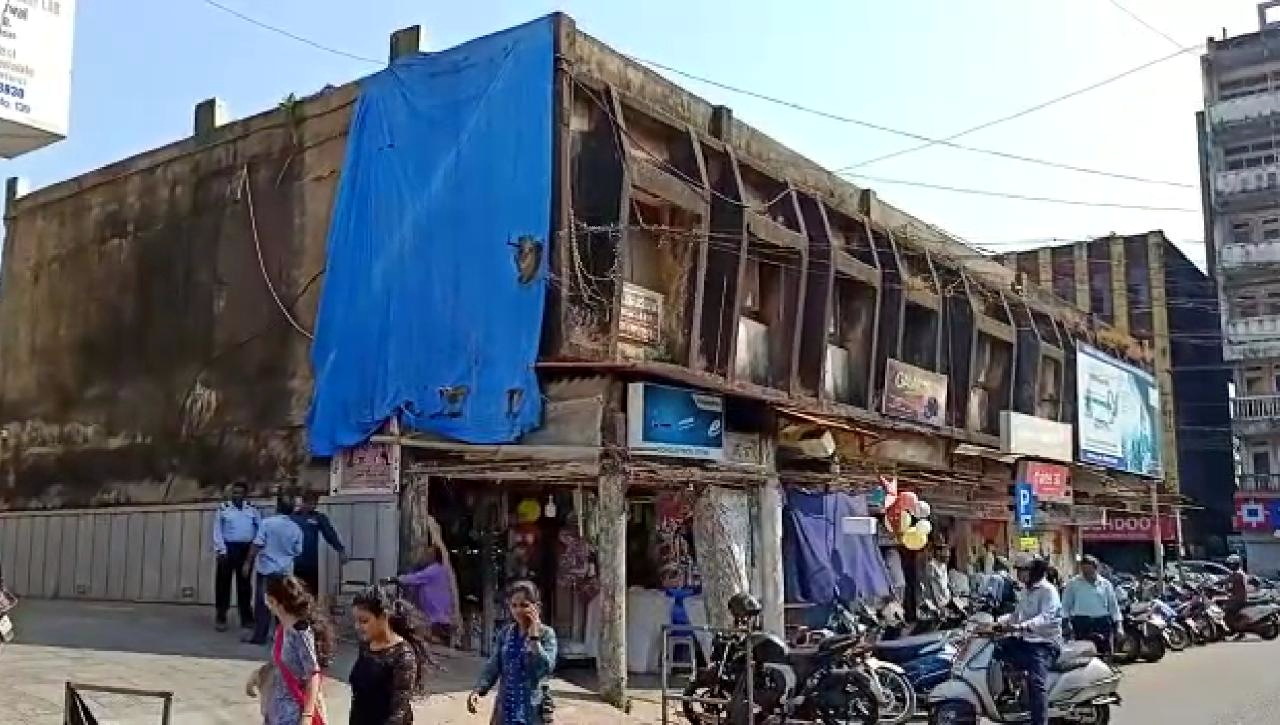
A file photo of a dilapidated building in Vasco market.
VASCO
Vasco’s crowded streets, busy markets and ageing neighbourhoods are carrying a hidden risk that grows sharper with every passing year.
Nearly 30 buildings within the Mormugao Municipal Council (MMC) limits have been identified as ‘structurally unsafe’, raising fears of a major mishap in one of Goa’s most densely populated urban centres.
These buildings — a mix of residential, commercial and municipal properties — are spread across key pockets of the city, including the busy core areas frequented daily by office-goers, shoppers and tourists. While some of the structures stand locked and abandoned, several others continue to house families, offices and ground-floor shops, placing hundreds of lives at potential risk.
Civic sources say the danger is no longer theoretical. Over the years, chunks of plaster and concrete have peeled off from multiple buildings, narrowly missing passers-by.
In one of the most serious incidents, cement debris crashed onto the pavement near the Vasco police station — a zone that also sees constant movement due to nearby government offices. Each such episode has added to public anxiety, but lasting solutions remain elusive.
THE STATUS
According to officials, around 30 to 32 buildings have been flagged as unsafe following inspections conducted by the MMC. Notices have been issued repeatedly, but enforcement has been weak.
“The inspections happen, warnings are served, but the process often stops there,” said a senior municipal source. “Owners delay action, tenants refuse to vacate, and the structures continue to deteriorate, especially during the monsoon months.”
The situation is particularly alarming in buildings where shops operate on the ground floor, attracting steady footfall throughout the day. In several cases, deep cracks are visible on walls, columns appear tilted, and steel reinforcements have been exposed due to years of neglect. Many of these structures are over four decades old and have long exceeded their intended structural lifespan.
Despite repeated discussions within the municipal council, demolition or large-scale redevelopment has moved at a slow pace. Disputes between landlords and tenants, unclear ownership patterns and prolonged litigation have all contributed to delays. Some housing societies, though vacant and visibly unsafe, remain stuck due to multiple owners being unable to reach a consensus.
LITTLE ACTION, RESPONSE
Only one such structure — located on Swatantra Path — was demolished in May 2023 after repeated complaints. The building had become notorious for falling debris and was finally razed after being declared a serious hazard.
To encourage redevelopment, the government has offered incentives such as higher Floor Area Ratio (FAR) under the Special Planning Regulations (SPR). However, uptake has been limited. Residents cite mistrust, legal complications and lack of coordination among stakeholders as major deterrents.
COUNCIL RESPONDS
MMC Chairperson Girish Borker said the council has now decided to take a more structured and technical approach, beginning with its own assets.
“The issue of old and unsafe buildings has been discussed at a very serious level,” Borker told The Goan.
“We have appointed the Goa Engineering College to carry out detailed structural stability and fitness tests of government buildings. We will start with municipal properties and then move on to private buildings.”
He said the engineering assessment will cost the council around Rs 12 lakh and will involve a comprehensive evaluation of each structure.
“They will examine all aspects and submit detailed stability reports. Based on this data, decisions will be taken on government buildings. This exercise will later be extended to private structures as well,” Borker said.
Warning of tough steps if occupants fail to cooperate, the MMC chairperson added, “Notices will be issued to those staying or operating from unsafe buildings. If there is no compliance, we may have to resort to extreme measures like disconnecting water and electricity, purely in the interest of public safety and the city of Vasco.”
URGENT WARNINGS
For residents living under cracked ceilings and shopkeepers operating beneath sagging slabs, every passing day is a reminder of how fragile their surroundings have become.
Urban planners and civic activists warn that unless firm and time-bound action is taken, Vasco could be one incident away from a tragedy that authorities would struggle to explain.
The crumbling facades and falling concrete are no longer just signs of old age — they are urgent warnings demanding attention before the city is forced to learn a painful lesson the hard way.