Gram sabha demands biodiversity heritage status for plateau
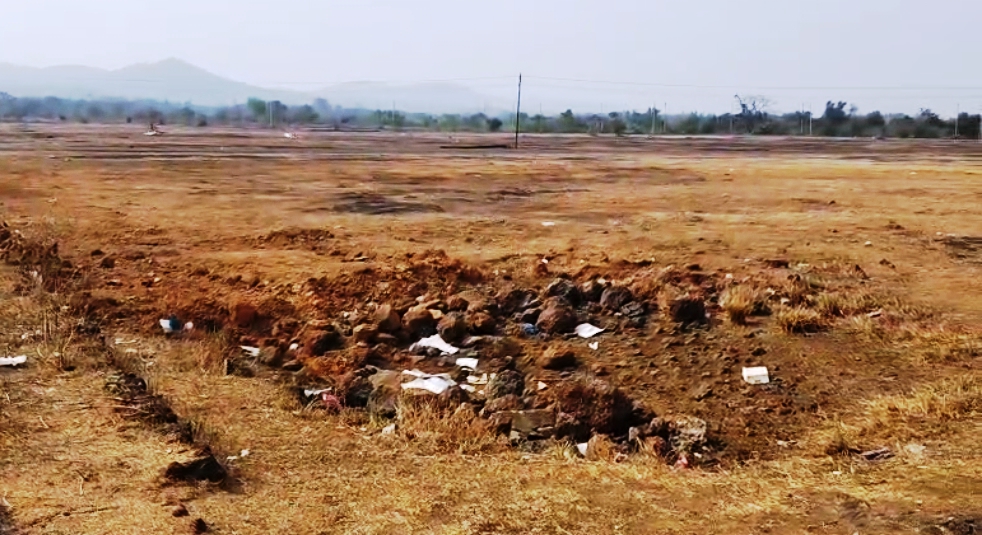
File photo of the proposed aviation and aero sports hub at the Quitol-Betul plateau.
MARGAO
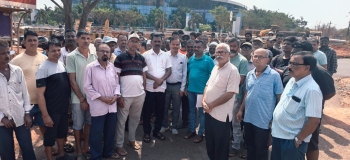
“Save Quitol, Save Betul” and “Save Our Plateaus” rent the air at Betul on Sunday as villagers voiced strong opposition to the proposed aviation and aero sports hub by M/s Skydiving Adventures Pvt Ltd at the Quitol Industrial Estate.
At a gram sabha meeting of the Betul panchayat, members unanimously demanded the immediate revocation of the in-principle approval granted to the company at the 40th Goa Investment Promotion and Facilitation Board (Goa-IPB) meeting held on December 23, 2025.
The meeting, chaired by Sarpanch Salosaon Simoes, also called for a comprehensive and independent Environmental Impact Assessment (EIA) before any further approvals are granted by the Goa Industrial Development Corporation (Goa-IDC) and the Goa State Pollution Control Board (GSPCB).
While demanding that the government keep all permissions on hold, the gram sabha has demanded formal recognition of Quitol-Betul Plateau as a biodiversity heritage site to protect it from industrial and commercial development. Describing the plateau as an integral part of Goa’s natural heritage, villagers expressed concern that any ecological damage would be irreversible.
Deputy Sarpanch Damas D’Silva read out the resolution tabled by Seby Fernandes, which called for an immediate halt to the aviation hub project on the Quitol-Betul plateau.
During the meeting, members were informed that the Goa-IPB has reportedly granted in-principle approval to M/s Skydiving Adventures Pvt Ltd for a large-scale project spanning approximately 2.45 lakh square metres of plateau land. The proposal reportedly includes facilities for skydiving, aviation training, drone manufacturing, and hospitality infrastructure.
The Board has also recommended the allocation of 3,000 KVA of power and 3.5 KLD of water for the project. The resolution criticised the proposed diversion of what it termed “massive public resources” to a single private entity, particularly at a time when Goa faces increasing concerns over water availability and energy demand.
Speaking to The Goan after the meeting, Deputy Sarpanch Damas D’Silva said the panchayat would immediately forward the resolutions adopted at Sunday’s gram sabha to the Office of the Chief Minister, the Goa-IPB, and the Goa-IDC, formally conveying its opposition to the project.
“The panchayat had no prior knowledge of the in-principle approval granted by the Goa-IPB. The people of Betul, Quitol and Naqueri are strongly opposed to this project,” he stated.
Quitol-Betul plateau not a wasteland
Asserting that the Quitol-Betul Plateau is not a wasteland but a fragile lateritic plateau ecosystem that supports 193 bird species recorded through citizen-science platforms like eBird and iNaturalist, including 9 near threatened and two vulnerable species under the IUCN Red List, and 18 Schedule-I species under the Wildlife Protection Act, 1972.
They pointed out that mammals such as the golden jackal, black panther recorded from the plateau, besides seasonal endemic plants, including ground orchids and specialised plateau flora. Reptiles, insects, and invertebrates uniquely adapted to rocky terrain. Lateritic plateaus are globally recognised as rare ecosystems that take decades to recover once damaged, the resolution stated.
Critical water recharge zone
The resolution stated that the porous laterite rock acts as a natural sponge during the monsoon, recharging groundwater for nearby villages such as Quitol, Betul, and Naqueri. These villages are dependent on spring water for their consumption. Large-scale aviation infrastructure will permanently damage this recharge system and worsen future water scarcity, the resolution stated.
Impact of the project
Gram sabha members feared habitat destruction from construction and vehicle movement; noise disturbance to wildlife; soil compaction and loss of seasonal plant diversity; light, plastic, and infrastructure pollution; besides permanent loss of an irreplaceable ecosystem.