


MARGAO
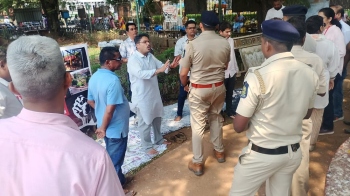
Drama unfolded in Margao on Friday after city-based businessman Chirag Naik launched a hunger strike to protest the proposed construction of a ‘two-storeyed’ structure inside the Margao Municipal garden.
Tensions escalated when Margao police, led by PI Arun Desai and accompanied by an executive magistrate, directed Naik to call off his protest. The move triggered strong objections from Naik and several members of the public, who questioned whether authorities had taken similar action against alleged anti-social and commercial activities within the garden premises.
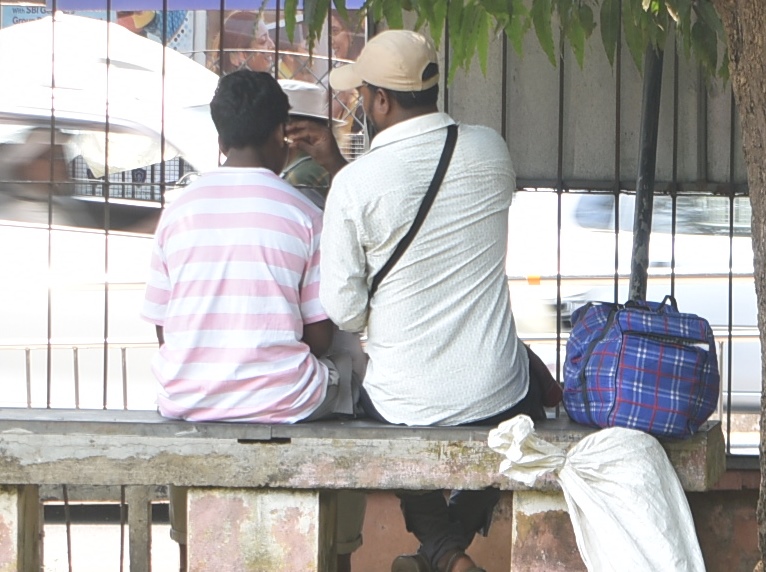
Former MMC Chairperson Babita Angle defended Naik, stating that he had done no wrong in staging the protest as the issue directly concerns the iconic garden. Another citizen, Andrew Sequeira, pointed out that unauthorised activities, including a migrant offering ear-cleaning services, were being carried out in the garden without intervention from authorities.
Despite the protests, police and the executive magistrate insisted that Naik obtain prior permission to hold a hunger strike at the site. While Naik maintained he had not violated any laws, police asked him to remove the mattress and bed sheets he had placed on the ground.
Unfazed, Naik continued his protest, sitting on the ground and vowing to persist until the Margao Municipal Council (MMC) clarifies the concerns he has raised about the project.
Later in the evening, municipal security personnel approached Naik and asked him to vacate the premises, citing the garden’s routine closure at 7 pm.
Explaining his stand, Naik said his peaceful protest aimed to alert residents to what he described as a lack of transparency by the MMC and the Goa State Infrastructure Development Corporation (GSIDC). He questioned the rationale behind constructing a two-storeyed structure in the garden at an estimated cost of Rs 4 crore without public consultation.
“We are only demanding clarity on the project. Instead, the police and the magistrate were sent to deter me from continuing the protest,” Naik said, reiterating that his intention was to raise awareness among citizens about the proposed development in the city’s prominent public space.
Meanwhile, Chirag has decided to continue his hunger strike in the municipal garden through the night. After informing MMC security personnel that he would not leave the premises, the Margao police reportedly instructed them to lock the garden gates.
Leader of Opposition Yuri Alemao has expressed solidarity with Congress leader Chirag Naik, who has undertaken the hunger strike in protest against the construction of a two-storeyed building in the Margao Municipal garden.
“This garden is not just an open space; it holds nostalgic memories for generations and continues to serve as a cherished meeting place where people gather, connect, and spend time together. Such projects, especially in areas already facing a shortage of parking, are unnecessary and harmful. This government seems determined to sell off and destroy our heritage, disregarding the sentiments of the people,” Yuri added.
Our councillors opposed plan, says Vijai
MARGAO: Goa Forward Party chief Vijai Sardesai said that Margao Municipal councillors affiliated with his party had opposed the garden proposal, but was pushed through by the ruling group by using the majority.
He alleged that the councillors were bulldozing the decision without adequate discussion.
Demanding transparency regarding the purpose of the building planned in the garden, Sardesai said that the Aga Khan Garden is a valuable asset for Margao residents.
He also highlighted that Margao is already facing parking issues, and any additional activity in the garden would further strain parking facilities.
Saying that more such projects are likely to be rolled out, as the Margao master plan was prepared without consulting the public, Sardesai noted that Digambar Kamat had followed due process while forming the Regional Plan, but similar practices are not being followed in Margao’s current development.
Questions over lack of public consultation
MARGAO: The Shadow Council for Margao has taken strong objection to the proposed construction of the two-storeyed structure in the Margao Municipal Council garden without seeking public opinion.
SCM convenor Savio Coutinho on Friday dashed of a letter to the Goa State Infrastructure Development Corporation’s Chairman and Managing Director with a plea to keep the project on hold and suspend the tender process initiated for the construction of this multi-storey structure.
He said citizens are unaware of what sort of multi-storeyed structure is proposed to be erected, and the purpose of the structure, we firmly feel that projecting vertically a concrete structure, would not only be an eyesore, but will destroy the very significance of this garden gifted to the city by Aga Khan.
Call for clarity on redevelopment plan
MARGAO: Raising serious concerns over the proposed construction at the Margao Municipal Garden, Madganvcho Awaaz and youth leader Prabhav Naik has written to the Chairman of the Goa State Infrastructure Development Corporation (GSIDC), seeking urgent clarification and requesting that the tender process be kept on hold.
In his letter, Naik highlighted that the Rs 3.96 crore project involves the demolition of an existing structure and construction of a two-storey building at a site that holds deep cultural, religious, and emotional significance for the people of Margao. The garden has traditionally been the venue for the Sarvajanik Shree Ganeshotsav and several community activities for generations.
MMC, GSIDC clarify project; say it’s reconstruction, not new structure
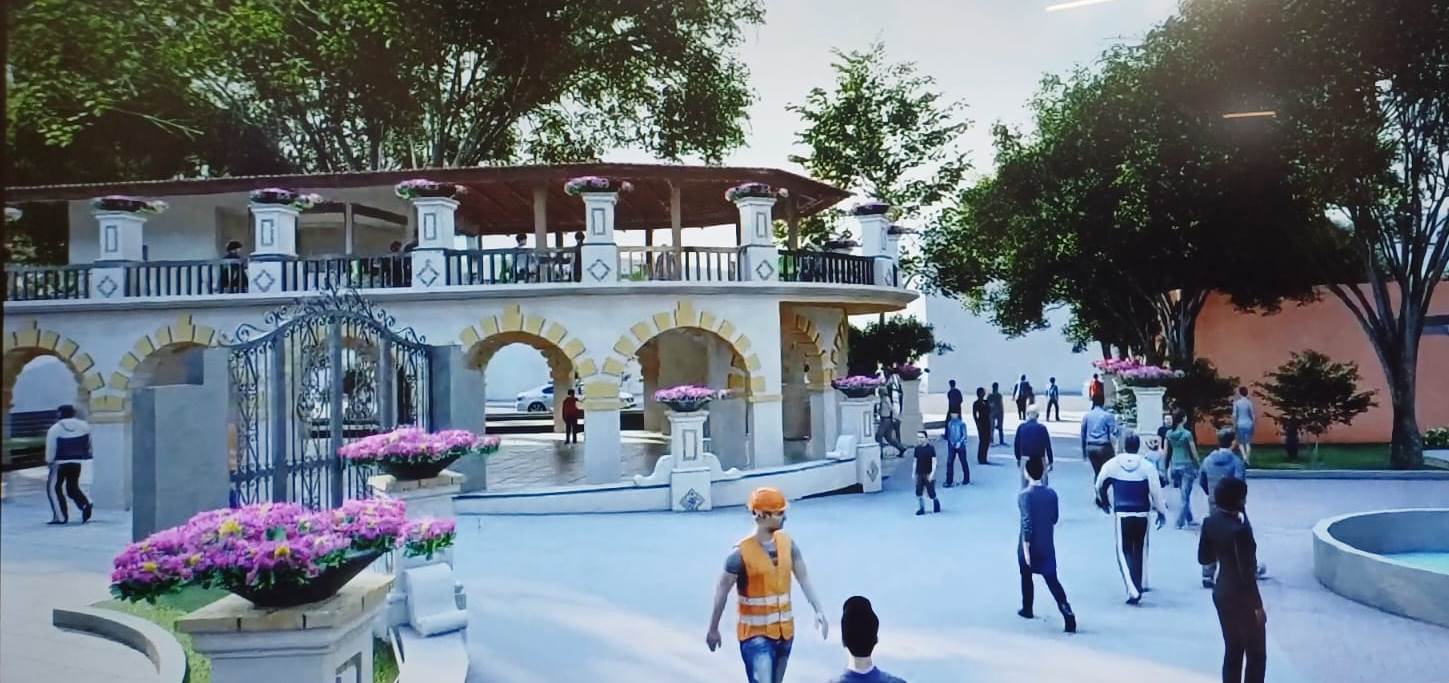
The design of the ‘two-storeyed’ structure project shown during the presentation held for the media by MMC Chairperson Damu Shirodkar on Friday.
MARGAO: As voices of dissent grew louder in the commercial capital over the proposed Rs 4 crore two-storeyed structure inside the iconic Margao Municipal Garden, the Margao Municipal Council (MMC) and the Goa State Infrastructure Development Corporation (GSIDC) on Friday moved swiftly to clarify that the project is merely a reconstruction of the existing dilapidated Ganapati Puja Mandap, with additional seating arrangements planned on the terrace.
MMC Chairperson Damu Shirodkar, along with GSIDC officials, conducted a PowerPoint presentation for the media on Friday evening. They explained that the Rs 4 crore project is not limited to rebuilding the existing structure but also includes the construction of rest rooms and toilets for sanitation workers, as well as beautification of the garden. This includes repairs to the compound wall and improvements to the overall landscaping.
Shirodkar stated that the MMC had initially submitted the proposal in 2024 to Margao MLA Digambar Kamat, requesting that the project be undertaken through GSIDC due to the civic body’s lack of financial resources. “Following the proposal, along with the MLA’s note dated November 28, 2024, GSIDC appointed a consultant to prepare the plan. The project includes reconstruction of the Ganapati Puja Mandap and ancillary facilities, along with rebuilding the existing MMC staff restroom at a new location with improved amenities,” Shirodkar said.
Addressing concerns about the structure being two-storeyed, the MMC Chairperson clarified that the terrace of the Ganapati Puja Mandap will serve as an open sit-out area for senior citizens and differently-abled individuals, complete with ramp access and related facilities.
He further assured that the project includes repairs and redesign of the compound wall, benches, and pavers, along with internal landscaping and pedestrian pathways to enhance accessibility and usability. He emphasised that no greenery will be harmed and no trees will be cut during the execution of the project.
Sit-out plan raises fears of misuse
MARGAO: Even if one were to accept the MMC chairperson’s assurances that the upper level of the reconstructed structure will function purely as a public sit-out, a critical concern remains: how will the civic body prevent misuse of the space?
This question gains importance in light of the MMC’s and Margao police’s acknowledged inability to curb anti-social activities within and around the garden, including drunkards, drug pedlars, etc. When asked how the MMC plans to prevent anti-social elements from occupying the proposed sit-out, Shirodkar conceded that the municipality would need to develop an effective mechanism to address the issue.
The concern is not unfounded. Many citizens have already stopped visiting the garden or using its benches due to the presence of anti-social elements and related activities. Without a clear plan for enforcement and monitoring, the proposed development risks exacerbating an already troubling situation.


