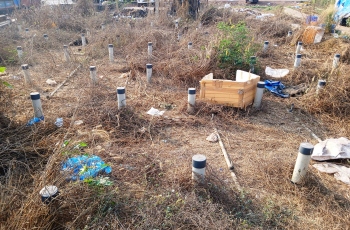
 The effluent treatment system set up at the wholesale fish market years ago is craving for attention. Captured by : Santosh Mirajkar
MARGAO
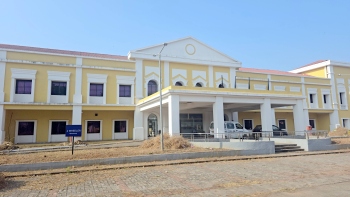
At the last meeting of the South Goa Planning and Development Authority (SGPDA), Chairman and MLA Krishna Salkar announced that the redeveloped Margao wholesale fish market would be inaugurated by the end of January. He defended the inordinate delay in inaugurating the market, attributing the year-long delay to issues related to the upkeep and maintenance of the market, particularly the toilets.
However, the announcement raises several critical questions that the Planning body has yet to clearly answer. Has the SGPDA addressed the more pressing and fundamental issues plaguing the market”most notably the treatment and disposal of effluents and leachate generated by fish waste?
Equally unresolved is the issue of dozens of migrant vendors allegedly carrying out illegal retail fish sales within the wholesale market premises, right under the nose of PDA officials and contractors. There is also no clarity on whether the Authority has taken a decision on setting up a cold storage facility”one of the key components intended to benefit traditional fishermen, who were the primary stakeholders envisioned under the centrally-funded wholesale fish market development project.
Whether the SGPDA will go ahead with the proposed inauguration or once again miss the deadline remains to be seen. What’s clear, however, is that the core issues afflicting the redeveloped Margao wholesale fish market continues to persist. This is despite the fact that the Goa State Infrastructure Development Corporation (GSIDC) completed Phase I of the project exactly a year ago.
Effluent treatment plant missing despite central funding

An effluent treatment plant (ETP) was not included in the redevelopment plan of the Margao wholesale fish market, which was taken up with central funding. The omission was based on the SGPDA’s claim that an alternative system to treat effluents had already been put in place with the assistance of experts from BITS Pilani.
However, a visit to the wholesale fish market paints a different picture. There appears to be no functional effluent treatment facility within the market complex. At one corner of the premises lies a fenced-off area with a pipeline installation, which sources claim was established by BITS Pilani nearly five years ago to handle effluent treatment.
A closer inspection reveals that the pipelines are damaged and buried amid thick vegetation, waste and overgrown bushes”clear indicators that the facility has not only remained idle but has also not been maintained for a considerable period of time.
This raises a crucial question: How does the SGPDA plan to manage the effluents and leachate generated at the redeveloped market once it is formally commissioned? Will the Planning body allow the situation to continue unchecked, as it has for years, or has it taken a concrete decision to set up a proper wastewater treatment system for the market?
Illegal retail fish sales in wholesale market

Another unresolved issue is the presence of dozens of migrant vendors allegedly conducting illegal retail fish business within the wholesale fish market premises. These vendors reportedly pay prescribed fees to PDA contractors, with the charges linked to the number of fish crates brought into the market.
The SGPDA now faces a straightforward but sensitive question: how does it intend to address the issue of these migrant vendors? Will the Planning Authority allow them to continue retail sales within a wholesale market”potentially in violation of norms”risk losing the revenue generated from them, or bar them entirely once the redeveloped market is inaugurated?
Cold storage plan faces resistance
At a media briefing following the last PDA meeting, Chairman Krishna Salkar made a striking disclosure, stating that fish traders were not in favour of a cold storage facility inside the wholesale fish market and instead wanted the remaining space to be used for parking.
This has prompted serious questions for the PDA Chairman and authority members, including PWD Minister Digambar Kamat, Fatorda MLA Vijai Sardesai and Curtorim MLA Reginaldo Lourenco. The fundamental issue is: for whom was the cold storage facility envisaged”fish traders or Goan fishermen, including traditional fishermen, ramponkars and boat owners?
If the facility was intended for the benefit of Goan fishermen, what authority do fish traders have to oppose it? It bears recalling that the Margao wholesale fish market redevelopment was sanctioned by the Central government specifically to modernise the facility, including the provision of a cold storage unit to support traditional fishermen.
Against this backdrop, can the PDA even entertain objections from fish traders”many of whom operate insulated vehicles”to a cold storage facility meant to serve the interests of traditional fishing communities?