


The Feast of Epiphany, celebrated twelve days after Christmas in the Christian liturgical calendar, is one of the oldest feasts of the Church. The word Epiphany is derived from a Greek term meaning to appear or to reveal, and as a religious concept, it signifies the manifestation of God in the physical world. The feast commemorates the visit of the Three Wise Men”Balthazar, Gaspar, and Melchior”who journeyed from distant lands to worship the infant Jesus, guided by the Star of Bethlehem. They brought gifts of gold, symbolizing Christ’s kingship; frankincense, signifying His divinity; and myrrh, foreshadowing His suffering and death for the salvation of humanity. Epiphany thus marks the revelation of God incarnate in Jesus Christ to the people.
In Goa, this feast is lovingly known as Denvorachi or Reianchem Fest”the Feast of the Three Kings”and is among the State’s most vibrant and culturally rich Christian celebrations. Observed annually on January 6, it commemorates the self-manifestation of Christ to the world through the visit of the Magi, symbolizing that Christ came not only for Israel but for all humanity. Celebrated with deep devotion and enthusiasm, Epiphany holds a cherished place in Goa’s religious and cultural life.
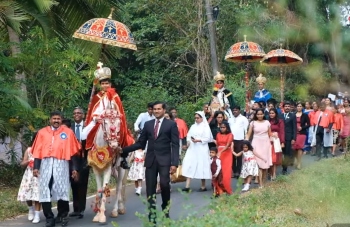
The feast is brought alive through unique traditions that blend faith with local culture. In three Goan villages, local boys dressed as the Magi reenact the journey of the Three Kings, riding on horseback in colorful processions. These re-enactments are especially renowned in Cansaulim (Cuelim) and Chandor (Chandrapur) in Salcete, and Reis Magos“Nerul in Bardez. Traditional attire, lively brass bands, and village fairs add a festive spirit, creating a celebration where solemn devotion and joyful community life merge seamlessly.
Feast at Cansaulim
The Epiphany celebration at Cansaulim is among the most distinctive and revered in Goa. Three young boys from the villages of Cansaulim, Arossim, and Cuelim are chosen to portray the Three Kings. Unlike Epiphany celebrations elsewhere in the world”where adults usually assume these roles”the Cansaulim parish preserves a rare and touching tradition by entrusting this sacred responsibility to children. Their innocence lends a profound sense of purity and spiritual depth to the celebration.
The kings arrive on horseback from three different routes, dressed in richly embroidered royal garments adorned with gold and silver, wearing crowns studded with glittering stones. They are accompanied by attendants carrying colorful parasols, flag bearers, and others forming a royal retinue. Brass bands lead each procession, while crackers light up the sky, adding grandeur to the event. The journey begins from the boys’ residences and proceeds toward the summit of the Cuelim hill.
The first halt for the king from Arossim is at the Chapel of St. Lawrence, where the chaplain offers prayers and blessings. The procession then follows an age-old path past the chapel, through the Comunidade paddy fields, and onward to the foot of the Cuelim hill. At the Chapel of Nossa Senhora dos Remédios, each of the Three Kings offers their gifts to the infant Jesus. After the solemn Eucharistic celebration, the boys return to their homes by different routes, in keeping with the Gospel narrative.
The origins of this tradition date back over 400 years to the Portuguese era. The Remédios Chapel, built in 1599 by the Jesuit priest Fr. Gonsalo Carvalho, stands atop the hill, commanding breathtaking views of lush fields, coconut groves, and the distant Arabian Sea. Interestingly, in a break from many male-oriented traditions, sons born to the daughters of village families are also eligible to don the mantle of the King, reflecting the inclusive spirit of the celebration.
For generations, devotees have climbed this sacred hill on Epiphany Day, believing it to be a place of blessing, healing, and divine protection. What began as a simple act of faith has evolved into a grand spiritual and cultural celebration that continues to unite villages, preserve tradition, and renew devotion year after year.
Feast at Chandor and Reis Magos
The village of Chandor celebrates the Feast of the Three Kings with equal fervor and grandeur, observing it as the feast of Nossa Senhora de Belém. Here too, three village boys dressed as Kings reenact the Gospel account of the Magi as narrated by St. Matthew. A solemn procession begins at the Chapel of Our Lady of Piety on Monte Cota and culminates at Nossa Senhora de Belém Church, where the Kings offer their gifts and participate in the Holy Eucharist.
Similarly, the Feast of the Three Kings (Festa dos Reis Magos) is celebrated with great devotion at Reis Magos Church in Verem. Reis Magos Church is the first church in Bardez, built by Franciscans in 1555. Unlike ‘young’ kings in Cansaulim and Chandor, three men from the village, clad in royal robes, reenact the journey of the Magi. After the Eucharistic celebration, a grand procession of the Three Kings moves through the village, drawing large crowds of faithful and visitors.
Across Goa, the Feast of Epiphany beautifully reflects the Goan spirit, where deep faith and joyful celebration coexist harmoniously. The feast also carries a strong message of inter-religious harmony, as people of different faiths”particularly Hindu brothers and sisters”join Catholics in celebrating the Three Kings with equal enthusiasm and reverence. Rich in symbolism, tradition, and communal spirit, Epiphany in Goa remains a living expression of faith, culture, and shared heritage.


