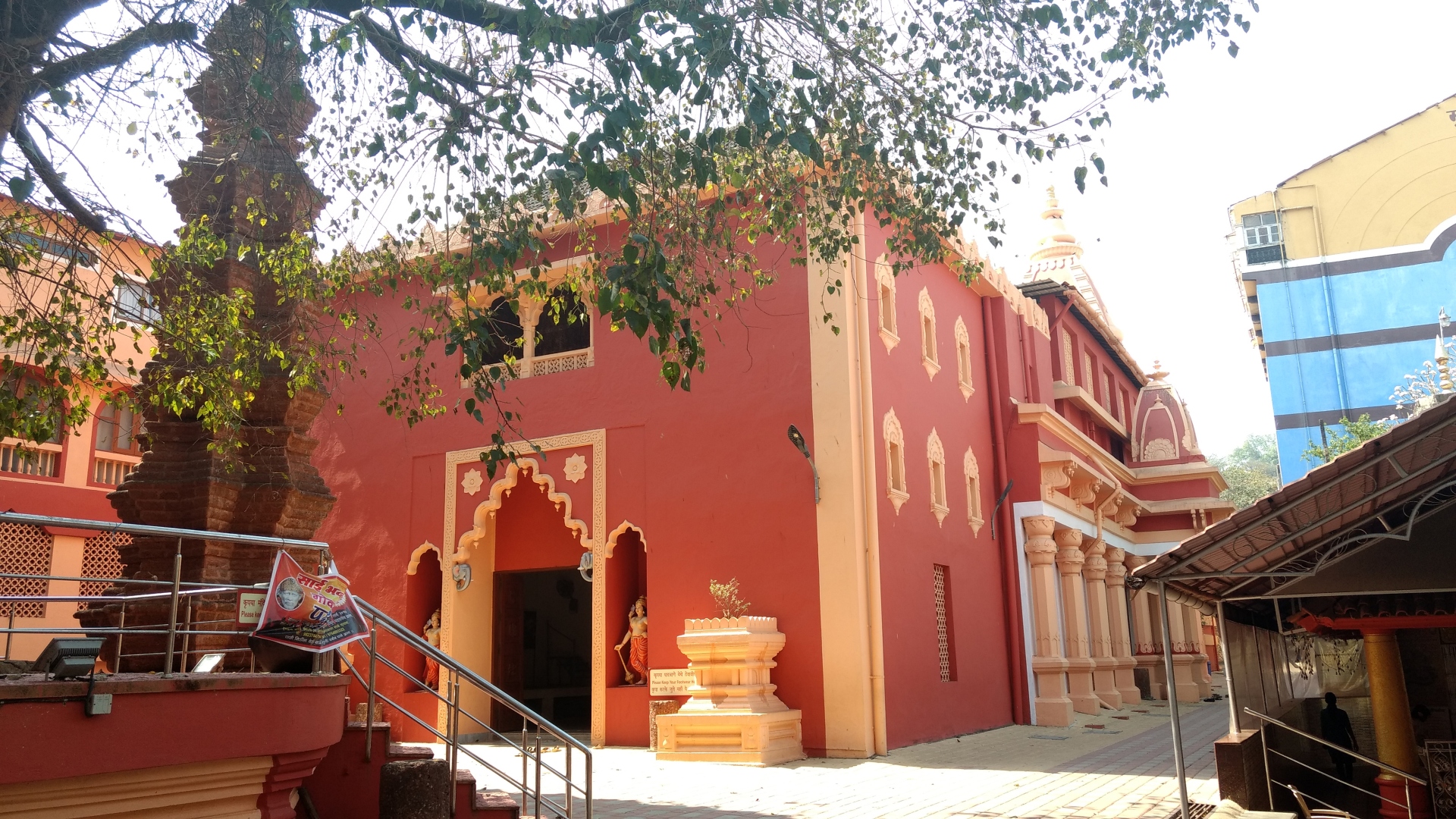
Temple of Shri Mahalakshmi in Panjim, after its renovation
A symposium titled ‘Architectural Expressions of Goanness and the Goan Hindu Temples’ will be held in Panaji on January 20 at 6 pm, organised by Fundação Oriente. The event will bring together scholarly perspectives to examine the architectural expressions of Goaness through the lens of Goan Hindu temples, engaging with both historical and contemporary contexts. It aims to initiate critical discussion on the cultural and architectural significance of these temples as key markers of Goan identity, while opening up new directions for research and documentation.
“The beauty of Goa’s architectural heritage lies in its uniqueness—it is, in many ways, distinct from both Portugal and the rest of India. Art historian Paulo Varela Gomes describes it as a Goan heritage with an identity of its own, one that Goans should take pride in and preserve,” says Joaquim Manuel Rodrigues dos Santos, who has extensively studied Goa’s architectural legacy and the traces of Portuguese presence in India. This influence has resulted in a vast and rich collection of structures, ranging from fortifications to religious and civil architecture.
Forgotten heritage
Usually, researchers focusing on the architectural heritage in Goa have tended to concentrate more their efforts on fortifications, civil architecture (especially Catholic) and Catholic religious architecture – with exceptions, such as architect Amita Kanekar. Santos observes that the Hindu architectural heritage in Goa sometimes seems to be downplayed or, at least, forgotten. “And this is something that I found deeply unfair, because it is a very interesting heritage that deserves to be studied and disseminated,” he asserts.
One of the focuses of his research has been the preservation of this built heritage, both during the Portuguese presence and in the post-colonial period. During his fieldwork in Goa, Santos witnessed and appreciated the uniqueness of Goan Hindu temples. However, while comparing old photographs, he noticed that these temples and their surroundings have undergone renovations, and many have been significantly altered.
Architect Hélder Carita of Nova University, Lisbon, has also been researching the Hindu temples of Goa for many years, together with anthropologists Rosa Perez and Pedro Pombo. “As we felt that this uniqueness of Goan Hindu temples should be explored in greater depth and, above all, documented for future reference. Therefore we would be carrying out 3D scanning of some of the best-preserved examples, with the support of architect Victor Ferreira, Faculty of Architecture, University of Lisbon,” shares Santos, adding, “The project is just getting started, so there are only proposed hypotheses that we want to verify over the next two years.”
Traces of Portuguese influences
According to Santos the Portuguese influences are visible in the dome-shaped shikara, the use of pilasters marking the exterior of the building, the basilica floor plan, the use of arches on Tuscan-style columns, triglyphs, Portuguese-style eaves, scissor roofs with ceramic tiles, balcony-style porches, etc.
Goan Hindu temples tell many things. They are both a palimpsest of stories from throughout history that have accumulated around them, and a receptacle of diverse influences that make them unique in the world. These temples are indelibly interconnected with their communities, and cannot survive without each other – they are also, in many ways, a question of identity.
There are currently several sensitive issues surrounding their ownership, which have increased substantially, as well as issues surrounding the renovation of several temples, which detract from them and cause them to lose much of their cultural value.
Cultural hybridisation
It is not only the Portuguese (or European) influence that seems to be fading; several characteristics unique to Goa's Hindu religious architecture, created in a rich process of cultural hybridisation (local, European, Bijapuri, Marathi) that gave rise to a very coherent and unique set of Hindu temples, seem to be disappearing, observes Santos.
These may be attributed to renovations that bring aesthetics from other parts of India, obscuring the unique Goan aesthetic, or due to excessive recreations of Goanness in some temples, which turn them into caricatures of Goanness, he maintains. “But these are general perceptions that need to be confirmed, and which we hope to see revealed throughout the project,” asserts Santos. Two cultural heritage experts, Prof Adam Hardy and Prof Vítor Serrão will also provide guidance.
Architect Vishvesh Kandolkar, professor at the Goa College of Architecture will also address the symposium.