PANAJI
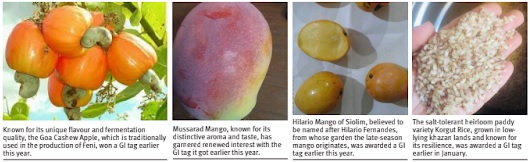
In Goa, Geographical Indication (GI) tags now cover a growing list of farm products, including Taleigao brinjal, Korgut rice, the Goa cashew apple, and the Mussarad and Hilario mangoes.
The tag legally links these crops to Goa, meaning the name can be used only when they are grown here. But what the tag actually delivers depends on farmers, buyers, and whether agriculture, food and tourism systems are ready to support them.
Former Goa agricultural officer Miguel Braganza says, “GI tags identify products with a place, e.g., Marquis de Pompador became ‘sparkling wine’ when southern France got a GI for champagne. Brands (like DesmondJi) cannot call their product tequila, after the GI went to Guadalajara province of Mexico and Basmati rice can only come from the Terai region of India.”
Parixit Pai Fondekar, founder of Kamaxi Group, says, “For Goa, GI tagging also strengthens the connection between agriculture, food and tourism. It showcases Goa’s identity through food and creates better value for local producers. GI tagging is part of our syllabus and discussions at the Kamaxi College Culinary Arts, as we believe it is important for culinary students to understand where ingredients come from and why they matter.”
Korgut rice received its GI tag this year. Engineer-turned-farmer Nestor Rangel says the red-brown variety survives in saline and brackish water and is grown in khazan lands using traditional, chemical-free methods. “This variety is more difficult to grow and harvest as compared to others. The output per sq. mt is less and it faces problems like lodging (when the upright crops fall over). Hence, though an heirloom variety, the Korgut is slowly losing its acreage of cultivation and may soon go extinct,” he says, adding that the GI may improve returns.
Speaking about the Goa cashew apple, Hansel Vaz says, “The GI tag will be hugely beneficial to the cashew farming and feni industry, as it helps protect the integrity of the raw material. It will also strengthen cashew cultivation across Goa. The Bali cashew, in particular, is what Goa is most known for and should be at the centre of this effort.” He adds that products such as oil and butter could open allied industries.
The hospitality sector says chefs are interested, but supply must match demand. “The cashew apple revival succeeded because there was both supply-side push (feni producers, processors) and demand-side pull (bartenders, chefs experimenting),” says Rutwik Kamat of Muchados Hospitality.
He says some items, like Taleigao brinjal and mangoes, may be easier for restaurants to adopt if flavours stand out and supply remains steady. Korgut rice may suit traditional menus but is harder in other formats.
Experts warn that tagging is only the first step. Braganza notes that feni received a GI in 2009 but became effective only after a Conformity Assessment Board was set up. Even now, just one brand is certified.
Kamat says GI offers scope for premium positioning and storytelling, but chefs still struggle to source speciality local ingredients consistently and at scale.