The rising frequency, intensity and fatality of heatwaves are burdening public health, agricultural and other socioeconomic and cultural sectors of India
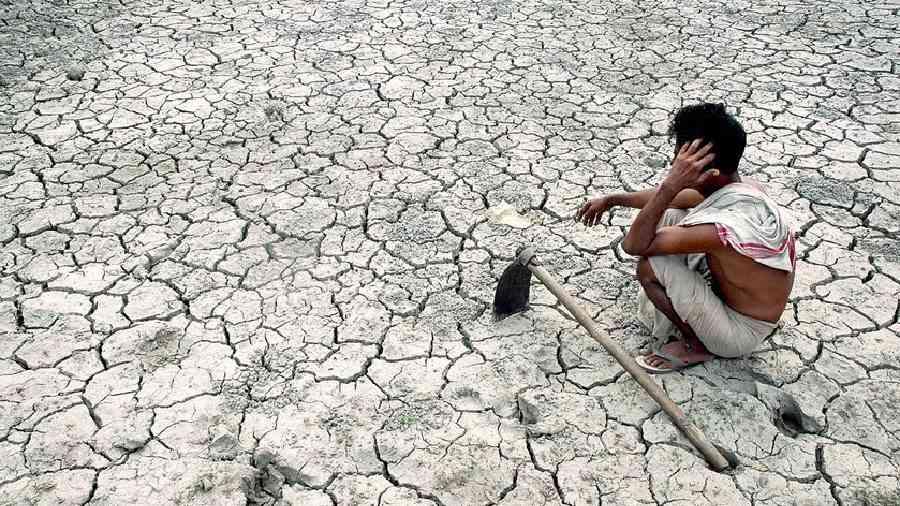
As a result of climate change, global temperatures as well as the frequency and severity of heatwaves have increased in the 21st century. When the maximum temperature departure is 4.5 to 6.4°C or more from the average temperature of the place for two continuous days, then the second day is considered to have heat wave conditions. The heatwave intensifies with increasing air humidity, especially along the coastal belt.
From February 2023 through April, India saw its warmest winter since records began in 1901. Several states have experienced oppressive heatwaves in recent months, and they are set to continue in the coming days. Heatwaves have resulted in more heat-related fatalities, heat stress, intolerable working conditions, and the spread of vector-borne diseases.
Heatwaves have multiple cascading social, ecological, and economic implications in the immediate and long term. Heatwaves can have a severe, short-term impact on large populations, frequently lead to public health emergencies, increase death rates, and have cascading socioeconomic effects such as reduced work capacity and labour productivity. As a result of the disruption caused by the power outages that frequently accompany heatwaves, they can also reduce the ability to provide health services.
Heatwaves now pose a recurring challenge in all countries, causing increasing threats to human lives and well-being, particularly in cities with concrete and tar surfaces. This matters because nearly 70% of the world's population is expected to live in cities by 2050 and will be exposed to extreme heat.
When India is attempting to foster its post-pandemic Gross Domestic Product (GDP) development and to become the third-largest economy in the world in a few years, unusual weather-related health hazard has raised some economic concerns. According to the World Bank, India's GDP growth could slow from its earlier prediction of 6.6% to 6.3% in 2023–2024. Heat waves may further pull it down.
It has been determined that nearly all of Delhi and about 90% of India are at risk from the effects of the heatwave. Delhi saw it's second warmest April since 1951 in 2022. On Thursday of this week, the IMD in Mumbai issued a heatwave warning for the second day in a row. At the same time, Chennai experienced the hottest day of the year on the same day, with temperatures scaling 3 to 4 degrees Celsius above average.
The rising frequency, intensity, and fatality of heatwaves are burdening the public health, agricultural, and other socioeconomic and cultural sectors of India. While summer necessities like coolers, air conditioners, ice cream, and soft beverages are becoming scarce, water shortages, air pollution, and glacial melting in the Himalayas have become rampant.
In India, where agriculture provides the primary source of income for more than half the population, heat waves could adversely affect several economic sectors and result in protracted high inflation. Additionally, it raises the need for water for irrigation and could strain local water supplies. Crop damage and poorer output influence agriculture and farming.
Given that over 75% of India's workforce depends on heat-exposed employment, labour- intensive industries risk increasing labour absenteeism and productivity loss. In India, less than 5% of fresh produce is protected by cold chain facilities, which results in an estimated $13 billion in yearly food losses, according to the World Bank.
Other frequent impacts include reduced fruit and vegetable yields, falling milk and poultry production, increasing insect and disease pressure, and soil degradation. The International Labour Organisation estimates that by 2030, heat stress will reduce working hours worldwide by 2.2%. On the social front, rising food prices and healthcare costs have the potential to topple India's economic pyramid completely.
The Reserve Bank of India may consider hiking interest rates to combat inflation if the impact of heatwaves influences its monetary policy. This will endanger India's GDP growth, which is already in trouble due to the Covid-19 pandemic.
According to the Climate Transparency Report, India could lose 5.4% of its GDP due to declining productivity from excessive heat. The risks to the economy are multiplied by the fact that 50% of the GDP of India is already dependent on heat-exposed activity such as agriculture, mining, construction and manufacturing.
Heat waves may hamper India's progress toward Sustainable Development Goals (SDG), made more prevalent by climate change. India has committed to reaching 17 SDG, which include eradicating poverty, promoting prosperity through employment, and ensuring global health and wellbeing.
In the study published in the journal PLOS climate, the climatic vulnerability index (CVI), a composite metric that considers socioeconomic, livelihood, and biophysical determinants, was used to compare with India's heat index (HI). Then, they contrasted extreme weather-related mortality from 2001 to 2021 with India's progress towards the SDGs during 20 years (2001–2021).
The CVI estimates that 20% of the nation is highly vulnerable to climate change. Similar outcomes were seen in Delhi, where HI estimations reveal that the entire Delhi is at risk from the consequences of catastrophic heatwaves. Heat waves are getting more intense, which puts 80% of Indians in danger, which remains unaccounted for in its current climate vulnerability assessment. If this impact is not addressed immediately, India's progress toward SDG will be sluggish. Climate experts and policymakers must review the parameters for determining the nation's climate sensitivity.