


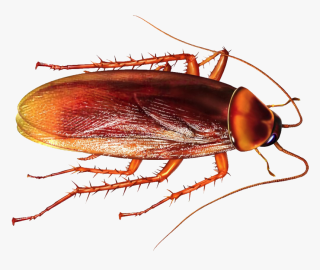
There is hardly any creature that invites such repugnance and panic, than that ubiquitous cockroach hiding in the dark corners and crevices of our dwellings. This ‘katsaridophobia’ or fear of cockroach is mainly due to the association of this antique insect with dark and dingy places, their gregarious habits and scuttling movements in our habitable space, their unpleasant odour and the dread of their erupting flight opening a psychological gateway into a long laundry list of traumatic experiences for many.
Named Cockroach from the Spanish Cucaracha literally meaning a ‘crazy bug’ that shuns light; this formidable insect who’s abode in our homes can be anywhere from cupboards and kitchen cabinets to book-shelves and old shoe boxes; has been a specimen of practical lessons in biology to the horror of many. Over the years, I have had women students who’ve turned pale and numb at the sight of a cockroach in their dissection tray, and many who divorced biology only due to their despise and disgust for this seemingly ominous hexapod.
And in my lengthy innings as a student and teacher of Biology; I have collected, handled and dissected an army of cockroaches; separating its gut-coils without letting my gut go into anti-peristaltic movements. My olfactory faculty instantly recognizes that garlicky nauseating smell of swatted roach, and I am conditioned to its sickly oily exterior and prickly legs.
My tryst with this cloistral household pest began during my undergraduate days when one of my Zoology professors Dr PV Desai ignited my curiosity by asking me to assess anti-fertility properties of beetle leaf-stalk alkaloids. Not being able to afford a mammalian test model, I opted for cockroaches available in plenty in our archaic laboratory cupboards. Despite constraints of resources, time and vociferous censure by some, I persevered and successfully submitted my research findings to the 72nd session of Indian Science Congress in 1985.
Recent research based on ‘coprolites’ or fossil feces of cockroaches affirm that they have given company and sanitary service to dinosaurs by feeding off their massive excreta. These chitin-armoured resilient insects could well outlive humans, despite the much feared apocalypse of nuclear warfare. Existence over long geological timelines, incredibly prolific and hard to banish, cockroaches can multiply fast and occupy every conceivable niche that they can sneak into with their flattened sleek bodies.
A single breeding pair of roaches can exponentially recruit millions in a couple of years. In fact their global spread was accomplished when these insects and their eggs hitch-hiked on shipment of grains. They can thrive and multiply anywhere as long as they are assured of food supply, and can feed on anything from paper to soap and clothes to garbage. Of course kitchens are preferred but sewers are not forbidden, cockroaches can infest dark caves as well as submarines and even occur in household refrigerators. Of the astounding 4,500 species of cockroaches worldwide, only 30 are of pest value; the American and German roaches being the most common.
Being generalist feeders, these insects do not hesitate to nibble at human skin and may even chew at eyelashes of unsuspecting victims in deep slumber. By their free excursions between dirt and dwellings, they traffic pathogens that are free floating in the detritus of humanity, and smear them on our food and wounds. Staphylococci infections and spread of antibiotic resistant bacteria in hospitals have been attributed to cockroach infestations, just as their unhindered movement on kitchen platform and dining table can sprinkle gut pathogens like Salmonella, Shigella, E. coli and Hepatitis-A that cause food borne illnesses. These little rogues also spread leprosy through their droppings. The two common species of German and American roaches are responsible for the despair of millions globally; who suffer from allergic asthma triggered by the insect’s moulted skin, saliva, and droppings.
The popular French cartoon series has promoted this insect in a rather comic role; with Joey, Marky and Dee-Dee the three mischievous cockroaches pestering Oggy the cat all the time. The Cockroach has starred in many Hollywood movies like Damnation Alley, Bug, and Men in Black. Cockroach has also been an epithet and nickname for many famous persons. The Hebrew Bible Tanakh mentions a noxious insect called cha·silʹ that ‘consumes whatever has been left behind by the others’ and in all reasoning could have been a reference to the cockroach. Interestingly in Arabic countries library books would be protected against cockroaches that nibbled at insect appetites like fish and starch glue and leather covers, through a printed appeal on the first and the last page to ‘Kabi:Kaj’, the King of Cockroaches. In many Hindu temples, the sanctum sanctorum inadvertently hosts a colony of cockroaches that benefits from the organic offerings given by the devotees to the deity.
The insect’s creepy crawl has inspired many global researchers in area of biomimicry, biomechanics and robotics. Kenjiro Fukuda and his team from RIKEN institute in Tokyo have been designing a remote controlled ‘Cyborg Cockroach’; a Madagascar cockroach that wears a suit with miniaturized electronic assembly that enables the rescue team to guide its movements through a wreckage of collapsed structures for search and rescue. Kaushik Jayaram, from UC Berkeley has also designed a cockroach-inspired robot that can creep through narrow spaces for surveillance in difficult terrains, his work being supported by the US army.
Cockroach farming is a booming industry in China that breeds the insect on commercial scale for supplies to pharmaceutical industry. Blatta Orientalis Mother Tincture dispensed in homeopathy for treating respiratory ailments has extracts of cockroach, while the Beetle cockroach found in China, SE Asia and pacific islands not only gives birth to young ones but also feeds them on crystalline ‘cockroach milk’ which is a super food and non-dairy milk alternative for humans. This insect is both, a tormentor and a benefactor and its resilience best reflects in what the ‘queen of Pop’ Madonna once said…. “I am a survivor. I am like a cockroach; you just can’t get rid of me.”


