The decline or crisis in public systems is partly exacerbated by the fact that many journalists do not engage with these systems as ordinary users
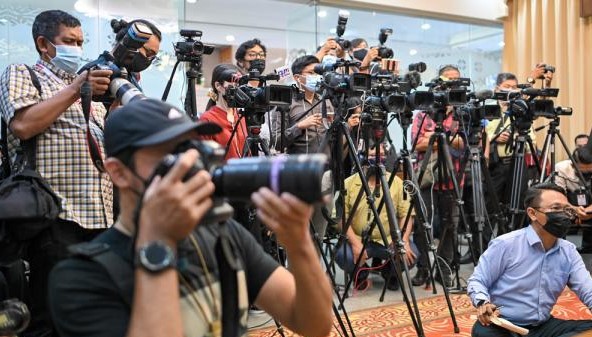
One injection, apparently a Vitamin B12 one, exposed the shortcomings of our health-care system, in a manner seldom done earlier. Our politicians also got excoriated for their behaviour. But one of the issues our media has shown not much enthusiasm to discuss has been how we in the media throw our weight around, sometimes all too wrongly.
Last Saturday's kerfuffle at the Goa Medical College was triggered off after a journalist from a Marathi paper phoned Health Minister Vishwajit Rane. From the half-facts emerging, in bits and pieces, the journalist was having a difficulty in getting an injection administered to his mother-in-law, on a public holiday when routine hospital services were not functional.
To recap briefly.... for the very few who might have missed the video and its aftermath.
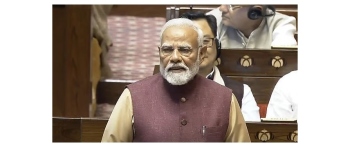
It started off with a video, showing Goa's health minister, the articulate but controversial Vishwajit Rane verbally attacking a doctor on duty.
Soon, the video went viral. Many viewers were shocked to see how a doctor-on-duty was being addressed, that too video-recorded and shared. All kinds of questions came up. Who was the journalist? Who had shot the video (not clear, with some suggestions saying that politicians take their own camerapersons along...) How was videography allowed within the GMC, when there is such a stringent ban on it otherwise? Who shared the video, and with what intent?
The Indian Medical Association (IMA) came out with a strong statement. An expat Goan-origin doctor posted online: "We had this all the time in the UAE. A 'local' would breeze into the hospital and demand any shit -- B12 inj, CT, anything. We just moved out of the way and called the 'PRO', a local, who would intervene and try to direct them appropriately. Nightmare!" He suggested that if this was over a B12 injection, a politician would have to resign, in a place like the UK.
Someone commenting on one of the videos online said sarcastically: "I also want the HM's [Health Minister's] number so I can tell him everything wrong with GMC -- machines broken, no toilets, rats in duty rooms, etc."
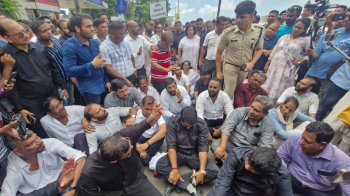
An online petition went out. Finally some kind of an apology came through, but the doctors stepped up their protest, this time captured on video outside the GMC, the kind of which was being seen after many years.
Undoubtedly, the issue left behind many questions. Who was right and who was wrong? Should media persons be expecting special treatment in cases like this? How did it all go so badly wrong? Was the minister trying to tighten the situation in the GMC, as suggested? Finally, what is the proper relationship between the Press and politicians, between politicians (even ministers) and the departments they run?
As anticipated, the discussion largely overlooked what the trigger was for this incident. The focus went to the minister's action, or even the wider debate of Goa's only tertiary healthcare hospital. A much needed discussion, but not just now.
In some analysis, journalists were quick to accept that our healthcare 'system' is in crisis. That patients queue up since long before dawn just to be ahead in the queue for OPD (out-patient) services. Or that everyone, one way or the other, uses clout to access the precious healthcare they badly need in an emergency.
This is the crux of the issue. Without prejudging issues (and, there are still possibly some facts which haven't emerged), the relationship between the press and power comes into sharp contrast here.
There is the issue of demoralising doctors, and upsetting a hardworking section of society in the first case. We saw this dramatically. Beyond that, it is possible to argue that the decline or crisis in public systems is partly exacerbated by the fact that many journalists do not engage with these systems as ordinary users.
The media not relying on public systems themselves, or using privileged access can cause problems. They do so by skipping queues, or using political or personal influence. This makes us in the media less attuned to the everyday struggles of the average citizen. End results included weakening of journalistic scrutiny; while public accountability is thrown out of the window.
It is not only public health or public transport where such a phenomenon applies. This happens in government schools and colleges. You can bet it happens, in at least a few cases, in jobs, selections and professional admissions. We've seen examples of this as well.
Water and sanitation services, ration shops (in the past, when still relevant), electricity services, garbage and urban waste, police and legal systems, public housing, land allotments, tenancy systems, or even panchayat and municipal governance. Imagine jumping queues in all these systems.
If journos have informal access to police officers or political patrons, they get a direct route to what they want. They thus avoid facing police apathy, or delays in filing complaints that the commonman (and woman) routinely does.
Very often, the citizen feels that his or her experiences don't get reflected in the media. This could be one reason why this happens.
Of course, this is not to fault the many hardworking people in the media. Nor to tar everyone with the same brush. But it just means that we need to rethink our approaches, and expectations.
In short, when journalists are too embedded in elite networks or rely on “access journalism” rather than investigative or at least immersion-based reporting, systemic rot can easily remain hidden. This is the issue. Can we think of more "lived experience" reporting — or at the very least, ground-level immersion and engagement — to restore the watchdog role of the media in Goa?