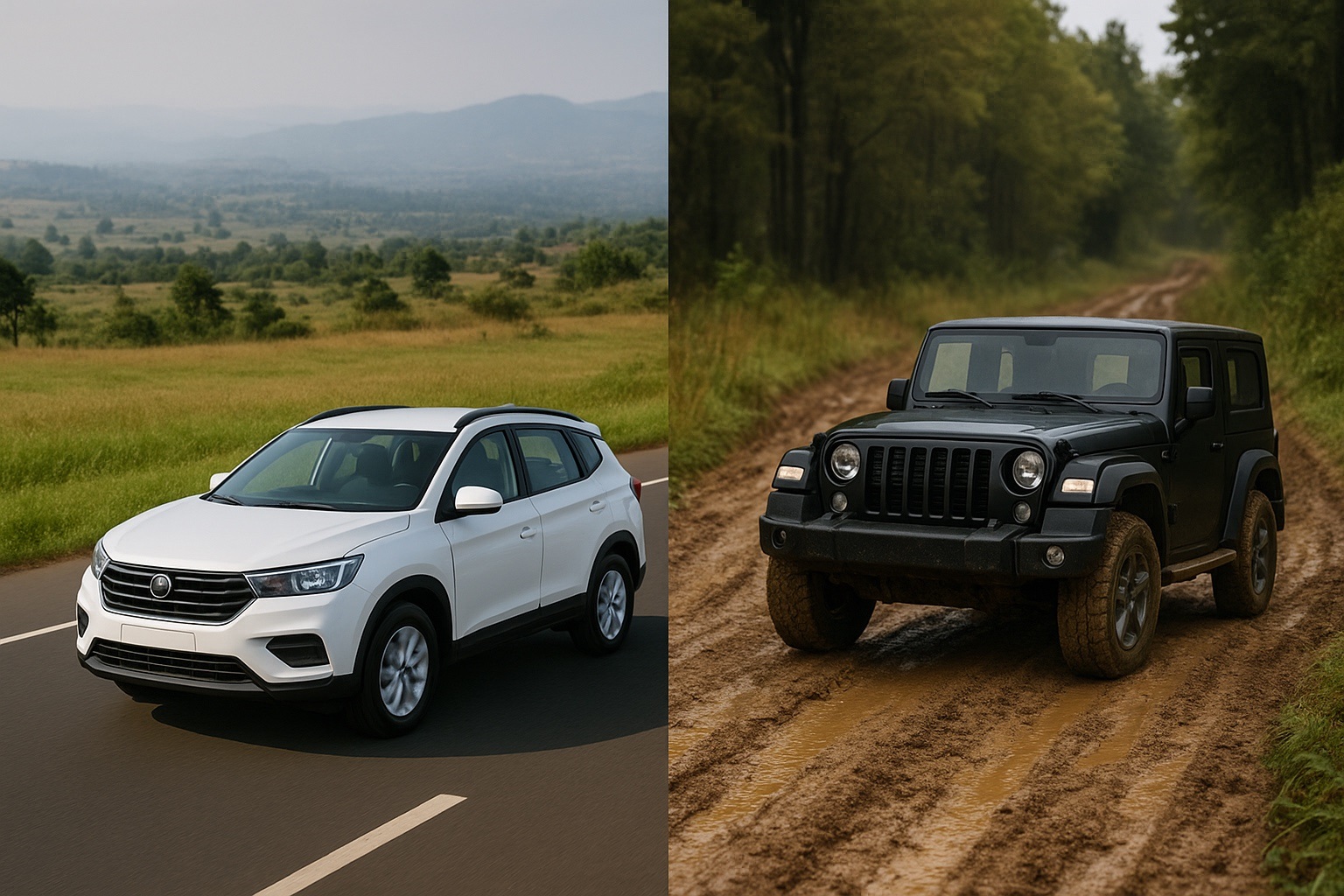
Choosing between a 2WD (two-wheel drive) and a 4WD (all-wheel drive) car in India comes down to one simple question: what will you actually do with the vehicle? Both drivetrains have clear advantages and compromises. Below is a practical guide to help you decide — considering roads, climate, cost, fuel, maintenance and resale value.
What the terms mean
A 2WD sends engine power to only two wheels — usually the front. A 4WD (four-wheel drive) sends power to all four wheels, either full-time or on demand. Some manufacturers also use the term AWD. For most Indian use cases, AWD systems provide better grip on slippery roads but are usually less rugged than traditional 4WD systems designed for off-roading.
Where 2WD makes sense
City driving and smooth highways are the natural habitat for 2WD cars. They are lighter, simpler and usually cheaper to buy. With fewer mechanical parts, they are easier to maintain and have lower service costs. Fuel efficiency is also better because power is transferred to fewer wheels, reducing drivetrain losses — an important factor with today’s fuel prices.
If your daily routine involves commuting inside a city, dropping children to school, office travel, shopping trips or occasional highway drives on well-maintained roads, a 2WD car is more than enough. These vehicles also tend to offer better ride comfort and handling because manufacturers focus on on-road performance rather than off-road ability.
Why choose a 4WD
A 4WD system shines whenever traction becomes critical. If you live in hilly states such as Himachal Pradesh, Uttarakhand or parts of the Northeast, or if your daily routes include rural or unpaved roads, the extra grip from all four wheels provides safety and confidence. People who enjoy off-roading, adventure travel, farming or towing will also prefer 4WD.
4WD vehicles usually offer higher ground clearance, stronger suspension and sturdier construction. These features are extremely useful when dealing with potholes, broken village roads or flooded stretches during the monsoon. They also carry a rugged image that appeals to many buyers, which often helps with resale value — especially in regions where capability is valued over comfort.
Trade-offs to consider
Cost: 4WD models cost more. The drivetrain adds hardware, and these variants often come with larger engines, pushing up the on-road price and even the insurance premium.
Fuel and running costs: 4WD systems typically consume more fuel because they are heavier and have more moving parts. Components such as transfer cases and additional differentials also mean slightly higher maintenance expenses over time.
Weight and handling: A 4WD vehicle is heavier and may not feel as quick or agile as a lighter 2WD version in tight city traffic.
Resale: In large metro cities, demand for 4WD may be limited to niche buyers. This means a 2WD hatchback or SUV may sell faster. But in hill regions and rural belts, resale for 4WD vehicles is often stronger.
Practical tips before buying
· Match your drivetrain to your location and daily route. If your terrain includes steep inclines, gravel, mud or waterlogging, lean towards 4WD.
· Consider AWD if you want better grip but do not need hardcore off-road capability.
· Look at real-world fuel economy from owners, not just manufacturer figures.
· Think local resale trends — what do buyers in your area typically look for?
· Check service network support for 4WD parts if you live away from big cities.
Conclusion
For most Indian drivers, 2WD is the practical and economical choice, offering lower costs and easier maintenance. Choose 4WD if you regularly face challenging terrain, drive in hilly areas, or need serious traction and durability. The best drivetrain is simply the one that fits the roads you actually use — and the lifestyle you lead.