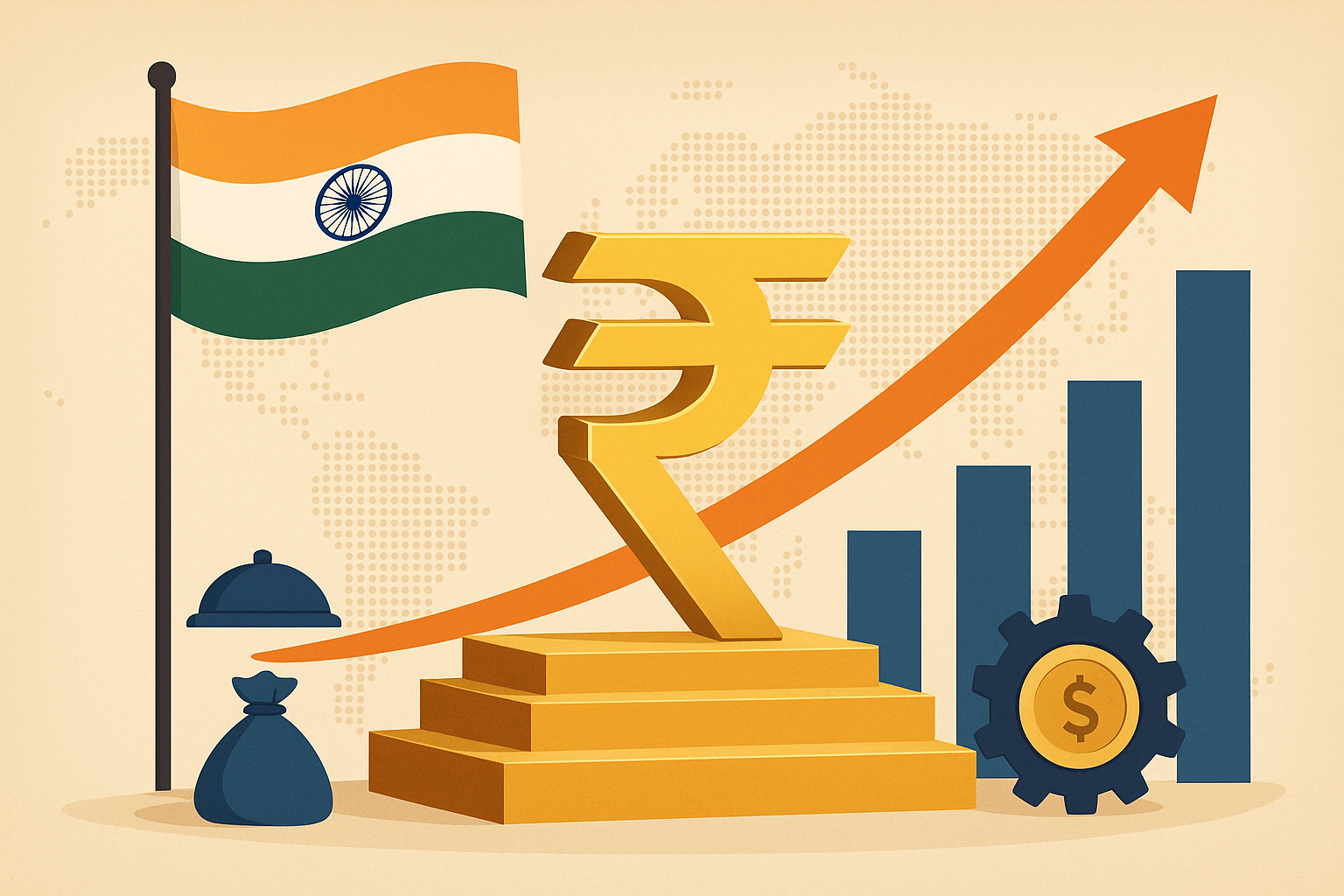
A New Wave of Economic Momentum
India’s economic engine is revving up, and one of the strongest accelerators in this growth story is the latest wave of GST reforms. Popularly referred to as GST 2.0, the updated tax framework is designed to simplify the system, reduce the burden on consumers, and encourage businesses to expand with greater confidence. With households spending more and companies experiencing relief in input costs, these reforms are contributing to a renewed phase of consumption-driven progress.
Simplifying the Tax Structure
One of the standout features of GST 2.0 is the shift from a cluttered multi-slab system to a much cleaner two-rate structure. Essential and mass-consumption goods now attract a 5% GST, while most other items fall under a simplified 18% standard category. High-end and sin goods continue to be taxed at elevated rates, ensuring the system remains equitable.
This rationalisation is aimed at reducing confusion, easing compliance, and promoting a more transparent tax ecosystem.
Relief for Households Across India
Consumers are experiencing some of the most immediate benefits. Lower tax rates on essentials—ranging from basic groceries and medicines to household appliances and fabrics—translate into lower monthly expenses.
This increased affordability provides families with better financial breathing room, enabling them to redirect savings towards education, home upgrades, insurance, travel, or long-term financial planning. For millions, GST 2.0 is not merely a technical reform but a meaningful improvement in day-to-day living.
A Boost to Businesses and Industry
The reforms are equally impactful for businesses. With reduced taxation on raw materials and commonly used goods, input costs across manufacturing, retail, real estate, and consumer goods sectors are expected to decline.
Lower costs can support improved profit margins, fuelling expansion projects and encouraging companies to invest in hiring, production, and innovation. As consumption rises, business confidence naturally strengthens, creating a cycle of sustained economic growth.
Supporting Domestic Economy at a Crucial Time
With global markets facing slowdowns and uncertainties, India has strategically shifted its focus towards domestic demand. GST 2.0 reduces the tax burden on essential consumption, helping families maintain their purchasing power even in volatile economic environments.
This inward-focused strategy positions India to grow independently, with a strong foundation built on local consumption and business resilience.
Empowering Small and Medium Enterprises
Small and medium enterprises—one of India’s largest employment generators—stand to gain significantly.
Simplified compliance, lower taxation on key inputs, and clearer filing norms help SMEs operate more efficiently.
As these businesses recover and expand, they will contribute meaningfully to job creation, improved rural incomes, and greater economic participation beyond urban hubs.
Navigating the Trade-Offs
In the short term, the government may experience lower GST collections, a natural consequence of reduced tax rates.
However, the expected increase in consumption, coupled with improved compliance and broader formalisation, is likely to balance this over time.
The long-term goal is clear: a wider tax base, reduced evasion, and a growth-oriented tax structure that benefits both households and industry.
Road Ahead
The real success of GST 2.0 will depend on how consumers and businesses use the opportunity.
If households channel their savings into productive goals and businesses reinvest their gains into expansion, the reforms could become a catalyst for a decade-long phase of economic acceleration.
Handled wisely, GST 2.0 can transform tax rationalisation into a broader movement of sustained, inclusive growth.
Conclusion: A Chance to Shape a Vibrant Future
India is at a defining moment in its economic journey. GST 2.0 is more than a tax update—it is a strategic opportunity to strengthen consumption, empower families, and encourage businesses to grow with renewed confidence. As the reform unfolds, the hope is that it sets the stage for long-term stability and a stronger, more vibrant Indian economy.
(The writer, as Founder and Chief Financial Coach of PlantRich & Vama PlantRich, has coached 5,000-plus corporate professionals in rewriting their money story)