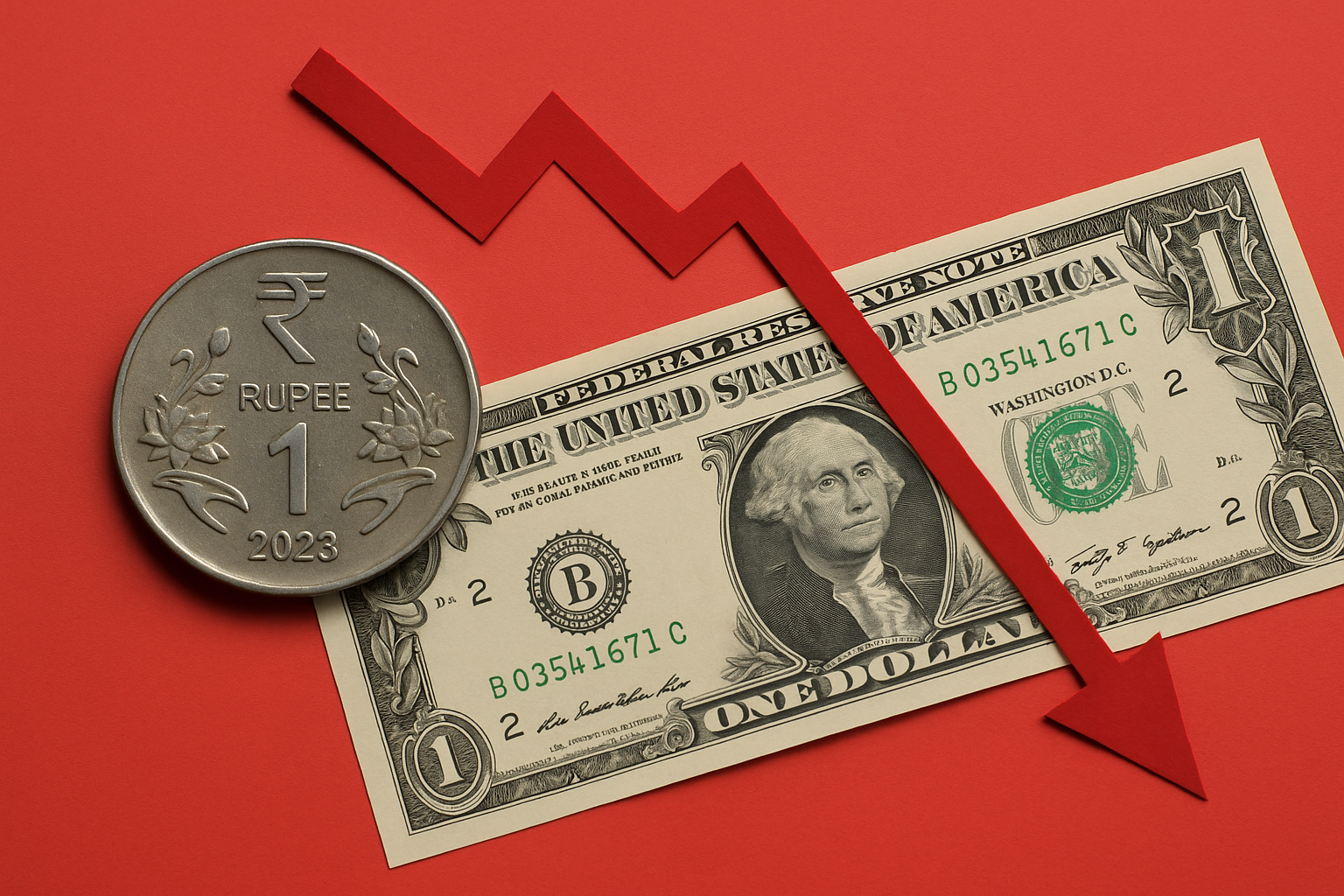
Imagine you have a chocolate. Your friend has a biscuit. If earlier one chocolate could get you one biscuit, but now your friend asks for two chocolates for one biscuit, that means your chocolate has become weaker. This is exactly how the rupee and the dollar work.
The rupee is India’s money. The dollar is America’s money. When we say the rupee is falling, it simply means that we now need more rupees to buy one dollar than before.
For example, if earlier Rs 70 bought 1 dollar and now Rs 89 is needed, it means the rupee has become weaker.
Let us understand this in the easiest way possible.
Why do countries need dollars?
India buys many things from other countries such as crude oil for petrol and diesel, mobile phones and electronic parts, medicines, machines and fertilisers. Most of these things are paid for in dollars, not rupees. This means India must keep buying dollars all the time.
When many people want dollars, the price of the dollar goes up. And when the dollar goes up, the rupee automatically looks weak.
Why is dollar so strong?
The dollar is like the most trusted money in the world. When global troubles happen such as wars, pandemics, or economic problems, big investors move their money to the US because it feels safer.
When more people want dollars, the dollar becomes stronger, and weaker currencies like the rupee fall behind.
What makes the rupee fall?
There are a few simple reasons.
High oil prices: India buys most of its oil from other countries. When oil becomes expensive, India needs more dollars to buy the same amount of oil. This puts pressure on the rupee.
Foreign investors taking money out: When foreign investors pull their money out of Indian markets and take it back to the US, they change rupees into dollars. This again increases the demand for dollars.
Stronger US economy: When the US economy is doing well and paying high interest on savings, people prefer to keep money in dollars instead of rupees.
Trade gap: India often buys more goods from other countries than it sells to them. This means more dollars go out than come in. This weakens the rupee.
Is a falling rupee always bad?
Not always. It is like a coin with two sides.
On the bad side, petrol and diesel become costlier. Flights, foreign education, and imports become expensive. Inflation rises because companies pay more for imported goods. This affects the common person because daily items become more expensive.
On the good side, Indian goods become cheaper for foreigners. Exports like software services, medicines, clothes and seafood become more attractive. Exporters earn more rupees for every dollar they get. So while shoppers may suffer, some businesses actually benefit.
Can govt stop rupee from falling?
The government and the Reserve Bank of India try to control the fall, but they cannot fully stop it. The RBI sometimes sells dollars from its reserve, raises interest rates, and controls the flow of money.
But the rupee is also affected by global events, which India cannot control on its own.
Does this affect your daily life?
Yes, even if you never touch a dollar.
When the rupee weakens, petrol prices may rise, cooking gas becomes costlier, mobile phones and electronics become more expensive, school and college fees abroad shoot up, and online subscriptions paid in dollars cost more. So even without travelling abroad, you still feel the effect in your wallet.
Will rupee ever become stronger again?
Currencies keep going up and down like a see-saw. The rupee can become stronger if India sells more goods to the world, oil prices fall, foreign investors bring money back, inflation is under control, and the economy grows steadily. So yes, it can recover, but it takes time.
A simple way to remember this
Think of the rupee as a student and the dollar as the teacher in a classroom. Some days the student performs well, some days not so well. Right now, the rupee is having a weak phase, but that does not mean it will always stay weak.
The big takeaway
A falling rupee means we pay more for things from abroad. It happens because of oil prices, foreign money movement, and a strong dollar. It hurts people who import, travel, or study abroad. It helps exporters and companies that earn in dollars. The rise and fall of the rupee is normal in a global economy.
So when you hear on the news that the rupee has hit a new low, just remember the chocolate and biscuit example. It simply means our money is buying less of the world’s strongest money right now.
[The writer has a keen interest in business and the dynamics of stock markets]