PANAJI
For over 50 years, a Mumbai-based choir, which includes a number of Goan performers, has been putting India firmly on the global map of choral music, bringing laurels and much acclaim for the country.
The Stop-Gaps Choral Ensemble conducted by Alfred J. D'Souza will present a performance of ‘The Day He wore My Crown’, the Resurrection Story in song created and arranged by David H Clydesdale, and other sacred choral works in Goa at the St John the Baptist Church, Pilerne (February 20 at 6.30 pm); Dasya, Porvorim (February 21 at 6.30 pm); and Our Lady of Rosary Church, Navelim (February 22 at 6.30 pm).
“This is our third performance in Goa, the first being a performance of 16 ‘Ave Marias’ in 2016, and we performed in different churches in Goa, including the Basilica of Bom Jesus. This was commissioned by the Redemptorist priests to commemorate 100 years of The Mother of The Perpetual Succour Icon being presented to them by the Pope,” said D’Souza.
“Our second performance in Goa was at the Monte Festival in February 2020.”
“The programme that we are now presenting in Goa this month is a Lenten outreach which has been successfully performed in various churches in Mumbai and Pune.”
“Since Goa is a centre for music, art and culture, and several of our singers have their roots in Goa, it was therefore decided to bring this concert here. As with our past performances, we look forward to packed churches and a very appreciative and discerning audience.”
“Our Stop-Gaps message to the Goan audience is to continue upholding their culture and their appreciation for good, classical music.”
THE ORIGIN
When contacted, Alfred J. D’Souza, Chairman & Music Director of The Stop-Gaps Cultural Academy, Mumbai, said The Stop-Gaps Choral Ensemble began in December 1972 in a little hamlet in Chennai called ‘Chinnamalai’ or Little Mount,
“The Stop-Gaps Choral Ensemble was born out of a need to assist locals whose livelihoods and existence were washed away by torrential rains & perilous floods. A motley band of people from various socio-economic and cultural backgrounds, ages and beliefs was mobilised into making music to raise funds to alleviate the sufferings of the washermen community who lived on the banks of Adyar River,” said D’Souza.

“Who knew then that the dedication and perseverance that stemmed out of this endeavour would go on to further support various charitable causes and establish a Choir that would lead to opportunities for international recognition, putting India firmly on the global map of choral music, bringing laurels and much acclaim for the country.”
“Thus, The Stop-Gaps Cultural Academy has forged on, over the past 42 years in Mumbai, to produce musical events of the highest quality.”
When asked about the name ‘Stop-Gaps’, D’Souza said he chose the name because it brought together people, bridging the generation, socio-economic, cultural and religious gaps, all with the intention of making music together and raising funds for the underprivileged during the tsunami of 1972.
THE PERFORMANCES
Having established its credentials on the Mumbai music scene and going on to perform in various major cities of India, The Stop-Gaps Choral Ensemble has performed in various parts of the world, including France, Germany, Italy, Belgium, and Northern Ireland.
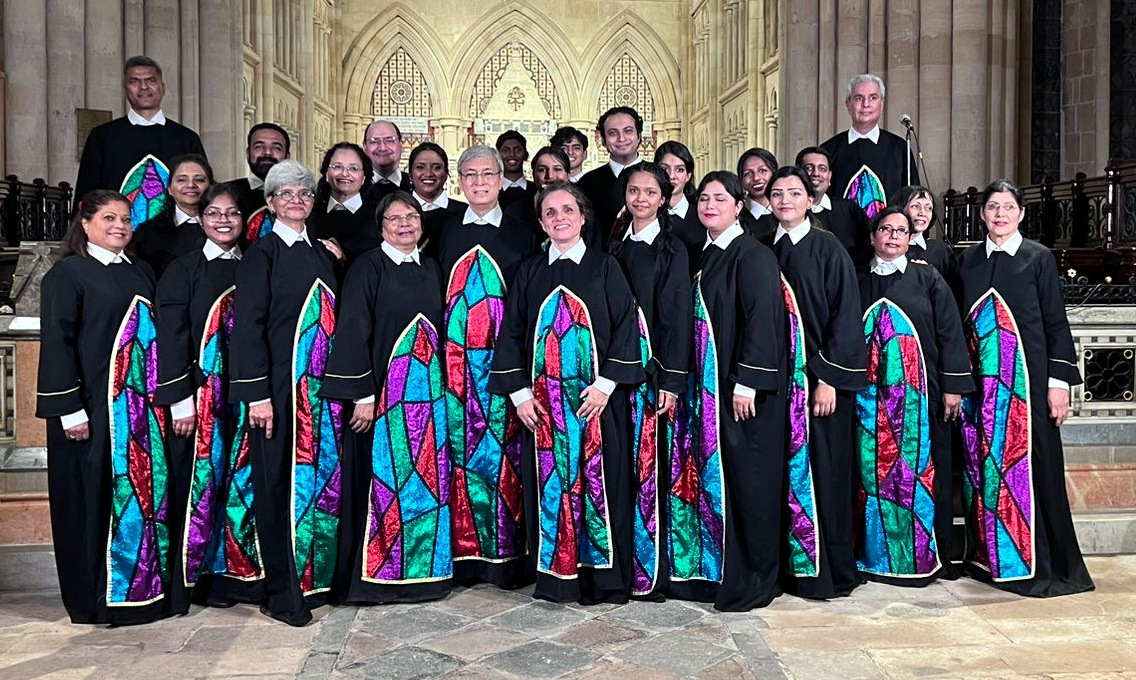
"The Stop-Gaps Choral Ensemble has represented India at international choir festivals and competitions, besides prestigious events which included singing at the Vatican for the late Pope John Paul II, participating as India's representatives at the closing celebrations of Israel's independence in December 1998, and performing as well at Manger Square in Bethlehem on Christmas Eve. Besides, this is the first Indian choir to have sung in China,” said D’Souza.
“Through international exposure, The Stop-Gaps Choral Ensemble has truly lived up to its motto of ‘Bridging The World With Song’."
THE PARTICIPANTS
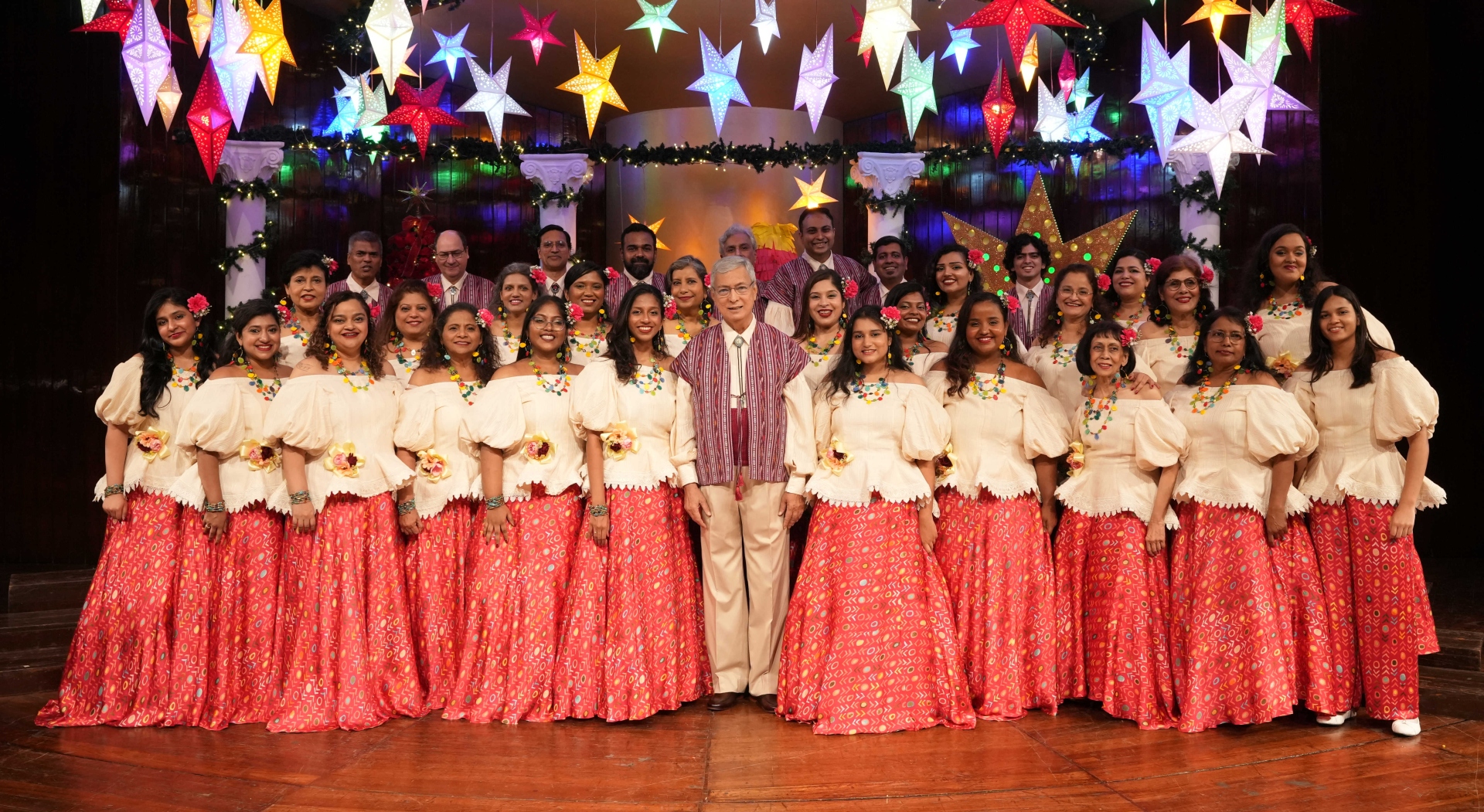
The Stop-Gaps Choral Ensemble consists of 30 singers, with women numbering twice the number of men.
“Presently, we have 22 women singers and eight men. Since we concentrate on 4-part harmony, the only accompaniment we use is a pianist and occasionally a drummer for rhythm, besides singing a cappella,” said D’Souza.
“Our choir has a mixture of choristers belonging to Christian, Parsi, Hindu and Muslim faiths.”
THE ACHIEVEMENTS
D’Souza said The Stop-Gaps Cultural Academy has blazed the trail with its Festival of Festive Music in December for the last 42 years, the longest-running festival at the NCPA which draws choirs from all over India.
“The Academy has also pioneered the ‘Young Talent’ & ‘Budding Brigade’ concert series in collaboration with the NCPA to provide a platform for upcoming young musicians, as well as the Annual Children's Choir Festival 'Younger Than Springtime' which has spurred on the dedication and drive in young artistes to reach high professional standards and go further in their careers.”
“It is now our vision to curate an international choral festival in India, both in Mumbai and in Goa,” added D’Souza.