Govt writes to oil companies to bring it on par with 'urban' Goa
PANAJI
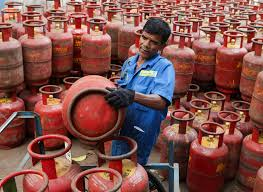
Even as the government moves to steady fuel supplies amid escalating tensions in West Asia, a quieter but more acute crisis has taken hold in parts of Goa, where residents in at least four villages are waiting as long as 45 days merely to book a cooking gas refill.
In Panchwadi, pockets of Usgao, Sancoale and Pernem, the rhythms of daily life have begun to bend around uncertainty. Outside LPG agencies, queues stretch and tempers fray, as residents return repeatedly, hoping for an opening in a system that allows bookings only through OTPs or mobile applications.
The disruption, officials said, is less from scarcity than from classification.
Sources informed The Goan that while Goa, as a whole, is categorised as urban, where consumers are allowed to book refills every 25 days, these villages fall under the “gramin” category, where the interval extends to 45 days.
“There is a panic situation as the refill booking notification for ‘gramin’ customers is 45 days. Although Goa is categorised under urban, where the refill gap is 25 days, these villages are placed under the rural bracket. Consumers have already expressed serious difficulties, and inputs indicate rising unrest as cylinders are not getting booked,” the source said.
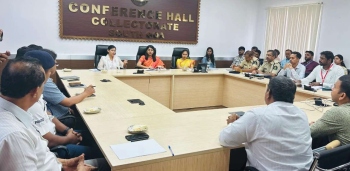
Local distributors, facing mounting pressure from residents, have approached Civil Supplies authorities in their respective areas seeking intervention. The State government has, in turn, written to oil marketing companies, seeking an immediate rationalisation of the booking cycle so that these areas are brought in line with the rest of Goa.
On paper, however, the supply chain appears intact. As of March 19, domestic LPG stocks across distributors stood at about 27,369 cylinders. With an opening stock of 25,535 cylinders and fresh receipts of nearly 13,605, availability rose to over 39,000 cylinders before routine dispatches of 11,771 units.
Commercial supplies, too, showed continuity, though under visible strain. Stocks opened at 56.421 metric tonnes -- roughly 2,971 cylinders -- and were supplemented by 18.323 MT in fresh receipts, taking total availability to nearly 3,934 cylinders.
Officials acknowledged that only about 20 per cent of commercial LPG demand is currently being met, wherein the hospitality sector has to operate on sharply reduced allocations.
“If a hotel consumes 10 cylinders in a month or over 25 to 45 days, it will now be provided only two cylinders for that period as per government norms,” the source said.