GSPCB orders output cap pending audit of air pollution systems; strict timeline issued to implement tighter norms

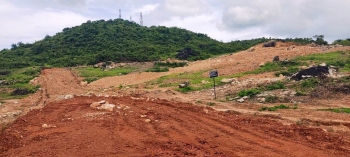
The Cuncolim Industrial Estate, where prolonged complaints over odour and pollution have led to new compliance measures for a fish meal plant.
MARGAO
In a significant regulatory move, the Goa State Pollution Control Board (GSPCB) has directed M/s United Marine Products to restrict fish meal production at its Cuncolim Industrial Estate facility to 1,200 tonnes per month until a comprehensive technical audit is conducted.
The Board stated that production will remain capped until the audit verifies the efficiency of the air pollution control systems installed at the plant.
The GSPCB has issued a series of mandatory directions to the company, requiring submission of an Action Taken Report/Compliance Report, along with proposed timelines, within seven days of receiving the order.
The Board has cautioned that failure to comply satisfactorily will invite stringent legal action under the provisions of the Air (Prevention and Control of Pollution) Act, 1981, without any further notice.
The GSPCB has made it clear that non-compliance with these directions will compel the Board to initiate legal proceedings under applicable environmental laws.
With the committee’s findings now formally adopted, the spotlight remains firmly on the Cuncolim-based fish meal unit to demonstrate compliance within the stipulated timeframe.
Expansion under scrutiny
The directions follow recommendations made by a committee constituted by the GSPCB in November 2025. The panel was tasked with reviewing the consents granted to M/s United Marine Products for expansion — specifically those dated July 24, 2024 and July 29, 2025 — in comparison with the plant’s existing operational capacity.
The committee examined the approved production capacity versus actual capacity, adequacy of the Effluent Treatment Plant (ETP), measures adopted for disposal of treated water, odour control systems in place and overall environmental compliance following expansion.
The committee’s report and recommendations have since been accepted by the Board, prompting the latest directives.
Strict handling, transport norms
Among the key recommendations issued to the company, fish must be transported only in insulated vehicles and all wastewater generated during transportation must be discharged at the plant and treated in the ETP. The company has also been advised to consider creating a standby raw material storage facility of adequate capacity.
The Board has directed that only fresh fish must be processed and that processing of spoiled or decomposed fish is strictly prohibited.
Additionally, all vehicles exiting the premises must be thoroughly washed in a designated contained area, and a fully operational wheel-washing system must be used before vehicles leave the facility. The unloading area must be equipped with a berm to prevent runoff, and all wastewater must be channelled to the ETP for treatment.
Enhanced air pollution controls
The Board has also ordered improvements in the plant’s odour and emission control systems. At present, gases captured through the roof suction hood are passed through a water scrubber before being vented into the atmosphere.
Under the new directions, emissions must be routed through biofilters before release, and the biofilter system must include an additional layer of activated charcoal above the water sprinklers to enhance purification efficiency.
====
Stricter monitoring, safeguards mandated for firm after review
MARGAO: Among its recommendations, the Goa State Pollution Control Board (GSPCB)-constituted panel has sought the installation of an Online Effluent Monitoring System (OEMS) for continuous monitoring of effluent quality to ensure compliance with prescribed treatment standards.
M/s United Marine has been further told to conduct a performance evaluation of the ETP to verify its functioning, through the Board.
While directing the company to assess the impact of water misters installed inside the production area with respect to potential concerns which may lead to corrosion of electrical and electronic equipment, the GSPCB has further directed the management to explore the possibility of utilising natural gas as fuel for boilers during initial firing and to undertake production activities preferably during daytime.
“Provide an additional water scrubber for the boilers within two months, to effectively capture the emissions generated,” the GSPCB further directed.
====
Manpower crunch may hinder GSPCB's enforcement push
MARGAO: The question of enforcing the directions issued to the fish meal plant at Cuncolim may soon pose a serious challenge for the Goa State Pollution Control Board (GSPCB).
At present, the GSPCB lacks both the manpower and the infrastructure at the Cuncolim Industrial Estate to ensure strict enforcement of pollution control norms.
While the Board has issued a series of directives to M/s United Marine Products — including instructions to use only fresh fish in the plant and to transport fish to the factory exclusively in insulated vehicles — these measures are likely to address the problem of foul odour only if they are effectively enforced.
When asked about the enforcement mechanism in place for M/s United Marine Products, GSPCB Chairman Levinson Martins stated that the Board is considering deploying dedicated personnel at the Cuncolim Industrial Estate to monitor compliance with pollution control norms. “The Board is considering a proposal to deploy manpower at the Cuncolim IDC,” he said.