PANAJI: The Goa government will place its AI Draft Policy in the public domain on May 4 for a 15-day consultation period, inviting feedback from citizens, students, industry stakeholders, and experts. The final policy is set to be implemented within 100 days, IT Minister Rohan Khaunte said today.
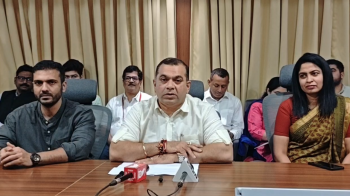
Briefing the media after a stakeholder meeting in Panaji, Khaunte said the policy aims to position Goa as India’s responsible AI and applied innovation hub, with a strong focus on skilling, governance, and citizen-centric applications.
“The draft policy will be open on the state portal and IT website from May 4 for 15 days. We want inputs from everyone, students, citizens, experts, and industry, so that we build a comprehensive and future-ready framework,” he said.
Khaunte stressed that the government is working to meet a commitment made in the Assembly. “Within 50 days, the draft policy was prepared. After public consultation, we will ensure that within 100 days, Goa has one of the best AI policies in the country,” he said.
A key pillar of the policy is workforce readiness, with the government targeting universal AI certification for technical graduates by 2028.
“Our goal is that by 2028, all IT and technical graduates should be AI-certified. We are building an AI-skilled youth force,” Khaunte said.
He added that exposure to AI will begin early in schools. “We are introducing AI learning from Class 6 onwards and targeting at least 20% participation from women and youth, aiming to build a skilled workforce by 2030.”
Reiterating that the policy is not about job displacement, he said, “Technology must serve people, not replace them. We want to create opportunities, not eliminate jobs, while ensuring a human touch in advancing technologies.”
The policy also proposes expanding AI-driven public services, including multilingual chatbots and local language models.
“We want governance to be accessible in Konkani and Marathi as well. Citizens should be able to interact with government systems in their own language through 24x7 AI-enabled platforms,” Khaunte said.
He added that AI could be deployed across sectors such as tourism, agriculture, healthcare, and education to improve service delivery and ease of living.
The draft framework also addresses emerging risks such as deepfakes and harmful online content.
“If a deepfake or harmful content is affecting a person’s life, the government must have mechanisms for takedown, accountability, and victim support. Citizen safety, especially for women, will be non-negotiable,” Khaunte said.
Khaunte said the policy is designed to encourage startups and the industry to adopt and build AI solutions in Goa. “We want industry to see Goa as a space for AI innovation. With inputs from academia and industry, this policy will drive growth across sectors,” he said.
Separately, the IT Department has proposed restricting social media usage for children below 16 years and will submit its recommendations to Union IT Minister Ashwini Vaishnaw.
“The report is ready. We are not talking about a ban but a restriction on harmful platforms. The idea is to promote educational tools while limiting exposure to platforms that may negatively impact young users,” Khaunte said.
He noted that the proposal is based on consultations with educational institutions and parents. “Parents are facing challenges in regulating usage. A policy framework will help create a healthier digital environment for children,” he added.
The state government will seek necessary amendments at the central level to support such measures.
Khaunte reiterated that the broader vision is to align technology adoption with social good. “We want Goa to embrace the future with confidence and clarity, ensuring that AI improves daily life while safeguarding people’s interests,” he said.