‘The Music Stopped, But We Were Still Dancing...’, an exhibition of archival photos, music tracks and videos, curated by noted photographer Prashant Panjiar, pays homage to some of Goa’s noted jazz musicians from the early Jazz and Hot Dance era
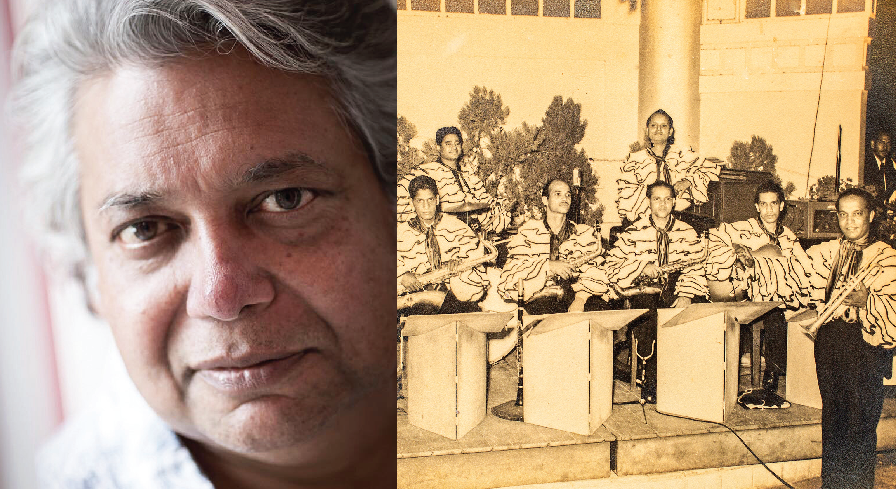
T he Music Stopped, But We Were Still Dancing... will catapult you straight back in time to the age of vibrant jazz music and the lively dance scene. Some of the names and faces you may recognise, especially if you are a jazz aficionado, others not so much. Yet as you scan the pictures, read their tales, and listen their music, it feels like you almost knew them in person. Almost.
Focusing on some of the most prominent Goan musicians in the Indian Jazz scene between 1935-70, the exhibition, which is part of the ongoing Serendipity Art Festival at Adil Shah Palace, Panaji, consists of archival photos from family albums, recordings and videos, that bring the olden days back to life once more. These have been painstakingly collected and curated by noted photographer Prashant Panjiar who has worked on the project for the past five to six month.
Having made Goa his home four years ago, Panjiar strives to do one major project that has something to do with the state every year and was previously the curator director of the Sensorium at Sunaparata- Goa Centre of the Arts, Altinho apart from doing a few shows at the last edition of Serendipity Art Festival, Panjiar once again chose to focus on Goa for this year's edition. "I was speaking with Naresh Fernandes about different ideas when I learnt about his book Taj Mahal Foxtrot: The Story of Bombay's Jazz Age. The Goan musicians on the jazz scenes is just one chaper in the book and I thought this could be developed into a great exhibition. Naresh of course was very generous with all the material and contacts," says Panjiar. Panjiar adds that he has always been fascinated with looking at photography in conjunction with other arts. "For the Sensorium for instance, I focused on photography looking at literature, photography looking at cinema etc. This particular exhibition on the other hand, was a great opportunity for photography looking at music. So it's not just photography. It's memorabilia, music and cinema," he says.
The exhibition, which Naresh Fernandes has provided the text for, begins with an introduction on how Jazz took roots in the country and slowly made it's prevalence felt at prominent night clubs as well as influencing Indian film music.
Viewers then come face to face with jazz musicians like Frankie Ferdinand, Chic Chocolate, Chris Perry, Lorna Cordeiro, Braz Gonsalves, Jazzy Joe Pereira, Johnny Baptist, Toni Pinto, Francis Furtado, Lucille and George Pacheco and Sonny Lobo.
And come away with enriching experiences and learnings. Lucille for instance is credited with introducing the Hindi film industry to the first electronic instrument the Solovox. While Antonio Xavier Vaz or Chic Chocolate had an interesting practice which he followed regularly in emulating his hero Louis Armstrong.
Their many contributions to the Indian film industry also mind mention with some recordings of the tunes also available for people to listen in like Bar Bar Dekho from the film Chinatown for which Frankie Ferdinand arranged the music as an assistant to music director Ravi. His interesting encounter with Mahatma Gandhi and how it influenced his music thereon also makes for an interesting anecdote.
Getting in touch with the families of these musicians was not easy, admits Panjiar, and a few did have some reservations initially. But all worked out well. Speaking about a sentiment held by some people that Goan musicians haven't gotten their due especially in Bollywood, Panjiar states that there are always cases of this sort. "Some artists become famous in their time. Some like Van Gogh get recognition after their death. But an effort has to be made by all of us to bring out these things that are not known to a lot of people. That's what Naresh's book did and what this exhibition is aiming to do," he says. "This exhibition only focuses on the band leaders but there are thousands of other musicians out there with thousands of untold stories."
And Panjiar has made some interesting observations about the exhibition ever since it went up on December 15. "Those who are from Goa relate to it because it is their own culture while those who are visitors to the state and don't know anything about Goa relate to it because of the many Hindi Bollywood songs. Many others just come because they enjoy the music. Thus the exhibition is appealing to a lot of different people," he says.