


MARGAO
He came, he saw and returned back but not before handing out a promise to work out an action plan to bring a turnaround to the deteriorating condition of the River Sal and restore Salcete’s lifeline to its pristine glory.
However, this is not the first time the WRD Minister has spoken about restoring the river. On several occasions in the past four years, Shirodkar has raised alarm over the worsening state of the river and urged key stakeholders “ including the Public Works Department and the Sewage Infrastructure Development Corporation of Goa Ltd “ to collaborate on a comprehensive plan to halt the rampant discharge of sewage into the river.
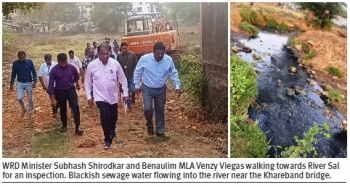
The Minister, accompanied by officials, was back for an inspection of the river upon a request from Benaulim MLA Venzy Viegas. During the visit, Shirodkar witnessed black-coloured water flowing into the river at Khareband, prompting renewed assurances that an action plan would be worked out to restore the river and bring back Salcete’s lifeline to its pristine state.
The latest inspection has once again pushed the issue of river contamination to the centre stage. Yet a critical question remains: Can the WRD bring about a turnaround in the river’s health when raw sewage from Margao continues to flow into it round the clock?
Each time the Minister has been questioned by the media about the status of the rejuvenation project, he has reiterated the need for the Public Works Department and the Sewage Infrastructure Development Corporation to expedite work on the Margao sewage infrastructure to plug multiple discharge points along the river.
Consider this: On January 21, 2023, when Shirodkar launched a multi-crore project to rejuvenate the river along the Verna-Nuvem stretch, including a barrage near the Margao wholesale fish market, he had also flagged concerns about sewage being dumped into the river.
About a year and a half later, in mid-December 2024, the minister returned to the city to inaugurate WRD works and advised stakeholders to set December 2025 as the deadline to stop the discharge of sewage into the river as part of the clean-up effort.
Six months later, on July 11, 2025, during another visit to Margao, Shirodkar repeated his call for stakeholders “ including the PWD, SIDCGL and local representatives “ to come together and prepare an action plan to plug the sewage flow.
Now, with the December 2025 deadline long past and sewage continuing to enter the river at multiple points, fresh questions are being raised. Did the WRD Minister convene any joint meetings with stakeholders “ including the PWD, WRD, SIDCGL and MLAs from Margao and Fatorda “ to address the issue? If yes, was any concrete action plan put in place to stop the discharge of sewage into the river? Many a question remains unanswered as there’s no stop to the discharge of raw sewage in the river from Margao.
Khareband makeover contrasts with sewage flow downstream
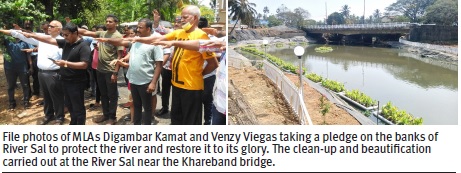
MARGAO: On World Environment Day on June 5, 2022, Benaulim MLA Venzy Viegas, along with his Margao counterpart Digambar Kamat, took a pledge on the banks of River Sal to restore the waterway.
The mission, launched at the initiative of the Benaulim MLA, carried a clear message ” to protect Salcete’s lifeline and restore the river to its pristine glory.
Almost four years later, questions are being raised over whether the Save River Sal Mission has truly achieved its objective. While a small stretch of the river around the Khareband bridge has been beautified with whitewashing, illumination and de-weeding, the work has largely added aesthetic value to the area and helped curb open defecation along the banks.
However, a few metres downstream, blackish water continues to flow unabated into the river, raising concerns that cosmetic changes alone will do little to rejuvenate the water body. While the beautification drive may have addressed open defecation in the area, the rampant discharge of raw sewage into the river at several points remains a major unresolved issue.
When the matter was brought to the attention of Water Resources Department Minister Subhash Shirodkar, he said that the Public Works Department (PWD) and the Sewerage and Infrastructural Development Corporation of Goa Limited (SIDCGL) are working on implementing vacuum technology to tap sewage flowing from low-lying areas and prevent it from entering the river.
Fatorda sewage trunk line work nears completion, pollution questions remain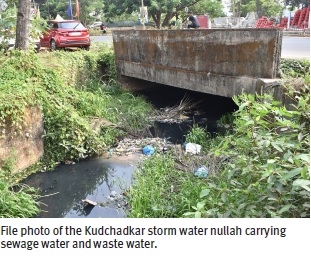
MARGAO: The replacement work on the North Main sewage trunk line passing through Fatorda is nearing completion, a development expected to significantly reduce the discharge of untreated sewage into nearby water bodies and paddy fields along its route.
However, several critical questions remain unanswered. Chief among them is when the storm water nullahs and drains will finally stop carrying sewage and wastewater from the commercial capital into River Sal.
This issue had earlier come up before the High Court during the hearing of the Salpem Lake contamination Public Interest Litigation filed by Navelim resident Antonio Alvares. Although the High Court eventually disposed of the PIL after the concerned agencies submitted undertakings and the court issued certain directions, no clear timeline appears to have been set to ensure that the entire city is connected to the sewage treatment plant.
As a result, concerns persist among residents and environmental advocates over the continued flow of untreated wastewater through stormwater drains into the river system, raising questions about when a comprehensive and time-bound solution will finally be implemented.


