


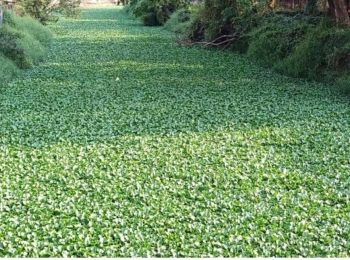
The Cavelossim Panchayat has sought the intervention of the South Goa Disaster Management Authority’s intervention to clear Water Hyacinth from River Sal.
With last year’s experience of massive water hyacinth accumulation along the coast still fresh, the Cavelossim village Panchayat has approached the South Goa district Disaster Management Authority seeking urgent intervention to clear the invasive weed from the River Sal.
Cavelossim Sarpanch Dixon Vaz called on South Goa Collector Egna Cleetus, who also heads the district Disaster Management Authority, urging the administration to direct the concerned departments to undertake de-weeding operations along key stretches of the river.
Drawing the Collector’s attention to the recurring problem, Vaz said large patches of water hyacinth grow along the River Sal, particularly in the Fatorda, Margao, Benaulim, and Navelim stretches. During the monsoon, the thick mats of weed are carried downstream by strong currents and eventually washed into the Arabian Sea, where they accumulate along the Cavelossim“Mobor beach belt.
“Every year, the water hyacinth invades the Cavelossim“Mobor beach belt, causing nuisance and pollution. It becomes an eyesore on the beaches and creates difficulties for traditional fishermen,” Vaz told the Collector.
He pointed out that the weed also tends to choke sections of the river around the Cutbona“Betul stretch, where several water sports operators anchor their boats, making navigation difficult.
Speaking to the media later, the sarpanch said the primary purpose of the representation was to ensure that the authorities undertake systematic de-weeding of the river, especially along the Fatorda“Benaulim“Margao“Navelim belt, which are among the worst affected areas.
“If the river is de-weeded at these points, it will significantly reduce the amount of vegetation and waste flowing into the Arabian Sea and help prevent the nuisance faced by fishermen and tourism stakeholders in Cavelossim,” he said.
Vaz suggested that the operation could be taken up under the district Disaster Management Authority, pointing out that the large volumes of water hyacinth carried downstream during the monsoon pose a serious hazard to fishermen and tourism-related activities along the coast.


