MAPUSA
In a renewed push to strengthen marine aquaculture and create alternative livelihood opportunities for traditional fishermen, the fisheries department has invited applications for fish farming through the cage culture method in the State’s open sea waters.
The initiative is being implemented under the Goa State Agriculture Policy 2020 and aims to promote modern fish farming practices while enhancing fish production along Goa’s coastline.
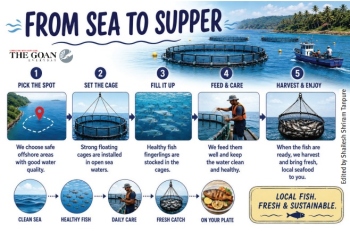
According to officials, the proposed project involves the installation of circular fish cages measuring approximately 10 to 15 metres in diameter and 10 to 15 metres in depth in designated offshore zones identified by the department.
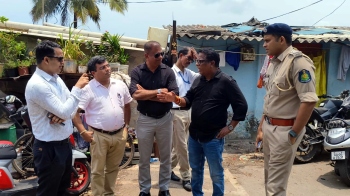
Senior Fisheries Department officials said the project would be executed under strict departmental supervision, with emphasis on sustainable aquaculture practices and environmental safeguards. “So far, we have received five applications under the scheme. Since this is an ongoing initiative, the department has decided to step up awareness efforts and encourage more people to apply,” said Shamila Monteiro, Director of Fisheries.
Officials stated that environmental protection measures and marine biodiversity conservation would be integral to the implementation process.
The department is expected to monitor water quality, stocking density, and waste management to ensure that the activity does not adversely affect the marine ecosystem.
The cage culture method, which involves rearing fish in floating enclosures installed in open waters, has been promoted by coastal States and the Centre as a viable option for increasing seafood production and generating employment in coastal regions.
However, the initiative has faced challenges in Goa in the past. Earlier attempts by the government to popularise cage fish farming reportedly failed to attract significant participation from Goan youth and traditional fishermen.
Industry observers attribute the lukewarm response to factors such as high operational costs, lack of technical expertise, concerns over profitability, and apprehensions regarding maintenance during rough weather conditions.
Despite the setbacks, the fisheries department remains optimistic that growing awareness about marine aquaculture, improved technical support, and government backing could lead to better participation this time.
“We are hopeful that with better guidance, training support, and clearer operational frameworks, more local fishermen and young entrepreneurs will come forward to explore cage culture as a sustainable business opportunity,” another official said.
The department is expected to conduct awareness programmes and provide technical assistance to applicants interested in taking up the activity.