PANAJI
Goa’s beach belt turned into one riot of a chaotic celebration on New Year’s Eve with hundreds of thousands of tourists thronging there to bid farewell to 2025 and ring in the New Year.
Choc‘a‘block traffic in the lanes and by‘lanes of North Goa’s hotspots kept the nearly 3,500 policemen deployed for the day on their toes.
The men-in-uniform were more tending to the crowds to ensure order rather than policing drunken driving and other mundane duties. The Porvorim stretch of NH‘66, already choked by flyover construction, as expected became a major bottleneck.
For residents in hundreds of Goa's villages and towns, particularly from the Catholic community, the New Year began in churches and their open‘air venues with midnight masses. Families exchanged home visits, keeping alive the quieter, local traditions.
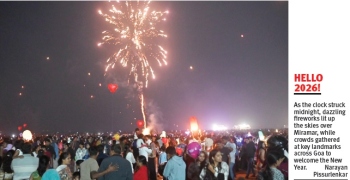
Fireworks lit up the skies at midnight, while traditional dances in villages ran parallel to commercial parties in hotels and nightclubs.
Another New Year hallmark “ the burning of the ‘Old Man’ effigy “ was also seen practiced across towns and villages.
Youngsters crafted figures from hay and old clothes, setting them ablaze at midnight to symbolise the end of the past year and welcoming the new.
Meanwhile, despite the debate and extensive reportage on dwindling tourist numbers, the beach belt in the North told a different story: thousands gathered to watch the last sunset of the year before plunging into revelry.
By nightfall, the sands were transformed into a sea of people at Baga, Calangute, and Anjuna and further up North in Mandrem, Morjim and Arambol.
From traffic snarls to fireworks, trance parties and midnight masses, Goa rang in the New Year with its usual mix of chaos, colour, and tradition.