PANAJI
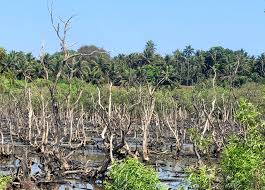
In a major push towards coastal conservation, Goa will undertake restoration of nearly 570 hectares of degraded mangrove ecosystems under the Centre’s MISHTI (Mangrove Initiative for Shoreline Habitats and Tangible Incomes) scheme over the next three years starting 2026“27.
The initiative will be implemented through the State unit of Compensatory Afforestation Fund Management and Planning Authority (CAMPA) following its recent national executive committee meeting, which identified Goa’s significant potential for mangrove restoration. The programme will run till 2028“29.
“During the CAMPA meeting held earlier this month, a total 570ha of degraded mangrove ecosystem is identified for restoration. CAMPA has directed the State to take up the project under MISHTI scheme,” sources said.
Though Goa was not included in the first phase of the scheme, it has now been brought into the programme’s expanded ambit. Officials said the inclusion follows assessments that highlighted the state’s degraded mangrove patches and the urgent need for restoration interventions.
In a parallel move to strengthen protection, the state government has already identified more than 13,000 survey numbers as mangrove conservation zones. These areas have been notified to restrict and prohibit developmental activities in and around mangrove habitats, aiming to prevent further degradation.
MISHTI is a flagship initiative launched by the Ministry of Environment, Forest and Climate Change on June 5, 2023, to restore and conserve mangroves across India’s coastline and salt pan areas. Initially planned for five years (2023“2028), the programme has now been extended till March 2029, reflecting its importance in climate resilience and coastal protection.
For the upcoming phase, CAMPA has earmarked a total budget outlay of around Rs 500 crore for nine coastal states, including Goa, and four Union Territories. The implementation will follow a convergence model, with around 70 per cent of funding coming from CAMPA, while the remaining 30 per cent will be mobilised through schemes such as the Mahatma Gandhi National Rural Employment Guarantee Scheme and other sources.
Under the programme, restoration will be taken up on both forest and non-forest lands through afforestation and reforestation measures. Activities will be executed under State CAMPA using components such as Net Present Value (NPV), along with support from National CAMPA and MGNREGS.
The core objective of MISHTI is to revive mangrove forests by adopting proven practices from India and globally. Mangroves are considered critical coastal ecosystems that act as natural buffers against erosion, storm surges and rising sea levels, while also supporting biodiversity and local livelihoods.