


MARGAO
Chief Minister Pramod Sawant’s assurance that the government will not permit “red category” industries in Cuncolim has offered a measure of relief to residents grappling with pollution concerns in and around the Cuncolim Industrial Estate.
However, the statement has also triggered fresh confusion and debate, particularly among locals who have been protesting against fish meal plants in the area.
While the Chief Minister’s remarks appear to signal a commitment to curb highly polluting industries, a key question remains unresolved: does this stance extend to fish meal units”both the one currently operating within the industrial estate and another proposed outside its limits?
According to sources familiar with industrial classifications, fish meal plants fall under the “orange category” rather than the more heavily regulated “red category”. This distinction has become central to the ongoing controversy, as it suggests that such units may not be covered under the Chief Minister’s stated restrictions. For residents who have long associated fish meal processing with foul odours and environmental degradation, the categorisation offers little reassurance.
“The Chief Minister said red category industries will not be allowed, but fish meal plants are classified as orange category. This leaves us in a dilemma,” said a local resident involved in the agitation. “Our fight is specifically against fish meal plants. If these are still permitted, then what does the government’s assurance really mean for us?”
Concerns have been further compounded by the fact that a new fish meal plant proposed outside the industrial estate has already secured approval from the Goa Investment Promotion and Facilitation Board. This development appears to contradict the broader sentiment of restricting pollution-intensive activities in the region, raising questions about policy consistency and regulatory oversight.
Residents also point out that the Chief Minister’s statement did not explicitly address either the existing fish meal unit within the industrial estate or the proposed facility beyond its boundaries. The absence of clarity has fuelled questions on about whether “orange category” industries”including fish meal plants”will continue to operate or even expand in Cuncolim.
In response, locals are planning to seek answers from Yuri Alemao, MLA of Cuncolim and Leader of the Opposition. “We intend to approach him for clarity on the government’s position. We need to know whether there will be any cap or restriction on fish meal plants in Cuncolim,” the resident added.
As the debate intensifies, the issue highlights a broader challenge for policymakers: balancing industrial development with environmental sustainability and public health. For the people of Cuncolim, the demand is clear”categorisation aside, they want decisive action against industries they believe are contributing to pollution and diminishing their quality of life.
Toxic dump to be cleared from May 1, but rains could halt pace
MARGAO: Chief Minister Pramod Sawant’s announcement that the government will begin transporting hazardous waste from the Cuncolim Industrial Estate starting May 1 has raised hopes that a long-pending environmental issue will finally be addressed.
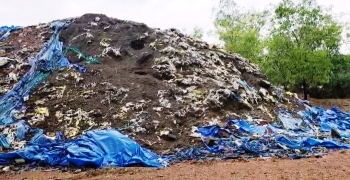
The waste, which has remained at the site for over 15 years, is estimated at around 35,000 tonnes. While the announcement signals a significant step forward, sources cautioned that the operation is unlikely to be completed within a short timeframe. Instead, the transportation process is expected to stretch over several months before the entire stockpile is shifted to the designated landfill at Pissurlem Hazardous Waste Treatment Facility.
Officials and experts have also flagged potential challenges that could delay the operation. Chief among them is the onset of the monsoon season, which may disrupt transportation logistics. As per directives of the High Court, the hazardous waste must be securely covered with tarpaulin sheets during handling and transit”a precaution that has been consistently followed by the Goa State Pollution Control Board over the past decade and a half.
Sources indicated that if the exercise begins on May 1 as planned, it may have to be paused during peak monsoon conditions, with transportation resuming only after the rains subside.


