


FORGOTTEN FILES
The long-pending issue of slum redevelopment and rehabilitation in Goa has once again been pushed to the backburner, with the State Budget 2026“27, presented by Chief Minister Pramod Sawant, making no mention. Sources now indicate that any concrete action on slum identification and redevelopment is likely to be taken only after the completion of the Census 2027.
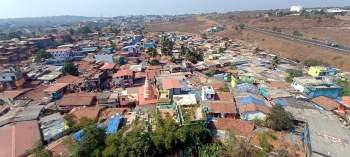
Despite successive governments acknowledging the need for intervention, not a single slum area in Goa has been officially notified to date- a mandatory step for initiating any rehabilitation or redevelopment process. According to Census 2011, slum populations were primarily concentrated in Panaji, Mormugao and Margao, with Mormugao alone accounting for nearly 90 per cent of the State’s total slum population.
Over a decade later, the situation is believed to have worsened significantly. Sources estimate that the slum population has grown by nearly 85 per cent and has expanded beyond traditional urban centres into areas such as Moti Dongor, Zuarinagar, Chimbel, Camrabhat and Mapusa.
Officials said the absence of notified slums continues to stall any meaningful policy action. “Identification and notification of slum areas is the first and most crucial step. Without that, rehabilitation cannot begin. The process is now expected to be taken up after updated data from Census 2027 is available,” a source said.
The issue is further compounded by institutional gaps. The Goa Rehabilitation Board (GRB), which was set up to address such concerns, reportedly lacks the authority to execute rehabilitation projects. Additionally, the State has not established key bodies mandated under the Goa Rehabilitation Act, such as a Slum Development Committee or a State Slum Redevelopment Authority.
“A dedicated authority is essential for planning and implementing redevelopment. At present, there is a lack of clarity on which agency will take charge,” sources pointed out.
They also stressed that budgetary allocations alone cannot resolve the issue. “Funds are secondary. The government must first identify and notify slum pockets within cities like Panaji, Margao and Vasco. Moreover, slum settlements are now emerging in places like Mapusa and Ponda as well,” sources added.
In previous budgets, including 2023“24, 2024“25 and 2025“26, the government had announced its commitment to rehabilitate notified slum dwellers in urban areas, earmarking Rs 5 crore annually for the purpose. However, in the absence of notified slums and an empowered authority, these provisions have seen little progress.
Earlier, in 2017, then Chief Minister Manohar Parrikar had allocated Rs 50 crore for the rehabilitation of residents in Zuarinagar, Chimbel and Camrabhat.
With no institutional framework in place and the process now tied to future census data, the state’s slum rehabilitation efforts remain in limbo, leaving a growing population without a clear roadmap for housing and basic amenities.


