


PANAJI
Q. The Master Plan of CEA gives the vision of vast investment in transmission sector, as a private sector entity what challenges you see in realising the plan?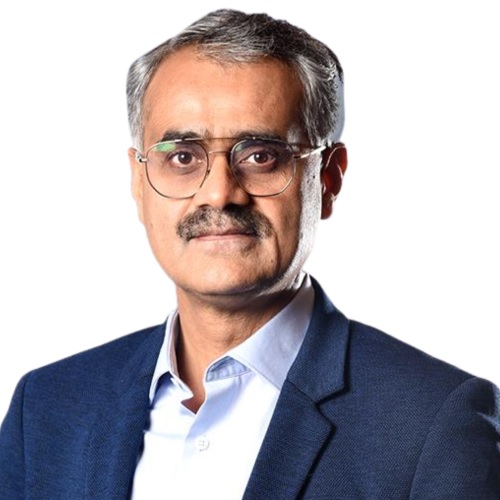 The vision articulated by the Central Electricity Authority is both ambitious and necessary. It signals intent, direction, and long-term confidence in the sector. However, from a private sector standpoint, the challenge is not about whether this plan should ppen, but how predictably and efficiently it can be delivered on ground.
The first reality we must acknowledge is that transmission in the North East is deeply interlinked with hydro generation timelines. Historically, hydro projects in the region have seen delays driven by environmental clearances, geological uncertainties, and local factors. When transmission is built ahead of generation, there is always a risk of underutilisation. When it lags behind, valuable generation capacity remains stranded. For private developers, this alignment is critical because project viability depends on assured utilisation and revenue visibility.
The second dimension is Right of Way and clearances. On paper, we have progressive policies, but execution still involves multiple layers involving state authorities, forest departments, and local communities. In a region where a significant portion of alignments passes through forested and ecologically sensitive zones, timelines can stretch unpredictably. For a private investor, this introduces a level of uncertainty that is difficult to price into bids.
Financing is another important consideration. We are looking at ultra large investments, including high capacity HVDC corridors. These are capital intensive assets with long gestation periods. The sector will require financial structures where risk is more evenly distributed. Today, a large part of execution risk, whether due to delays, cost overruns, or unforeseen terrain challenges, sits with the developer. Going forward, a more balanced framework will be essential to sustain private participation at this scale.
There is also the question of supply chain readiness. When multiple large projects are executed simultaneously, particularly those involving advanced technologies like HVDC, pressure builds on global supply chains. Equipment availability, manufacturing timelines, and cost volatility become real constraints.
Finally, and perhaps most importantly, there is the issue of predictability. Large scale plans succeed when policy, approvals, and execution move in sync. The industry does not shy away from complexity. We deal with it every day. What we seek is a stable and predictable environment where long term investments can be planned with confidence.
If these aspects are addressed, alignment with generation, streamlined clearances, balanced risk allocation, and supply chain preparedness, the private sector will not only participate but actively accelerate this vision.
Q. As Resonia is having rich experience in implementing transmission lines in difficult terrains, what kind of difficulties you envisage in development of huge transmission network for evacuation of power from NER?
Execution in the North East is unlike any other part of the country. Over the years, what one learns is that projects here are not defined only by engineering. They are defined by terrain, weather, access, and people.
In states like Arunachal Pradesh and parts of Assam, the first challenge is simply reaching the site. There are stretches where there are no roads, or the existing infrastructure cannot support movement of heavy equipment. Something as basic as transporting a transformer or tower material becomes a project in itself. In many cases, you are building access before you even begin building transmission.
Then comes the terrain. Steep gradients, fragile soil conditions, and high seismicity mean that standard designs often do not hold. Foundations have to be adapted continuously based on what the ground reveals. Geological surprises are not exceptions here. They are part of the process. This makes both planning and cost estimation significantly more complex.
Weather adds another layer. The working window in many parts of the North East is limited. Extended monsoons, heavy rainfall, and flooding, especially in regions like Assam, can halt work for weeks. You are effectively compressing execution into a shorter timeframe, which puts pressure on resources, planning, and coordination.
Environmental sensitivity is also very high. A large part of the transmission network passes through dense forests. While this reflects the ecological richness of the region, it also means stricter compliance requirements and limited flexibility in execution. You have to work within very defined boundaries, often with minimal disruption.
One of the most critical constraints is the evacuation pathway itself, particularly through the Siliguri Corridor. This narrow stretch is the gateway connecting the North East to the rest of the country. Building high capacity corridors through this region is both strategically essential and physically challenging. It demands careful planning, advanced technology, and precise execution.
Equally important is the human aspect. Projects in the North East require continuous engagement with local communities. Each area has its own social fabric, and progress depends on building trust and maintaining transparent communication. In my experience, when communities are aligned, projects move forward much more smoothly.
What has evolved over the years is our approach. We are increasingly relying on technology such as drone-based surveys, improved design tools, and better project monitoring systems. But ultimately, success in the North East comes down to adaptability. You cannot apply a standard template here. Each project teaches you something new.
If I were to summarise, building transmission in the North East is a test of resilience. It demands patience, flexibility, and a long-term commitment. At the same time, it offers one of the most meaningful opportunities to connect a region rich in clean energy potential with the rest of the country and play a defining role in India’s energy transition.


