Say beautification near Margao won't curb pollution
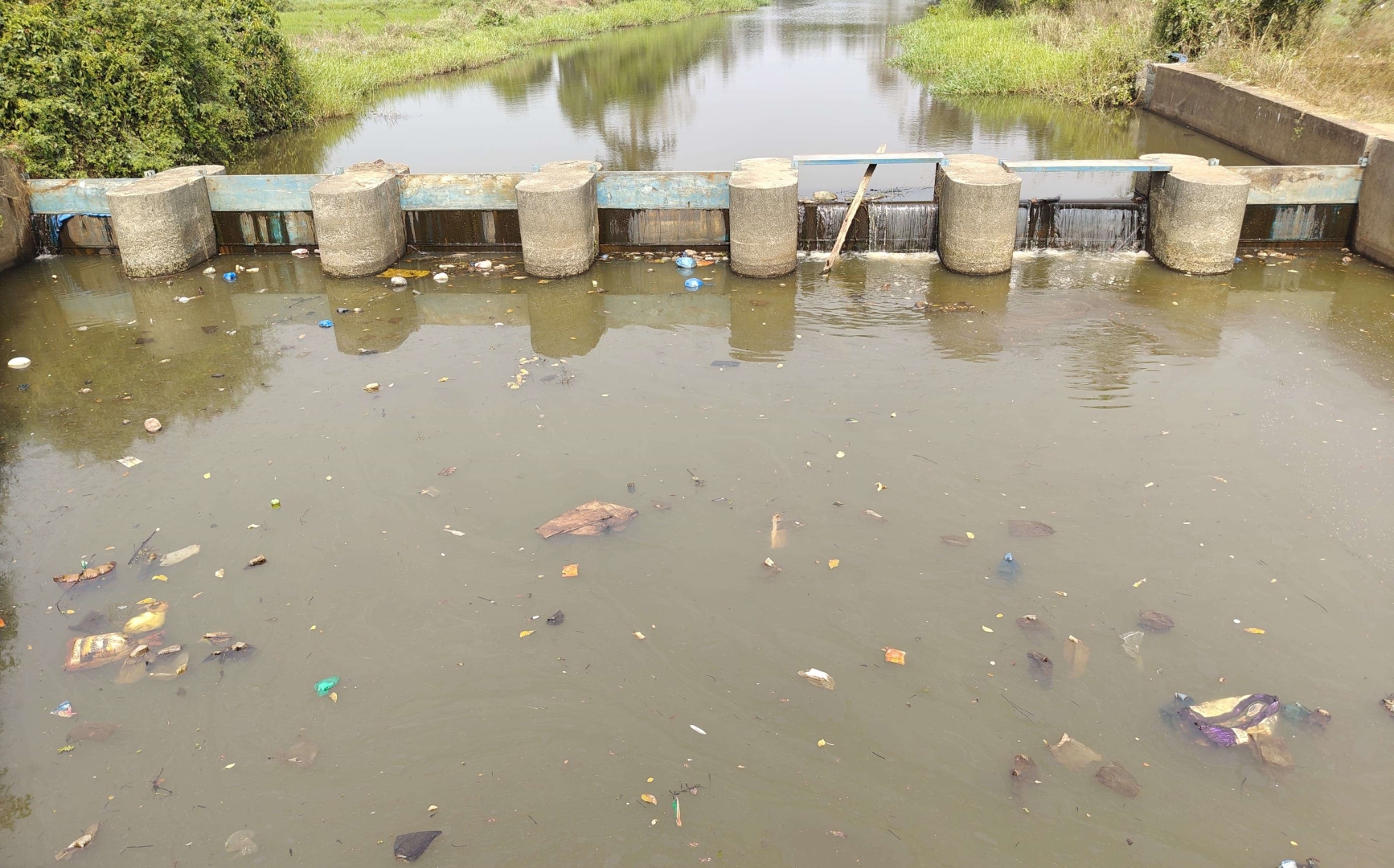
The state of the river Sal flowing through Nuvem before entering Margao near the wholesale fish market.
MARGAO
The River Sal has been in the spotlight recently following the authorities’ decision to beautify a 60-metre stretch near the Kharebandh bridge in Margao, aimed at giving the area a facelift.
However, residents of adjoining Nuvem have urged the government to go beyond cosmetic measures and undertake a comprehensive rejuvenation of the river from its origin at Verna to its confluence with the Arabian Sea at Betul.
Local citizens have called for a multi-pronged initiative to curb pollution and restore the river to its pristine condition. Social activist Zarinha Da Cunha highlighted that the River Sal is suffering from three major forms of pollution—industrial effluents from the Verna Industrial Estate, untreated sewage discharge, and rampant garbage dumping—leaving its waters severely contaminated.
Da Cunha alleged that unchecked industrial activity at the Verna Industrial Estate has devastated the river, with effluents flowing into it through multiple outlets. She accused the Goa State Pollution Control Board (GSPCB) of failing to effectively regulate pollution. “The River Sal is a freshwater river originating at Verna before it meets the Arabian Sea at Betul. Over the years, we have witnessed its gradual degeneration. There have been no serious efforts to restore the river to its lost glory. Piecemeal attempts will not help,” she warned.
She further stressed that the authorities, including the GSPCB, must establish a robust mechanism to prevent industrial effluents and sewage from entering the river.
Echoing similar concerns, Chairman of the Nuvem Biodiversity Management Committee, Jose Roque Andrade, said that years of industrial discharge and sewage disposal have devastated the River Sal. Recalling a time when people freely bathed in the river and caught fish, Andrade said residents now avoid entering the water due to serious health concerns.
“The government must take up the rejuvenation of the River Sal in both letter and spirit by plugging all sources of pollution. Piecemeal measures will not restore the river. A comprehensive rejuvenation plan must be put in place and implemented on a war footing,” Andrade said.
The Water Resources Department had recently unveiled a plan to take up remediation of the river Sal near the Margao wholesale fish market on the Margao-Nuvem border. Questions, however, have been raised over the efficacy of the pilot project when sewage and effluents find their way into the river with impunity.
Jose Roque Andrade said that the government should not take any haphazard measures in order to revive the river, but initiate steps that would help restore the river in the long run.