PANAJI
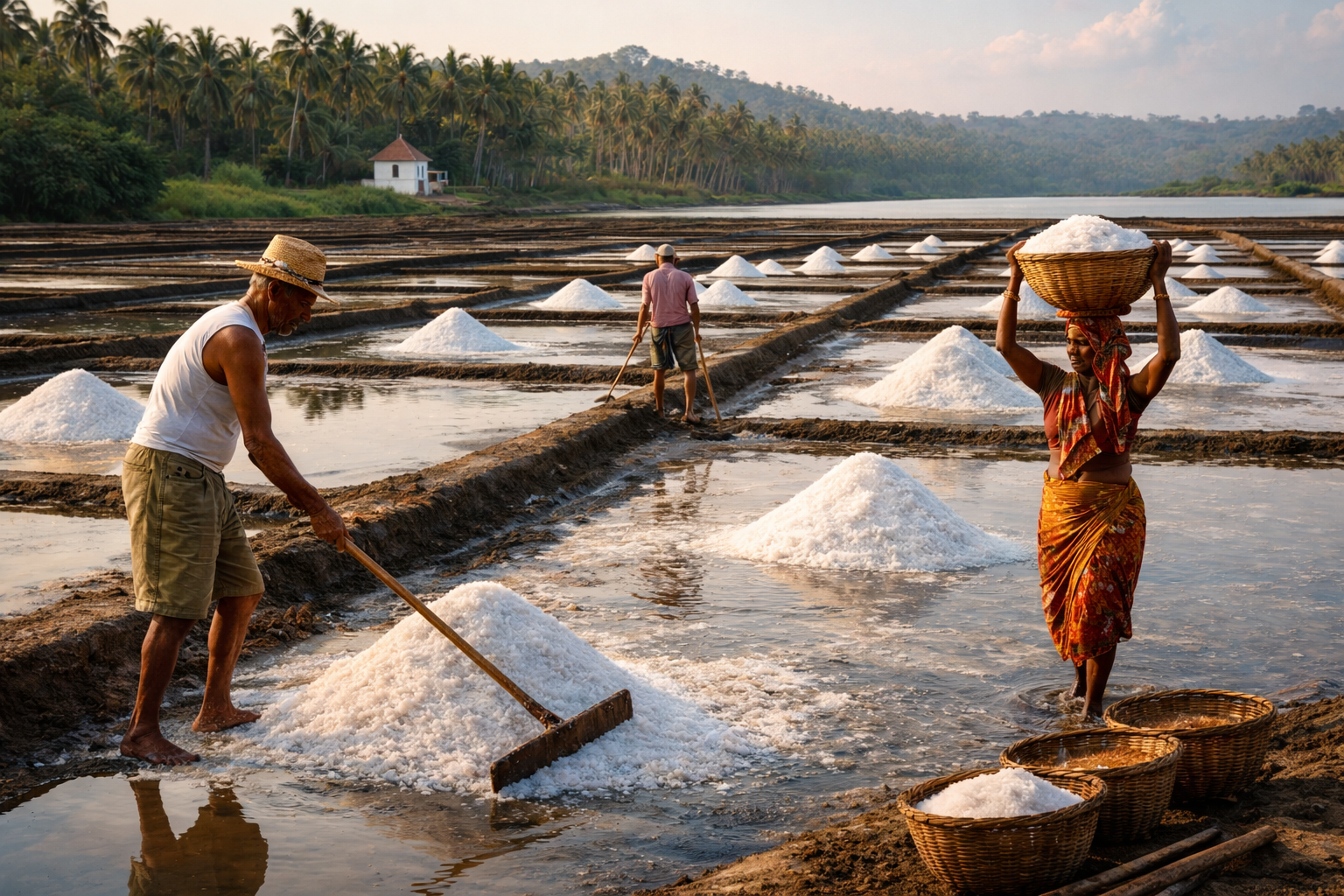
Joaquim Francis Cabral, 51, a salt farmer from Ribandar, produces around eight truckloads of salt every year. Demand is high, so he buys another 15–20 truckloads from other salt producers in North Goa and supplies them to his regular customers. “The current price is Rs 350 per one tin (square dabba), which is high, as usually a tin gets sold for Rs 200-250 each,” says Joaquim. He works in two bundas (fields), while the 20 salt farmers in his neighbourhood have stopped production. “Many have settled abroad in places like London, though they have not sold off their lands,” he mentions.
Season of work and sales
Salt farming runs in Joaquim’s family. His father Francis did the same work, as did his father and grandfather. “We have been doing salt farming for over 100 years,” quips Joaquim. Work begins in November–December, when the heaps of salt are left to dry in the sun. By January, the salt is ready for sale. Production and sales peak in March–April. Vendors who sell sea salt at the Purument fests buy from him. He continues to sell even during the rainy months of June–July, though there is no field work then.
Joaquim hires four to six non-Goan labourers on daily wages. The business is profitable for him mainly because his salt pan is next to the road, making transport easy. Salt pans located inside, without road access, have fewer buyers and larger stocks. Joaquim buys salt from such farmers and sells it to his customers. Apart from Ribandar, farmers in Curca, Nerul, Bhati, Agarwada and Kelashi still continue salt farming. But not everyone is as fortunate.
Decline of the salt pans
Many farmers have stopped producing salt for several reasons. The work is hard and needs patience. Labour shortage in Goa is another big problem. The younger generation is moving away from this traditional family occupation in a state once known for its salt pans and trade. Bardez, Tiswadi, Pernem and Salcete were famous for salt. In the early 19th century, Goa had about 700 salt pans. The number fell to around 200 during the liberation period. Today, only about 50 remain.
Large areas of salt pans are now inactive. Due to neglect and underuse, many have remained idle for years. Some have been taken over for other commercial purposes. One recent example is the Birch club. The issue came up after it was found that construction stood on a salt pan that had been unused for a long time.
It may sound harsh, but only a handful of farmers still harvest salt today. The trade is declining and needs support. Hard work and lack of labour have pushed many away. Across the state, many salt pans lie abandoned, waiting to be revived. The older generation of farmers is fading, and youngsters are not keen to work long hours in the sun, stir saline water and produce sea salt.
Memories and hope
A few people have continued the tradition. Dr Nishikant Shikerkar, a practising psychiatrist from Margao, proudly carried on his family business and for years kept aside a day each week to sit in his shop on Old Station Road to sell sea salt. Adv Govind Bhobe, now in his eighties, continues salt farming on his ancestral land in Nerul while also practising law, staying loyal to his family occupation.
Elderly residents of Margao still remember the now vanished Khareband jetty, from where sacks of salt were once sent by canoe to bigger ships. The name Khare Band itself points to this salty business. Women earlier went door to door with bamboo baskets, calling out ‘Mith jay ge mith’. Buyers often received a little extra after the wooden ‘maap’ was emptied. Even today, people buy salt during the Purument fests to store for the monsoon. Many homes keep yearly stocks in clay pots or ceramic jars. It is a reminder that Goa once produced, traded and exported salt.
Today, the industry needs urgent attention. There is a strong need to revive salt farming and restore its past importance. Recognising this, the State government has approved a subsidy of Rs 95 lakh for conservation, support and revival of salt pans in the financial year 2025–26. The plan is to help 75 traditional salt farmers with a direct subsidy of Rs one lakh each. Many hope this will be a real effort to revive the industry, protect heritage and restore wetlands, and not just a distraction from concerns over illegal constructions in salt pans.