PANAJI
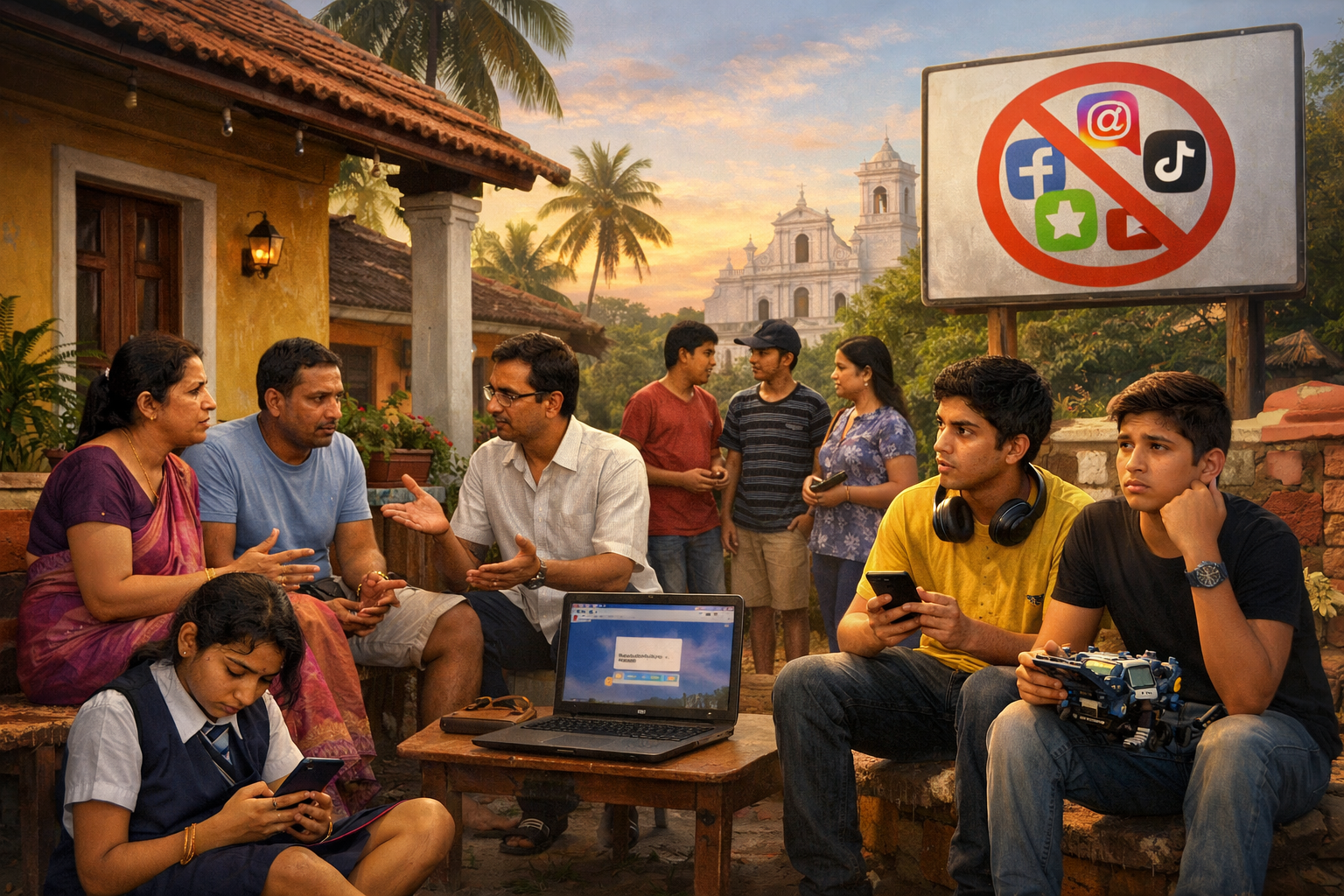
A proposed social media ban for children under 16 has become the talk of the town. While it may bring relief to parents, it also raises questions about how the system will monitor who accesses what content online. There is also concern over whether the move will be implemented seriously or remain only on paper. Educationists, teachers and parents see it as a possible breather, but they hope the ban is not mere eyewash and actually makes a difference. Another key question is whether the Australian model will suit the Indian ecosystem or be copied without proper execution.
The Goa government’s decision to study the Australian Online Safety Amendment Act—which bars minors from maintaining accounts on platforms such as Instagram, Facebook and X—has drawn mixed reactions. The move comes amid growing concerns over excessive screen time and reduced face-to-face interaction with family and friends.
Parents of teenagers are divided. Some support the proposed ban, while others fear their children may remain unaware of current events, miss learning opportunities and fall behind their peers. They also worry that once children cross 16, sudden exposure to unrestricted content could confuse them.
“Every coin has two sides. Similarly every decision has its own advantages and disadvantages. Today’s children, especially teenagers, want to explore. All of them may not be interested in having their own personal accounts, but they would definitely like to scroll, watch and learn too. Will the ban be only on opening accounts on social media, or will it have restrictions on watching harmful, obscene, abusive and violent content too?” asks a mother of a 14-year-old, class IX girl.
“My daughter will be in SSC next year. She needs to complete assignments, add to her general knowledge, answer online exams to improvise her skills, and learn Sanskrit language on her own. I don’t mind if she is not allowed to open her account till she is 16. But my question is how can parents be sure that kids will not be (mis)using their phone even if they don’t have an account? We have given a handset to Tanvi, and also guided her how the internet is a boon and a bane, at the same time. Being sensible, and obedient, she uses mobile and laptop only for a limited time and that too for educational purposes. What about mischievous, naughty children who don’t listen to their parents or teachers?” she questions.
A teenager with exceptional talent in robotics spends his free time practising and has won competitions at national and international levels. “How can I stop my son from using the internet, when I know why he uses it, and how it benefits him,” asks his father. “So, having or not having an account on social media, will not affect the use of the internet. It will only restrict teenagers under 16 from posting photos, content, videos or reels, and from viewing content posted by others. The age-specific ban will prove to be a toothless tiger in that case,” he points out.
While protecting children from cyber criminals and blackmailers is crucial, educating them on responsible internet use is equally important. Curiosity often drives children to do what is forbidden. Simply raising or lowering the age limit for social media accounts will not address the real problem. Children can still fall prey to online traps, gaming addiction, blackmail or deceitful online friendships.
“The real concern is how to stop this, not only for under-16 kids, but at any age, especially for all children, be they in any age group,” says an educationist from Goa. “And for this to happen, laws should be wiser, implementations serious, and penalties stricter,” he feels.
The educationist adds that government machinery should focus more on serious physical crimes against minors—such as kidnapping, molestation, sexual abuse and rape—by catching offenders and ensuring strict punishment, rather than spending time studying laws from other countries that operate within very different ecosystems.