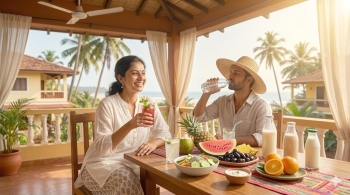
For those with preferences for nature and wildlife holidays, the fresh air, natural light and organic sounds can calm the overburdened and overstimulated sensory faculties

Here comes summer, and like many tourist hotspots, Goa is filled with the buzz of holidaymakers as many dash to the sunny shores. The month of May brings not just solo travellers, newly married couples, and groups on package tours but also families with children in tow, as schools are on a long break.
Travelling is synonymous with a holiday. Considered a luxury at one point in time, travelling has increased with families having more disposable incomes and being encouraged by the media. While some may travel for social media shots, some do it for the genuine love of discovering new places. There is no doubt that vacations and travel can serve as a psychological reset and relief not just for our brain and body but also for our mind and spirit.
Being on a vacation brings a break from the monotony of daily routines. It reduces the chronic stress that comes with the daily hassles of life and hence supports long-term health. Travelling brings on plenty of outdoor activity, be it walking around exploring nooks and corners of a city, trekking on adventurous hikes, swimming in the seas or rolling in the snow.
Each of these increases blood flow to the brain, thus enhancing cognitive health. For those with preferences for nature and wildlife holidays, the fresh air, natural light and organic sounds can calm the overburdened and overstimulated sensory faculties.
New cultures, languages, cuisine and landscapes bring forth experiences that support the formation of new neural connections and promote learning and new behaviours. Novelty in terms of simple new movements and routes supports the production of Brain-Derived Neurotrophic Factor (BDNF), a protein that helps support brain cell survival, growth and neuroplasticity. Travelling enhances social learning and interaction. Meeting new people and engaging in conversation strengthens communication skills.
Research shows that travelling can reduce exhaustion, boost mood, and elevate life satisfaction, with effects lingering for weeks post-trip. A Finnish study in 2022 tracked around 174 vacationers who had travelled to West Africa and found improved well-being on their return. Jessica de Bloom's meta-analysis of 22 independent studies covering vacationers across Europe and North America for the period 1980 to 2008 confirms physiological perks like lower cortisol, positioning holidays as vital for mental resilience.
In fact, the travel bug can reward the brain with a dopamine hit. Just planning a trip can create a rewarding chemical reaction that brings happiness even before the trip has happened. Some start to plan their next vacation on the return trip of the current vacation.
Perhaps that is why there was a trend of revenge travelling across the globe post Covid. Travellers started to prioritise experiences over excessive shopping, eating and drinking. There is a shift to slow, mindful travel where the goal is to immerse oneself in the experience rather than ticking off the touristy hotspots in a hurried package tour. Taking more frequent short vacations throughout the year, rather than one long break, has also become very popular. However, travel can also bring on anxiety, turning every trip into an ordeal of overplanning and FOMO (Fear of Missing Out).
For those who hesitate to wander or just do not have the resources to take a break, there is still the idea of staycations. It involves the joy of taking a break within one’s own house and familiar surroundings. It brings with it the same positive effects without the logistics of a travel holiday. In fact, what better place to have a staycation than Goa, given that it is indeed a paradise on earth!
(The writer is Associate Professor and Head of Department of Psychology at St Xavier’s College, Mapusa)