


PANAJI
Since 1981, under the Goa Marine Fishing Regulation Act, the state has observed an annual fishing ban throughout June and July. While large-scale trawlers and boats equipped with heavy-duty motors are strictly prohibited during this period, small canoes using gill nets, as well as traditional fishing in rivers, estuaries, and close to the shore, are permitted.
Seasonal Fishing Ban
This suspension is vital: it allows fish stocks to replenish, securing the health of the marine ecosystem for the new season beginning on August 1. Historically, many Goan fishermen avoided the sea during the monsoons due to perilous waves, only resuming their work after the August feasts involving the traditional blessing of the seas. However, the economic necessity of the past often pushed some to brave the waters in the hope of earning a modest income.
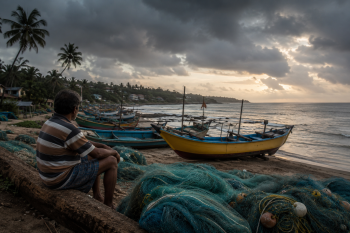
Beyond the cultural practices, the ban serves as a period of financial hibernation. Migrant workers return to their home states for their annual break, while local fishermen spend the quiet weeks repairing, cleaning, and drying their nets in anticipation of the new season. For many, this is a time of zero active income, forcing families to rely entirely on savings.
Period of Financial Pause
“We don’t earn during these months,” says Peter Silveira. “If the sea remains rough after the ban, we delay heading out.” Recently, unpredictable weather patterns have forced fishers to dock their boats even before the official ban commences. “We manage with our savings,” he explains, noting the added disadvantage for small-scale families who must wait for the post-monsoon tides to settle. “Sometimes we survive on leftover salted fish we prepared, or if the sea calms periodically, I head to the shore with my cast net.”
As the fishing community navigates these lean months, the rest of the state must adapt its palate. For Goans, a meal without fish curry and rice is inconceivable, leading to careful preparation ahead of the season. Markets see a surge in demand for salted, pickled, and frozen fish, often at premium prices. This scarcity has led many villagers to turn to inland fishing in flooded fields for catfish, while aquaculture, specifically for prawns and chonak (Asian sea bass), has become an increasingly common solution to meet the state’s appetite.
Yet, meeting this year-round demand has exacted a heavy toll. Despite the seasonal ban, the diversity of marine life in Goan markets has declined significantly. Varieties like sardines, once an affordable staple, have at times become more expensive than mackerel, with both size and quality diminishing due to chronic overfishing.
Pressure on Marine Resources
Worse, the ecosystem is under constant threat from non-local motorised boats that illegally enter Goan waters, employing destructive practices like LED and bottom trawling. Such methods not only jeopardise breeding grounds but also deplete future stocks, pushing local small-scale fishers towards “fish famines”. Compounding these issues was the recent controversy involving the use of formalin, a chemical preservative, in fish imports, which sparked widespread public health concerns.
Changing fortunes
These ecological and commercial pressures intensify the personal hardships inherent in the trade. “This is back-breaking labour,” says Francis Fernandes, who represents the last generation of his family to work on the Calangute coast. “My son wants an office job for a guaranteed monthly income. As a child, he felt ashamed of being called a fisherman’s son.” While Francis wishes to pass down the family trade, he remains conflicted, prioritising his son’s happiness over tradition.
However, not everyone views the changing tides of the profession with such pessimism. “There is good money in this line of work; people always crave fresh fish,” notes Alex Mascarenhas, a successful boat owner. Catering to both locals and the state’s thriving tourism industry, Alex has seen his business flourish, allowing him to upgrade his home and support his children. “The sea has always provided for us,” he says proudly, describing his daily routine of selling fresh catches on Baga beach with his wife and daughters.
Despite individual success stories, the broader reality for the traditional fishing community remains complex. While Goa is celebrated for its fresh fish, those who harvest it often endure a social stigma and a sense of neglect. As local youths increasingly migrate abroad in search of financial stability, the divide deepens: while industrial trawler owners continue to find profitability on a commercial scale, small-scale fishers remain vulnerable, caught between rising operational costs, volatile weather, and diminishing returns.


