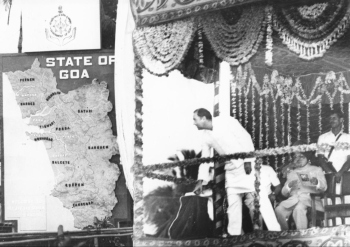
Goa Statehood Day on May 30 marks the 40th anniversary of Goa attaining statehood. Since June 2025, the state has witnessed significant progress across infrastructure, tourism, healthcare, connectivity, and public development initiatives, reflecting its continuing journey towards growth and the vision of a Viksit Goa.
Improving infrastructure
Goa’s infrastructure push since June 2025 has focused heavily on expanding infrastructure while simultaneously undertaking major urban, healthcare, tourism, and public utility projects. NBCC (India) Limited and Goa Industrial Development Corporation signed an agreement for redevelopment projects worth approximately Rs 1,700“1,726 crore in the first phase, aimed at modernising key public infrastructure across Goa. The projects include the redevelopment of Junta House in Panaji, the Government Garage on MG Road, the Administrative Building at Porvorim, the Circuit House at Altinho, the Government Quarters at St Inez, the Mini Convention Centre at Patto, and a feasibility study for the redevelopment of the Vasco Bus Stand. In addition, the Goa government introduced modern Ro-Ro ferry services, including vessels such as Dwarka 7 and Gangotri 6.
Goa’s tourism sector is undergoing a major transformation worth nearly Rs 350 crore, focusing on hinterland tourism, improved public amenities, heritage promotion, and enhanced visitor safety under the “Goa Beyond Beaches” initiative. The strategy aims to reduce pressure on coastal destinations while promoting year-round tourism across rural and cultural circuits.
Renewable energy and solarisation
Since May 2025, Goa’s electricity sector has advanced through infrastructure expansion, smart grid modernisation, and proposed tariff reforms. A major milestone was the successful test-charging of the 220 kV Dharbandora“Xeldem transmission link, which is expected to enhance grid stability, improve power distribution efficiency, and ensure a more reliable electricity supply across the state.
The government and the electricity department have also accelerated infrastructure planning, including upgrades to substations, transmission corridors, and underground cabling in selected urban areas, as well as the integration of smart grid technologies to support Goa’s growing residential, tourism, and industrial demands. These initiatives are designed to minimise outages, improve load management, reduce transmission losses, and strengthen long-term energy security for the state.
Digital infrastructure
Since June 2025, Goa has witnessed several important developments in internet and digital infrastructure, aimed at expanding high-speed connectivity, improving digital governance, and bridging the urban“rural digital divide. A major step in this direction was the launch of the Har Ghar Fibre initiative in July 2025, which seeks to provide high-speed broadband connectivity to every household in the state. The programme was initially introduced on a pilot basis in Porvorim, Sanquelim, and Bicholim in North Goa and is supported by an expanding optical fibre network to strengthen last-mile internet access.
Goa has made significant progress in strengthening its digital and telecommunications infrastructure through major policy reforms and technology expansion initiatives. To accelerate internet infrastructure projects, the state government designated the Department of Information Technology as the State Designated Department for implementing a Single Window Approval System under the Right of Way (RoW) framework. This unified online portal streamlines permissions for laying optical fibre cables and installing telecom towers, reducing procedural delays and enabling faster expansion of digital connectivity across the state.
Improving water supply
Since 2025, Goa’s water supply sector has undergone major reforms and infrastructure expansion. A major initiative undertaken by the newly established Department of Drinking Water is the launch of an ambitious Rs 2,000 crore pipeline replacement and modernisation project. The programme focuses on replacing aging pipelines, reducing leakages and transmission losses, improving distribution efficiency, and ensuring uninterrupted potable water supply to households and commercial areas.
At the local level, the foundation was laid for a Rs 21 crore water supply upgrade project covering the Agassaim, Bambolim, and Nauxim regions. The project includes strengthening of distribution networks, improved storage and pumping infrastructure, and enhanced supply capacity to cater to the growing residential and institutional demand in these rapidly developing areas.
Improvement in public services
Since June 2025, Goa’s public services have shifted toward decentralised, door-to-door, and digital delivery to make the state self-reliant and accessible. Through the Swayampurna Goa Programme, the government conducted extensive village-level outreach drives using local representatives and Swayampurna Mitras to deliver benefits of over 40 welfare schemes directly to citizens. Administrative efficiency was strengthened through iGOT Karmayogi training programmes conducted by the Goa Institute of Public Administration & Rural Development. The FY26 budget allocated major funds for healthcare, roads, and bridges, while the Mhaje Ghar Yojana was launched to expand housing access and support human development across Goa.
Modernisation in healthcare
Since June 2025, Goa’s healthcare sector has undergone major modernisation and expansion through advanced medical technology, preventive healthcare initiatives, and improved infrastructure. Goa Medical College introduced free In-Vitro Fertilisation services and successfully carried out the state’s first Transcatheter Aortic Valve Implantation, marking a milestone in minimally invasive cardiac care. In collaboration with Qure.ai and AstraZeneca, Goa also became the first state to launch an AI-enabled lung cancer screening pilot project that processed more than 130,000 scans, significantly reducing diagnostic time. To strengthen medical education and healthcare manpower, 19 new postgraduate seats were added across five specialties at GMC. Meanwhile, new infrastructure projects, including a Rs 113 crore boys’ hostel and an upcoming eight-floor state-of-the-art Cancer Hospital, are expected to greatly enhance healthcare access within the state.