As State marks International Museum Day on May 18, exhibitions and heritage talks at the Goa Science Centre are bringing State’s rich and often overlooked history closer to the younger generation, while also highlighting the urgent need to preserve its cultural legacy
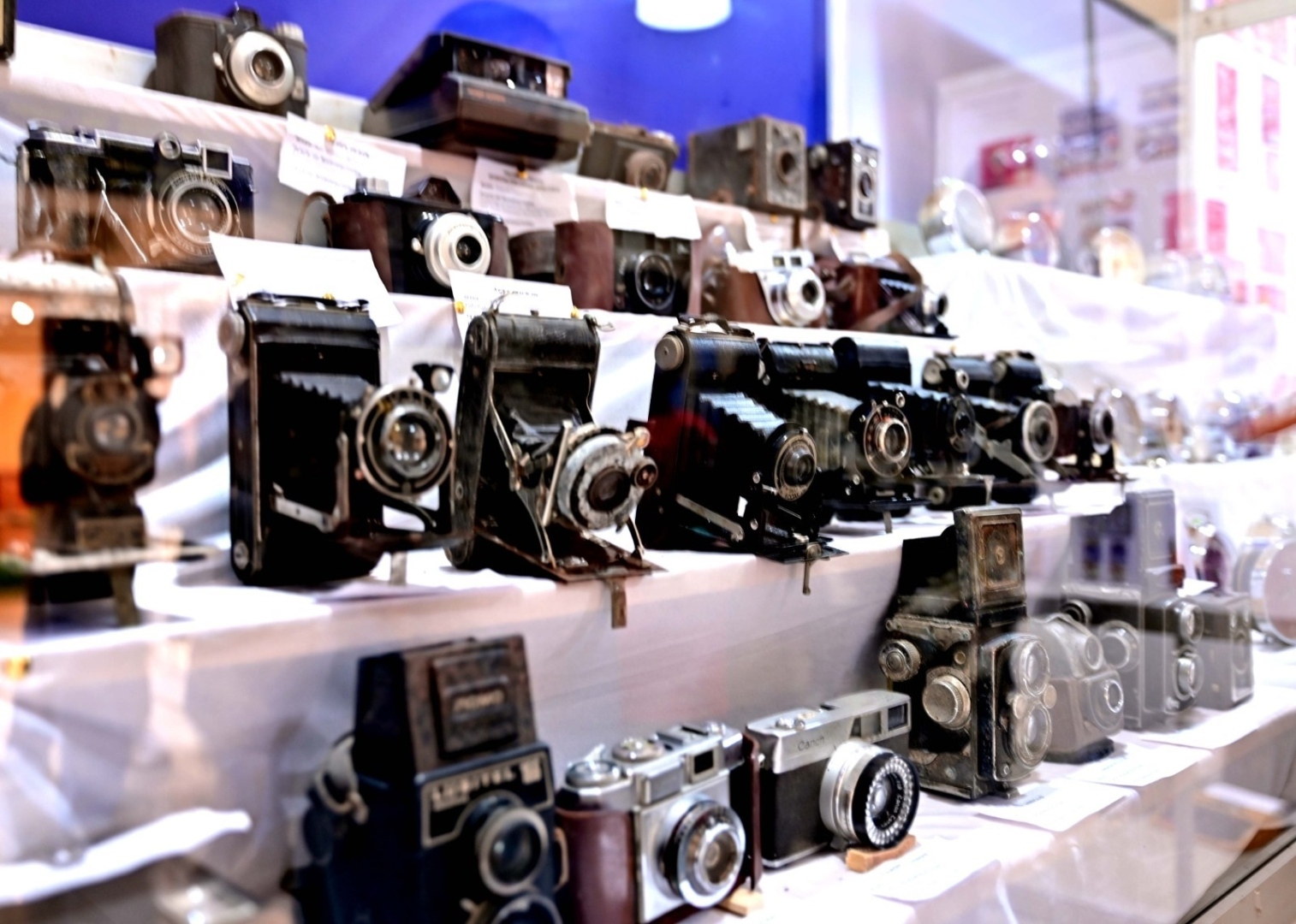
Cameras on display at ‘My Own Collection’ exhibition at Goa Science Centre.
PANAJI
As International Museum Day is observed across the world tomorrow, Goa’s rich and layered history serves as a reminder of the importance of preserving heritage and collective memory. Many times, Goa’s history is viewed as beginning with the Portuguese invasion, overlooking the fact that the State’s chronicles date back thousands of years. From petroglyphs and rock carvings at Usgalimal to archaeological evidence of early human settlements, Goa possesses a deep and diverse historical legacy. Often recognised as the only State in India to have witnessed an Opinion Poll, Goa’s historical significance extends far beyond its colonial identity.
Museum Day Celebrations
Thus, in celebration, the Goa Science Centre, Panaji, in collaboration with the Directorate of Museums, Government of Goa, is organising a series of programmes till May 18. As part of the celebrations, an exhibition titled ‘My Own Collection’ has also been organised, featuring 25 hobbyists from different parts of Goa displaying their unique collections, including coins, stamps, antiques, fossils, artworks, toys, vintage items like cameras and typewriters, and other collectibles.
At the lecture on “History & Heritage of Goa from Ancient Times to 2019”, organised as part of the International Museum Day celebrations, historian and professor of History, Prajal Sakhardande, highlighted the various eras of Goan history. He also emphasised the need for preservation and greater awareness of Goa’s long-gone and often forgotten past.
Learning Goa’s History
Goa’s history extends far beyond textbooks and classrooms, making it increasingly important to create awareness about it among the younger generation. Sakhardande highlighted the need for practical learning. “To the teachers and parents, I have one appeal. Take your children to see these places. If you just tell them Chandor was the capital of ancient Goa, they will not understand. If you take them there, visit Chandor, and see the petroglyphs with their own eyes, they shall remember,” he remarked. He further added, “It is important to experience History rather than just learn it.”
Moving from one hand to another, there was never one king for Goa. Goa witnessed the rule of various dynasties like the Bhojs, Shilaharas, Kadambas, Bahamanis, Adil Shahis, and finally the Portuguese. However, it is widely believed, and written records suggest, that Devraj Bhoj, the first king of Goa, established his base in the then Chandrapur and present-day Chandor. Various rulers followed, including the Shilaharas, Kadambas, Bahamanis, Adil Shahis, and finally the Portuguese, with Goa ultimately gaining freedom on December 19, 1961. Thus, Goa’s history is a potpourri of cultures and traditions.
Museum Space Challenges
International Museum Day thus draws attention to the importance of preserving cultural heritage. However, the condition of Goa’s State Museum highlights the challenges faced in showcasing the State’s vast and layered history. Goa’s past is shaped by dynasties, trade, migration, faith, and colonial influence, leaving behind a rich archive of artefacts, manuscripts, sculptures, paintings, and archaeological finds. Yet, despite this immense historical wealth, the State Museum continues to operate from the Adil Shah Palace in Panaji, where space constraints have limited the scope of display and curation. “Their collection is excellent, but space constraints are a challenge,” mentions Sakhardande.
The fate of the long-proposed new Goa State Museum building at Ela, Old Goa, envisioned as a larger and more modern space for conservation and exhibition, continues to remain undecided. As the detailed project report is still awaiting approval from the concerned authorities, officials have noted that the construction is unlikely to begin until financial clearances and central assistance are secured. Meanwhile, the estimated project cost has increased, further delaying hopes of a dedicated museum space for Goa’s history. “One way to expand the display could be by utilising the entire Adil Shah Palace until the new museum building is ready, encouraging visitors to explore both the museum and the historic palace,” Sakhardande states.
Preserving Goa’s Past
As we move towards the future, it is equally important to look back at the past and learn from it. Goa’s history offers valuable lessons on unity and coexistence, values that have faced challenges in recent times due to various circumstances. By preserving and understanding Goa’s past, we carry forward the stories and values that continue to shape its future.