Among book releases, discussions and book readings, GALF 2026 will have an innovative initiative this year – the launch of Goa’s first biodiversity map developed by World Wildlife Fund-India. WWF-India State Coordinator for Goa Aditya Kakodkar speaks to The Goan on State-related educational projects in Goa including the map that’s going to be released for school children on February 14
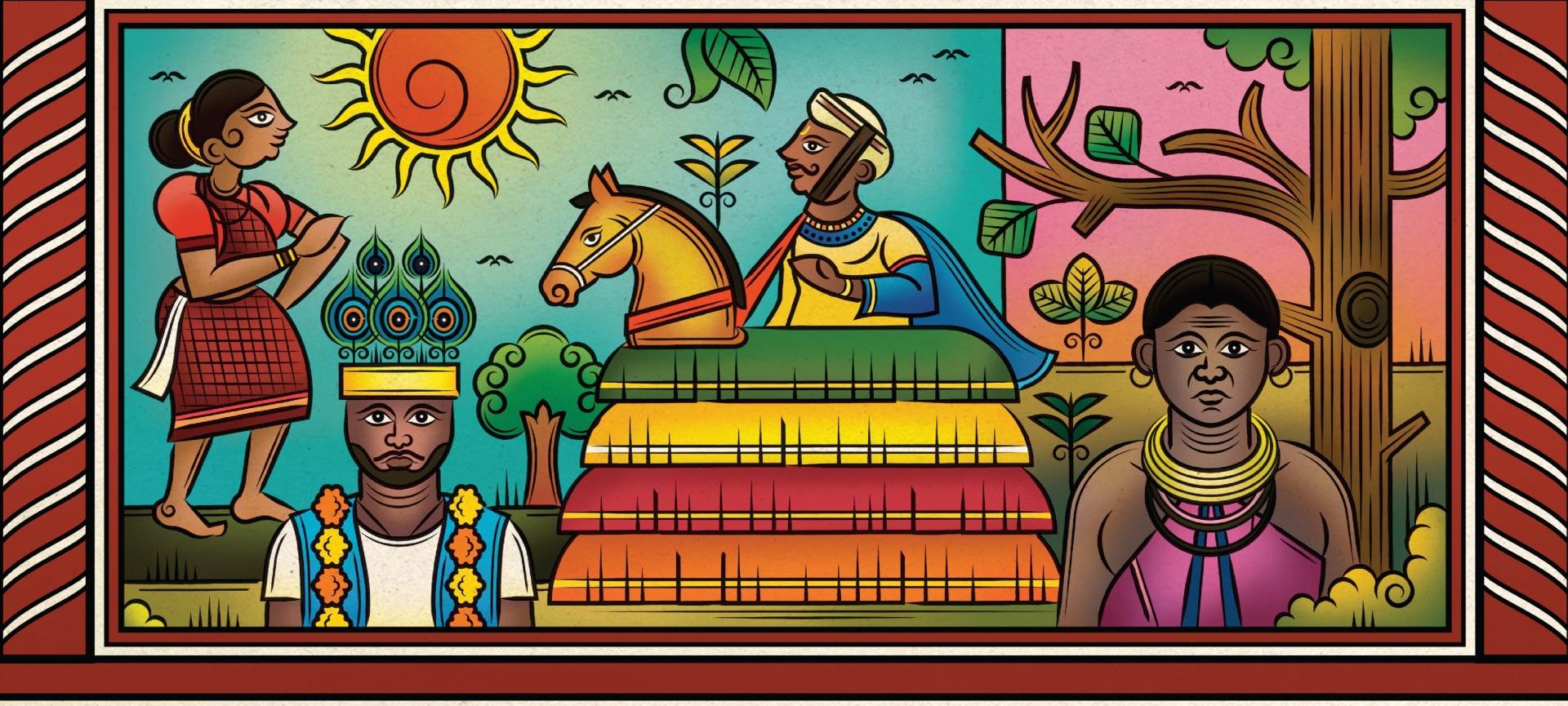
The classroom walls in government and government-aided schools in Goa will soon look more vibrant after having Goa’s first biodiversity map hanging on them with colourful visuals of birds, animals, insects, marine life, mangroves, traditional art forms, folk dance forms in the State invoking curious minds to observe and register what’s around in their surrounding neighbourhood. Designed as an educational tool, the initiative aims to strengthen environmental awareness among school children in Goa.
An initiative of World Wild Life Fund-India, this first biodiversity map in the State will be unveiled at the upcoming Goa Art and Literature Festival (GALF) at the hands of Stephen Alter on February 14 at 11 am at the International Centre Goa (ICG). Developed by WWF India-Goa, the map will offer a child-friendly visual guide to 48 commonly found species and traditional art forms of the State. It will be distributed free of cost to schools across Goa in both, print and digital formats. “The large wall map, sized 6 ft x 4 ft can be printed even bigger,” stated Aditya Kakodkar, WWF-India’s State coordinator for Goa.
“Goan culture is highly linked to nature and wildlife. Hence, in the Goa map we have included cultural aspects of biodiversity along with traditional Kaavi art rooted in the red soil here, the local Kunbi weave, and folk dance forms like Ghodemodni, Morulo, Waghro Dev, Sateri Devi and Mange Thaapni have their association with specific animals – horses, peacocks, tigers, ants and crocodiles respectively which we have done for the first time,” shares Aditya.
The map on the wall will induce discussions among students, and instil curiosity to observe similar flora and fauna in the vicinity, thus making them environment conscious individuals. They will learn to respect the arts and cultures in the State, and relate to the festivities around them. The artworks on the map are by the Odisha-born artist, change-maker and conservationist Sudarshan Shaw, known for his unique, personal art style ‘FolkIndia’. It’s a blend of local roots and global outlook seeking to communicate with India’s masses and at the same time offering a fair representation at a global level. Shaw believes that when it comes to science and conservation communication, one must also listen and speak to communities that are most proximate to wildlife… far from modern graphic languages.
WWF-India has published such maps for many States including Maharashtra (marine + terrestrial), MP, Rajasthan, Ladakh, J&K, Delhi, West Bengal, Uttarakhand, Tamil Nadu, Karnataka, Gujarat, Bihar and Assam – all of which can be found on WWF-India one planet academy website – a digital learning destination for environment and sustainability, said Aditya. All these maps are slightly different due to various teams being involved.
Aditya who manages all State-related education projects in Goa, has been with the WWF-India for the past five years. The team in Goa works from their office in Miramar, coordinating with all government and government-aided schools by training teachers through a MoU with the Goa government. “We have agreements with major colleges in Goa including Carmel College, Dhempe College, Chowgule College, Government College Quepem, Government College Sanquelim and Goa University,” informs Aditya.
The purpose of this agreement is to provide regular volunteering opportunities for students and help them participate in WWF-India activities like Moth Week, Big Butterfly Month, Dragonfly Festival, Young Birders’ Month, Campus Bird Count, Earth Hour and City Nature Challenge. Other projects in Goa deal with mitigating plastic pollution, rivers and coral reef monitoring etc.
“Apart from it, we have MoU with SCERT (State Council of Educational Research and Training) and we help them to train the environmental curriculum for class III to SSC,” explains Aditya. As the New Educational Policy (NEP)’s new concept is ‘learning by doing’, the schools have included small projects in all subjects. There are various vocational experiences included from class VI, VII and VIII, so that those who dropout in class IX are already introduced to these vocations and can decide which one to choose. Under environmental subjects, careers in wildlife, agriculture, ecology etc can be chosen.
Environmental aspects linked to local vocations are being incorporated into teaching modules. Rather than teaching each student individually in environment and wildlife related skills, the team trains the teachers to maintain a biodiversity register for their campus or nearby area. There are both theory and practical aspects of learning. Through experts teachers are educated on the importance of biodiversity.
“Goa has around 410-415 government and government-aided schools where 500 teachers cover vocational subjects. We empower teachers with training for the first and second term, and currently class VI teachers are being trained by us. Next year we will take up class VII and then class VIII, phase wise so that they are not burdened. The biodiversity map serves as a practical classroom aid. Goa’s map has additional features apart from biodiversity which will help children connect to their roots through culture and traditions,” concludes Aditya.