Maintaining its unique cultural identity, the island of Divar celebrates traditional festivals in a different manner. The Potekar Fest is one of those age-old traditions that the islanders have been following for generations. With the entry of modern elements and social media hype, the festival’s identity and existence is in danger
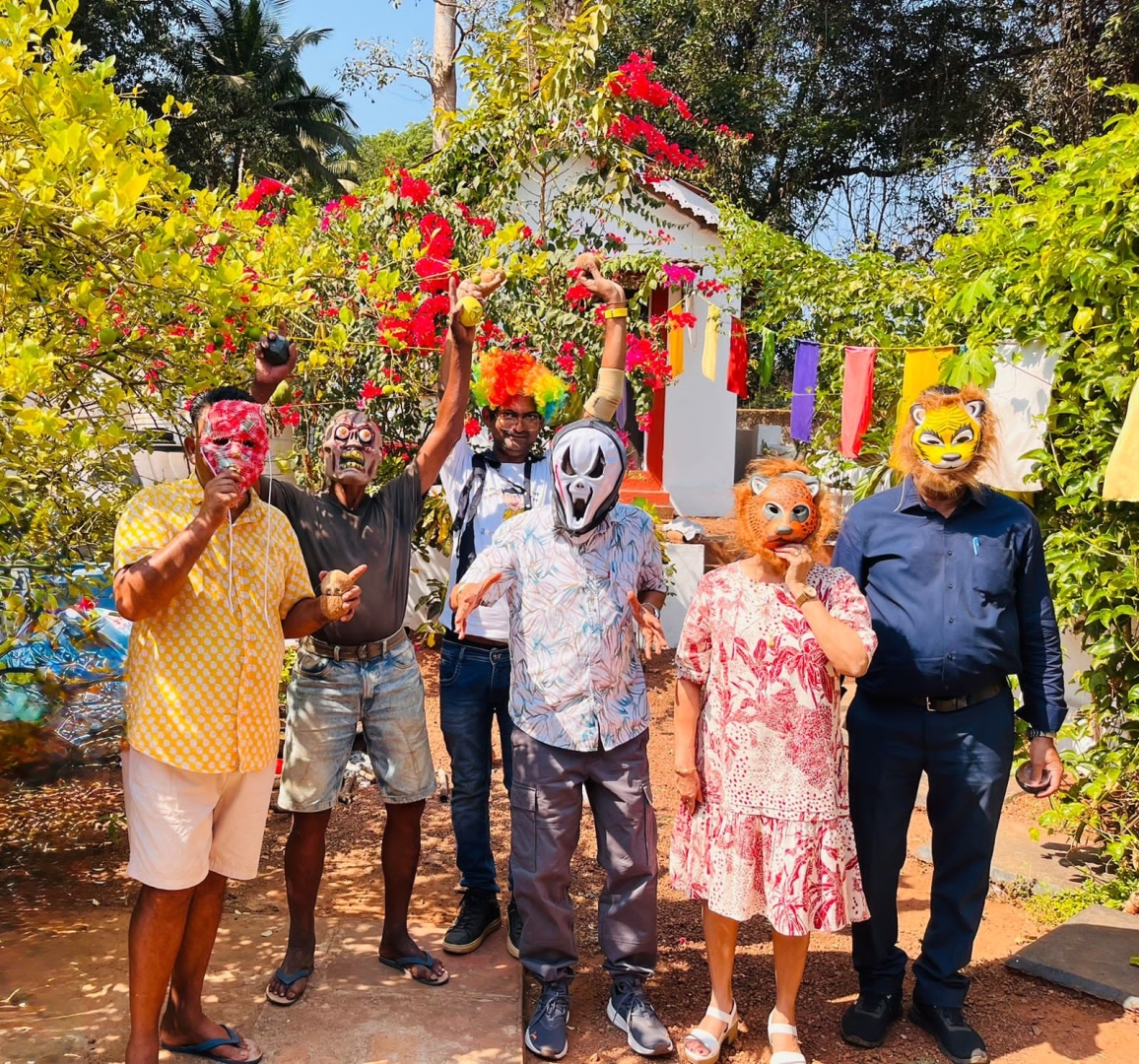
Some traditions take us back in time. The Potekar Fest is one of these cultural festivities that have been a part of the people of Divar Island for generations. One of the most unique and mysterious celebrations, the fest is observed during the closing days of Goa’s Carnival, just before Ash Wednesday and the beginning of Lent. The word Potekar, derived from the Konkani word potem (sack), describes a person who appears deliberately shabby and disguised. Participants traditionally wear worn garments, masks, cowbells, and coconut-shell accessories, moving from house to house in anonymity. It is playful yet symbolic, mysterious yet deeply rooted in community understanding.
Cultural roots
This year, this unique and one-of-its-kind festival was celebrated at Clube Marius Festacar. Curated by Dr Gwendolyn de Ornelas the event brought together scholars, artists and community members to honour the legacy and living spirit of Potekar. Blending memory, scholarship, art, music and cuisine, the festival reaffirmed the enduring cultural identity of Divar with a deep sense of belonging that continues to define its community. The programme commenced with the traditional lighting of the ceremonial lamp by Suresh Kunkalikar, Dean of the Goa College of Agriculture who also released a book ‘Goan Healthy Recipes’ by Dr Gwendolyn de Ornelas and Professor Carmellito Andrade.
Memories revived
An engaging dialogue between Marius Fernandes and Prof Carmelito Andrade brought back the nostalgic memories of Potekars from the 1960s in ‘Balcãoancheo Gozalli’. Marius underlined that the roots of Potekars are deeply tied to the land, the river and generations who lived in harmony with both. His family has been involved in Potekar since 1967, after returning from Kenya and reconnecting with their ancestral home in Divar. After returning from the UK in 1999, the family continued celebrating Potekar in the same spirit — intimate, cultural, and family-centred. “This year, we organised the Potekar Fest in St Mathias, Divar, not as a spectacle, but as a statement. It was a reaffirmation that Potekar belongs first to the people of Divar, to families, to memory, to tradition, before it belongs to cameras and crowds,” said Marius.
Community spirit
For the people of Divar, Potekar has never been about public display. It was about gathering with relatives and friends. Celebrations with traditional Konkani music, dancing the Potekar dance using coconut shells, preparing old Goan medieval dishes that are reminders of Goan heritage. Mask making workshops are held to educate the younger generation the real meaning behind the disguise. Sitting together and exchanging stories of Potekars that lived in history, sharing their tales filled with humour, satire, and moral undertones is the Potekar we know,” underlines Marius.
And the fest did just that. A mask-making workshop was held by artisan Gregol Fernandes, introducing an age-old technique using wheat glue paste and recycled paper, reflecting sustainable traditional practices preserved across generations. Fashion designer Harold Andrade presented Marius with a unique mask crafted from traditional Kunbi cloth, symbolising Goa’s rich indigenous textile heritage. The Barreto Brothers performed music, accompanied by Russel Joe Barreto and John Lino D’mello. Traditional Goan cuisine was served and the festivities concluded with a dance using coconut shells to the rhythmic beats of Konkani songs.
Growing concerns
In recent years social media has brought unprecedented attention to the festival. What was once a close-knit community ritual has begun attracting an increasing number of visitors! While interest in Goan culture is welcome, the hype surrounding Potekar is cause for concern for the islanders. Potekar involves masks and anonymity. Historically, this anonymity functioned within a shared moral framework, everyone knew each other. As those living outside Divar may not understand its significance, the same anonymity can create risk. There is no formal organising body. No visitor orientation. Potekar, in many ways, is nobody’s baby, and that makes it vulnerable, expresses Marius.
Preserving legacy
Goa has already seen how fragile traditions can be. Divar’s own jewel, the Fotash, faded after controversy and social pressures. It would be heartbreaking if Potekar suffered the same fate. In today’s environment, a single incident could lead authorities to impose restrictions or even ban the celebration altogether. Once lost, such traditions are rarely revived in their original spirit which is why the Potekar Fest was organised focusing on education and preservation rather than spectacle. Families gathered in a controlled and respectful setting. Traditional masks were showcased, their symbolism was explained. Coconut-shell dances, authentic Konkani music, and heritage food with the elderly narrating stories of earlier decades when Potekar was celebrated within homes and close community circles.
“Our aim was clear, to demonstrate that Potekar can thrive without losing its dignity,” said Marius, who firmly believes that the future of Potekar lies not in expanding onto crowded streets, but in strengthening its roots within homes and community spaces. The festival should be celebrated responsibly, with awareness of its history and cultural context. Visitors must be educated about its meaning. Basic safety measures must be considered if public participation continues. Most importantly, respect, especially toward women and children, must remain non-negotiable. Traditions survive not because they become popular, but because they remain protected.