PANAJI
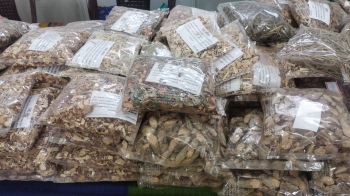
Little-known underwater seaweed forests play a vital role in sustaining marine life, coastal livelihoods, and Goa’s seafood culture, yet they remain largely undocumented and unprotected, Goan marine researcher and educator Gabriella D’Cruz said at the Museum of Goa during a storytelling session titled The Story of Seaweed. The session featured D’Cruz in conversation with Nefertiti Titli and included a live sound performance by Ashel Unger.
D’Cruz highlighted the ecological importance of Goa’s seasonal Sargassum forests, which grow along rocky marine outcrops between November and March. Despite forming dense underwater canopies and supporting fish populations, these forests remain absent from mainstream conservation narratives in the State.
Drawing attention to Goa’s everyday relationship with the sea, D’Cruz noted that while coastal life and seafood are central to Goan culture, there is little public reflection on the origins of marine food or the health of ocean ecosystems. She argued that recognising the presence of seaweed forests along Goa’s coastline should prompt deeper questions around protection, public engagement, and long-term stewardship.
“Seaweeds form the base of the marine food web,” D’Cruz said. “Fish eat seaweed, and that is where their flavour comes from. If we don’t have healthy seaweed forests, fish stocks will be affected, and that will directly impact fishing communities and Goa’s seafood culture.”
The discussion explored how the seasonal rhythms of Sargassum forests align with ecological cycles that sustain marine biodiversity. D’Cruz emphasised that these underwater forests are not marginal ecosystems but foundational ones, supporting a wide range of marine species while contributing to coastal resilience.
Despite their importance, seaweed forests have remained largely invisible. D’Cruz suggested that their physical inaccessibility has played a dual role—protecting them from overexposure while simultaneously excluding them from cultural and legal recognition. “Because they are invisible, they don’t have protection status. There are no laws, no cultural narratives, and very few people advocating for them,” she said. The session also addressed the lack of documentation and baseline data on Goa’s seaweed ecosystems.
Without mapping and scientific records, D’Cruz noted, conservation efforts remain difficult. Climate change—particularly rising ocean temperatures—was identified as a major long-term threat, as warming waters hinder seaweed growth. Traditional coastal knowledge emerged as a key theme in the discussion, with D’Cruz highlighting practices among fishing communities, such as using washed-up seaweed as fertiliser for coconut trees, as evidence of long-standing relationships with seaweed that have received little attention.
She stressed that engaging fishing communities is essential for understanding, mapping, and protecting seaweed forests. “They are the original observers. Their knowledge is crucial,” she said.
Following the storytelling session, participants experienced Step into the Sea, a multidisciplinary immersive installation combining moving image, storytelling, and live sound. The installation allows visitors to experience the sensation of swimming through a Goan seaweed forest without entering the ocean. Step into the Sea is on view at the Museum of Goa, Pilerne, until January 30.