Goa marked the 25th Lokotsava at Darya Sangam, Kala Academy, Panaji, from January 20“29. The people’s festival showcased inclusivity and variety, delighting visitors and bringing smiles to vendors after 10 days of brisk sales.
Spread across the entire Kala Academy campus, the stalls of readymade garments, artwork, bed sheets, crochet, carpets, sarees and salwar suits, ceramic and clay work, jewellery, shawls and stoles, shoes and leather footwear, medicines, food, spices “ entertained enthusiastic visitors.
The event, held annually by the Directorate of Art and Culture, in collaboration with the West Zone Cultural centre (Udaipur Rajasthan), Kala Academy Goa, Sports Authority of Goa and the Corporation of the City of Panaji (CCP) celebrated its silver jubilee. A tribal village concept introduced by the former Art & Culture minister Govind Gaude was continued this year too, albeit with a subdued response.
The reason for this low participation from the tribal people was mainly because many of them were reluctant to come to Panaji, leaving their homes for 10 days, as it was a new city for them. Many are not habitual of interacting with strangers, or dealing with the crowd, as most of them are senior citizens who continue their traditional vocations be it preparing herbal medicines, or doing clay work. However, those who dared to come and display their products were happy to see good sales.
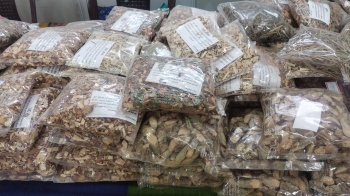
Herbal medicine vendor Sushila Daikar, 60, has been carrying forward her family legacy for 35 years from her shop at the Canacona market, selling herbs and farm produce. “We grow sweet potatoes, areca nuts, coconuts, bananas and papayas,” she said, adding that people travel from afar for their herbs. She noted the process is lengthy and done as a service, not for profit.
“We are provided transport from home to Lokotsava venue, accommodation for 10 days, travel facility to and from our stay area as well as lunch and dinner. The stalls are also free. Actually we were allotted 10 stalls but only three of us (herbal medicine sellers) showed interest in coming to Lokotsav, staying away from home for 10 days. But we are happy about the sales,” she said and added that she would participate in future too.
Shaboo Velip (80) of Kotigao Mahalbadde has been preparing Ayurvedic medicines for 55 years, continuing the legacy of his grandfather, Govind Bhamto Velip. After losing his father early, he learned about medicinal forest plants from his grandfather. Shaboo treats ailments ranging from diabetes and jaundice to skin, kidney, women’s and children’s issues. His herbal packets cost Rs 200“250 and are sold at the local village market on Saturdays.
Another tribal Laxman Ghurko Gaonkar, from Yeda Kotigao, has participated in Lokotsav for the first time though he has been participating in the local Lokotsava at Canacona for the past 10 years.
The area demarcated for tribal village is in the main building of Kala Academy, and secluded. The crowd of visitors entering through different gates, mainly come to main common area where all vendors sit, and hence the tree tribal vendors preferred to be with other vendors. “Who would, otherwise, enter the main KA building to shop when all the vendors are in the other area,” he asked.
Laxman, 73, has been preparing traditional herbal medicines for 35 years. His father Ghurko Govind Gaonkar and father-in-law Babu Bhikoo Gaonkar also are in the same profession. “My son also has learnt to identify the herbs and helps me seek them from the forest,” he said. Apart from the similar concoctions that others have, Laxman has remedies for burning hands and feet, worms, pains etc.
“The four stalls for persons with disabilities are not free, but charged minimum,” disclosed Sadiya Bandodkar, a hearing impaired person who communicates with sign language. Sadiya sells handcrafted jewellery, paintings while Zeba Bi Mamlekar sells scarves. Vaibhav Chiplunkar, also deaf, is an artist who sells artworks, paintings and t’shirts. Mangal Panchapur sells ragi laddoos and pickles. They all share the space and share the charges of the stalls.
The other vendors, who are in the mood of packing up, are selling their products for reduced prices. The quilt that was quoted Rs 999 on day one is now Rs 750 each. The kurtis that were sold at Rs 750 are now available at Rs 500. “We don’t want to carry back baggage, so we are selling at cheaper prices,” said a vendor Sonu Kumar.