What sentiment of Goa are we holding on to today? The one that brought people together, or the one that is slowly pulling them apart?
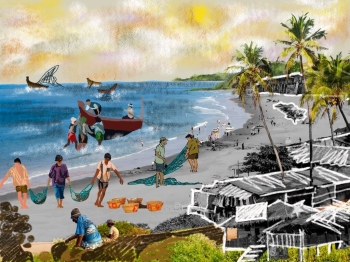
Was there ever a time when Goa did not need to explain harmony because it simply existed? When festivals were not labels but lived experiences, when Diwali sweets reached every home, Christmas stars lit up entire neighbourhoods, and Eid was quietly shared without announcement? When being Goan meant belonging before it meant identifying? What changed? Because today, Goa seems to be asking a different question—not how we live together, but who has hurt whose sentiments.
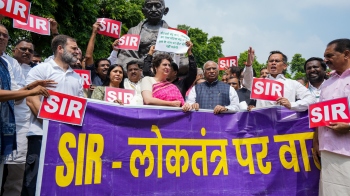
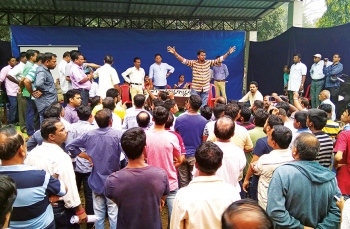
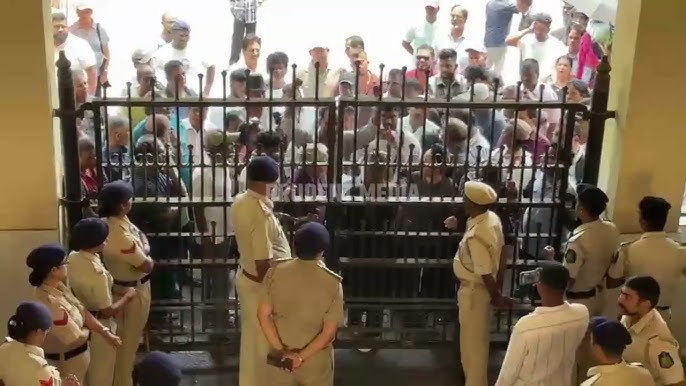
In recent weeks, this shift has become difficult to ignore. A protest outside the Panaji Police Headquarters turns tense over alleged remarks. An FIR is registered in another matter where sentiments are claimed to be hurt over a depiction. Earlier, the arrest of a YouTuber for remarks relating to St Francis Xavier triggered strong reactions and protests. Around the same time, social media debates on cultural and religious titles spiral into sharp exchanges, sarcasm, and provocation. Each incident stands on its own, rooted in its own context, and the law will take its course. Yet, taken together, they point to something larger unfolding in our public life.
That sentiments are not just being hurt—they are being activated, amplified, and mobilised.
And increasingly, alongside this, another disturbing trend is becoming visible—hate-filled speeches, provocative language, and public commentary that deepens suspicion instead of healing it. Words are becoming sharper. Public discourse is becoming harsher. People are speaking more to provoke than to understand. Somewhere in this constant noise, restraint appears to be disappearing. But when speech begins to inflame more than inform, are we really protecting communities, or are we quietly damaging the social fabric that communities depend on?
So it becomes important to pause and ask—whose sentiments are we protecting today? Is it faith, or is it identity, or is it something more subtle—the need to assert, to respond, to not remain silent? Faith, in its true sense, has never been this fragile. It has endured centuries of change, conflict, and interpretation. It did not need constant defence then—why does it seem to need it now? Or are we confusing faith with something else?
Because when every statement feels like an attack, when every difference feels like disrespect, and when every opinion becomes a trigger, we must ask whether we are responding from belief or from insecurity.
A comment is made, a post is shared, a clip circulates, and within hours, lines are drawn, sides are taken, and reactions escalate. The movement from social media to street protests, from discussion to detention, from sentiment to FIR, is becoming shorter. And Goa, of all places, is beginning to feel that shift. But in this process, what are we losing?
Because while we are busy protecting sentiments, we may also be eroding the very sentiment that once defined us—the sentiment of coexistence, of mutual respect, of allowing difference without turning it into conflict. These are not loud sentiments. They do not protest or trend. They do not demand action. Yet they are the ones that held Goa together.
And perhaps this is also the moment to remember something very basic that society often forgets during periods of division—that humanity has always been the greatest religion. Blood donated in a hospital is not separated by religion before saving a life. Doctors do not ask a patient’s faith before treating them in an emergency. Firefighters do not check identity before entering a burning house. Police personnel standing between angry crowds are not protecting only one community. During floods, accidents, illnesses, or tragedies, people instinctively help one another not because of religion, but because of humanity. If humanity still becomes our first instinct in moments of crisis, why does it disappear so quickly in moments of disagreement?
So where are we heading? And why are the sentiments of coexistence and humanity not being protected with the same urgency?
Social media has made everything faster—faster reactions, faster outrage, faster judgments. But has it made us wiser, or just more reactive? What we are witnessing today is not just expression, but amplification; not just disagreement, but escalation; not just hurt, but sometimes performance. And that is not an easy truth to sit with.
This is where awareness becomes critical. When emotions run high, when sentiments are constantly stirred, and when differences are repeatedly highlighted, it becomes easier to forget what once held us together—and easier to be led than to reflect. Not every disturbance is accidental. Not every reaction is isolated. And not every moment of outrage is without consequence, especially in times when attention, alignment, and identity begin to matter more than ever.
So perhaps the question is not just about sentiments—it is about how we engage with them. Are we thinking before reacting? Are we questioning before aligning? Are we pausing before participating? Because if we are not careful, we may find ourselves defending positions we never held, reacting to issues we never examined, and losing something we never intended to give up.
And that brings us back to the word we keep invoking—sentiments. What sentiments are we protecting today? The sentiment of faith, or the sentiment of identity? The sentiment of devotion, or the sentiment of reaction? The sentiment of coexistence, or the sentiment of division?
And Goa—the Goa we speak about with pride—what sentiment of Goa are we holding on to today? The one that brought people together, or the one that is slowly pulling them apart?
Because if every difference becomes an offence, if every word becomes a trigger, and if every sentiment becomes a battle, then what remains of the Goa we knew?
And in this constant effort to protect sentiments, have we paused to ask—which sentiment is actually worth saving? And more importantly, are we choosing it consciously, or reacting without even realising?