National Science Day (NSD) or Rashtriya Vigyan Diwas is celebrated every year in India on February 28 since 1986 to honour Sir CV Raman for the discovery of the Raman Effect in 1928. Raman Effect is based on the change in the wavelength of light that occurs when a light beam is deflected by molecules in a media. It also helps in explaining various natural phenomena like the appearance of blue sky, red sky at sunrise and sunset, etc. Sir CV Raman was awarded the Nobel Prize in Physics in 1930 for the discovery. He is the first Asian to receive a Nobel Prize in any branch of science.
We are pushed to our limits by science. Science is the foundation of everything in our surroundings. The NSD is a celebration and popularisation of science. Scientists and engineers strive hard to achieve new heights in scientific and technological domains. So the NSD is the day to celebrate technological achievements. The theme of NSD 2023 is "Global Science for Global Wellbeing."
There have been major achievements and new initiatives seen during 2014-2022. India has seen a considerable increase in the number of articles in Science Citation Index journals, moving up to third place globally from sixth in 2013. After the US and China, India is third in terms of the number of PhDs (almost 25,000) that have been awarded in Science and Engineering.
The National Supercomputing Mission, which was established in 2015, has improved the country's high-performance computing infrastructure by deploying four entry-level systems and fifteen mid-level systems with a 24 Peta-Flops compute capacity in various institutions across the nation.
In terms of research and innovation centres, the National Mission on Multidisciplinary Cyber-Physical Systems, which was started in December 2018 with a budget of Rs 3660 crores, has accelerated technological advancement in cyber-physical fields like Artificial Intelligence, robotics, and Internet of Things. To accomplish the mission's goals, 25 Technological Innovation Hubs have been established in reputable academic institutions throughout the nation. Under National Mission on Interdisciplinary Cyber-Physical Systems, several Cyber-physical systems and its related technology verticals have been taken into consideration.
The Survey of India (SoI) has started a Pan-India geospatial mapping project using the most cutting-edge technologies, such as drone technology, at a very high resolution of 10 cm scale. India now belongs to the small group of countries that use ultra-high-resolution national topographic data. For several states, a Big Scale Mapping on a 1:500 scale of States & UTs has been finished. As part of Survey of villages and mapping with improvised technology in village areas, SoI has successfully conducted drone surveys of rural Abadi areas of more than 2 lakh villages. These surveys are being done to distribute Property Cards in Abadi Areas and provide "Record of Rights" to village household owners.
To empower Women Scientists, a new programme called KIRAN (Knowledge Involvement in Research Advancement through Nurturing) was introduced to address gender inequality, and a pilot programme called VIGYAN JYOTI was tested for a short time and on a small scale to entice and support young women. AWSAR (Augmenting Writing Skills for Articulating Research) was started to encourage young scientists to write articles about their research in the popular press.
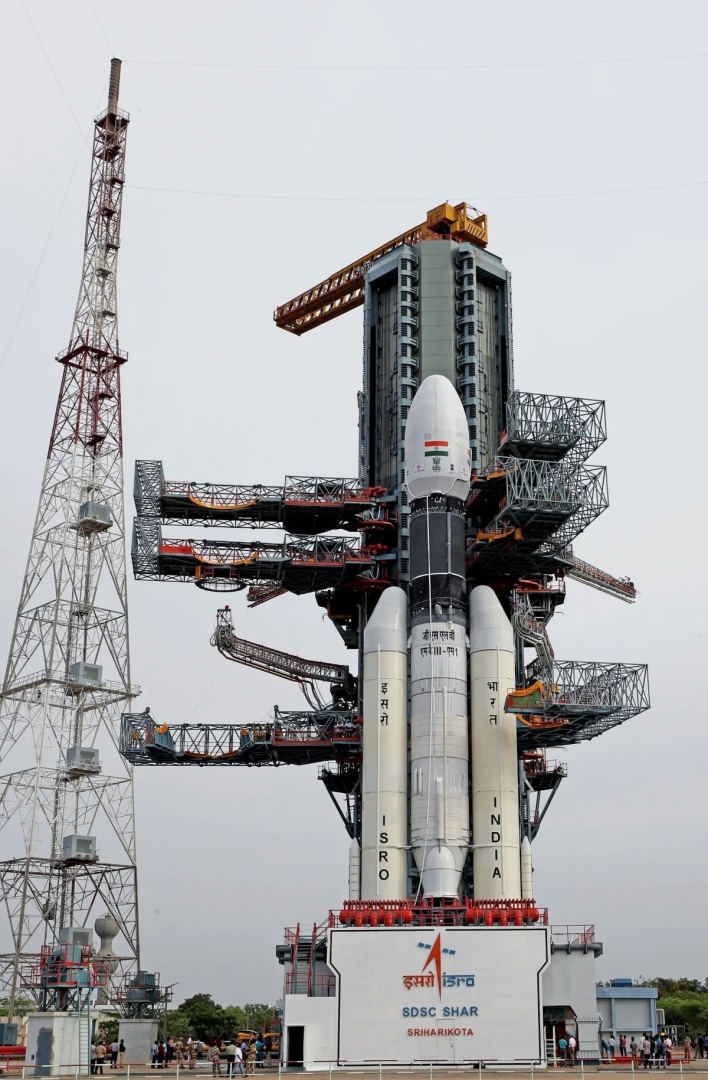
In terms of satellite technology, ISRO made history. Its first and successful lunar orbital mission, Chandrayaan-1, paved the way for a new generation of space missions. The Mangalyaan Mars Orbiter Mission was successfully launched into orbit in September 2014. The project was an amalgamation of numerous firsts: ISRO became the first Asian space organisation and fourth in the world to successfully launch a mission to Mars; it was the least expensive project (it costs about 1/10th of what NASA's MAVEN project costs); and India became the first country in the world to launch a Martian mission in its initial attempt. The world's lightest satellite weighing 1.62 kg, the KalamSat V2, was successfully built and launched into space by a group of Indian students in January 2019.