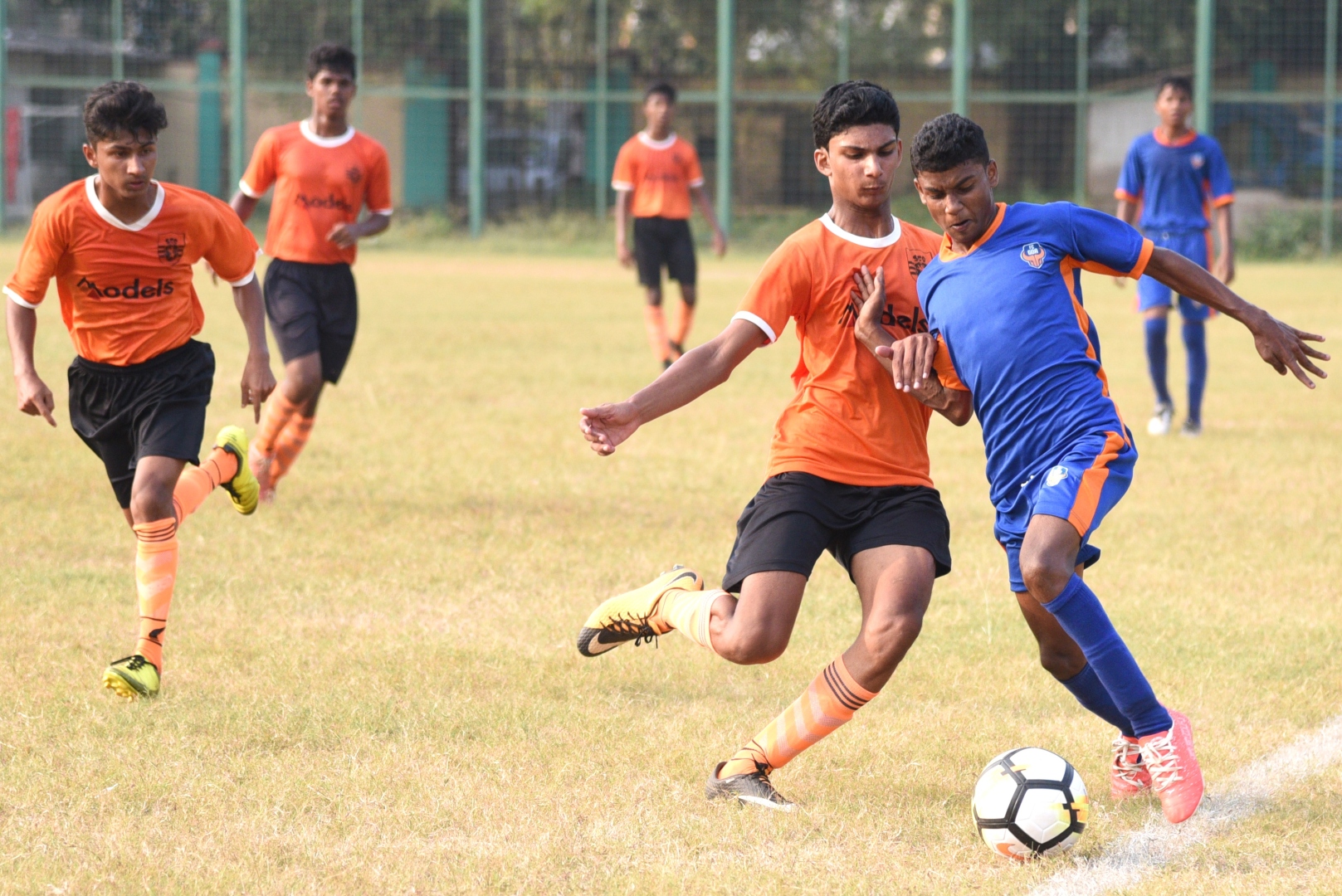
Goa’s footballing legacy faces scrutiny as concerns over declining standards, fitness levels and grassroots planning fuel debate about the game’s future in the State.
PANAJI
Is the decline in Goan football standards a reality or merely nostalgia clouding our judgment? Increasingly, it appears to be the former.
The signs are visible — in the stands, on the pitch and in the conversations of those who have followed the sport for decades. Football coaches, sports administrators and fans alike are pained at the way the game has been heading downhill over the years.
For Santan Pereira of Benaulim, a football fan, the telltale signs of football's decline are obvious and deeply frustrating.
Visible decline
“I have been watching football matches since childhood in my village (inter-village football) and also matches at Dr Rajendra Prasad Stadium, Margao, and now at Nehru Stadium, Fatorda. I am pained at the way the standard of football is going down the drain.”
He says the reason why many people turn out for veterans’ matches and not for Goa or for I-League or Indian Super League club matches is that people still remember the "beautiful touches" of the veteran players and want to see them in action.
He says nothing compares to the level of football played by the current crop of footballers who play for Dempo SC, FC Goa or Churchill Brothers to the football dished out in yesteryears by veteran players.
“The standard of football played by these footballers of yesteryears was much higher,” he says.
Two former players-turned-coaches agree that the standard of football is keeping the fans away from some of the top matches played at the stadiums in Goa.
Pressed for the reasons for the decline, Alfred Fernandes said the methodology of training by these new young coaches left a lot to be desired.
Questions over coaching & fitness
“Speed and running are key to any sport, athletics, and as they say, athletics is the mother of all sports. But what I have been noticing is that many of the young players are not fit to last 90 minutes. So that leaves a question mark on their fitness and the coaching pattern followed by the coaches,” the former Sesa Goa midfielder said.
For the record, a host of coaching certificate courses are conducted starting from D to A level for coaches, but there is no significant change at the ground level in terms of quality players, which is often repeated.
Alfred points out that the 35 Goa Football Development Council centres (GFDC), with so many coaches and centres, have not been able to produce a single international over the last few years they have been around, which is a big question mark, he said.
Another coach said many parents are not allowing somersault exercises for their children for fear of injury, a fact which “many of us would do day in and day out and which made us flexible”, he said.
A parent who has been closely following the GFDC coaching centres said the coaches should be given a clear-cut long-term plan and short-term targets to produce results and be made accountable — a carrot-and-stick policy.
Another parent questioned who is monitoring the GFDC coaches and their performance, most of whom are part-time employees, and added that their salaries have not been increased for years, which is another issue, while the appointment of the Technical Director is still awaited.
For the record, the GFDC has been approved a budget of Rs 5 crore for the current financial year.
NEP and GFDC coaching timings
The National Education Policy (NEP) has not become fully operational, but its impact on sports cannot be gauged, said Santan Pereira as a parent of a school-going child who loves football.
“My child used to be part of the GFDC centre in Fatorda, which used to begin training at 3 pm. With school getting over at around 2.30 pm, it was impossible to attend the coaching, have lunch and rest after food, if you take those factors into account. So I took my child out and enrolled him in a private football coaching programme,” said Santan.
The government — Education Department, Sports Authority of Goa, Directorate of Sports and Youth Affairs and GFDC — should all work together if they want to improve the standard of football in Goa. “I believe SAG has 20 coaches, DYSA some two to four, GFDC close to 50 and some private coaches working with futsal clubs and indoor coaching centres, so we have quantity but do we have quality footballers? That is my question,” said Santan.
“So we need to work together if we want to improve football in the State, and the Goa Football Association administration must shift into high gear if we are to reach the great heights Goa reached in football in earlier years,” said Santan on a parting note.
Separate coaching cadre
Former footballer and recently retired physical education teacher Oswald D’Costa offers a simple and straightforward approach to raising football standards in the State.
“You have to respect the work of the coaches and support them,” he says, adding that his formula is clear: create a separate cadre for sportspersons.
“A coach’s duty hours cannot be six hours like office staff. He or she should be working for just two hours or a maximum of three hours. So there needs to be separate recruitment rules for coaches and their duty hours. The sooner they come up with it, the better,” said the former goalkeeper.
D’Costa was part of the Goa University team that won the All-India championship and played for leading State clubs such as Salcete FC and the now-defunct MRF Soccer Foundation, before taking up a career as a physical education teacher at a higher secondary school.
“Have a long-term and short-term plan for the coaches and make them accountable,” he added.