VASCO
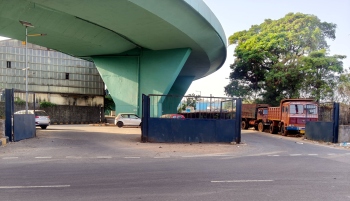
More than a year after the first protests erupted over installation of gates at the Baina flyover ramps, the structures continue to stand firm ” quietly defying agitations, resolutions, official assurances and even a Collector’s notification that once promised closure to the controversy. At the busy up-ramp and down-ramp near Baina, where traffic flows steadily and commuters navigate the stretch daily, the gates remain a visible reminder of a dispute that saw everything from street protests to high-level meetings ” but little change on the ground.
OBJECTIONS, PROTESTS
The issue first snowballed in February 2025 when Vasco MLA Krishna Salkar publicly warned the Mormugao Port Authority (MPA) against ignoring public concerns. Assuring residents that he had taken up the matter with Chief Minister Pramod Sawant, Salkar had promised to raise the issue in the Assembly if needed.
Within days, a delegation led by Mormugao MLA Sankalp Amonkar met the chief minister and MPA chairman. The outcome appeared promising at the time, with the MPA assuring that the gates would remain open round-the-clock for public access, citing their use only in emergency situations. However, the assurances did little to calm tensions on the ground.
By February end, frustration had spilled onto the streets, with Baina residents staging an agitation under the leadership of councillor Deepak Naik. A memorandum was submitted to the deputy collector, accompanied by an ultimatum ” remove the gates within eight days or face direct action from locals.
The protests brought into focus deeper concerns, with residents questioning not just access restrictions but also the broader intent behind the installations. The issue gained further momentum when the Mormugao Municipal Council (MMC), in a rare show of unity, passed a unanimous resolution on March 14, 2025, to demolish the gates and compound wall, terming them an obstruction to public access.
Yet, even this strong political stance failed to translate into action. Weeks later, the matter resurfaced in a special council meeting, where councillor Naik openly expressed frustration over the inaction, warning of legal recourse if authorities continued to delay intervention.
THE INTERVENTION
As pressure mounted, a joint inspection was carried out in June 2025 involving Salkar, MPA officials, police, traffic authorities and civil administration. The inspection highlighted safety concerns, particularly the blind spots created by the compound wall, which locals claimed had made the stretch accident-prone.
In what appeared to be the first tangible response, the MPA began lowering the height of the compound wall later that month. But for many residents, the move fell short of expectations, as the primary demand ” complete removal or relocation of the gates ” remained unmet.
A major breakthrough seemed to arrive on July 9, 2025, when South Goa Collector Egna Cleetus issued a notification directing the shifting of the gates and compound wall behind Pillar No. 94. The development was widely celebrated, with political representatives calling it a “victory” for the people after months of sustained pressure. The notification outlined a clear plan ” demolition of the existing structure, relocation of the gate, and additional traffic safety measures including road median, blinkers and speed breakers. But months down the line, that “final solution” appears to have remained largely on paper. Despite the notification, inspections, and repeated assurances, the gates continue to occupy their original space, raising fresh questions over implementation and accountability.
MPA SAYS GATES NEEDED
Responding to the issue on Wednesday, MPA Chairman Dr N Vinod Kumar maintained that the gates were a mandatory requirement under international port security norms. “The up-ramp was constructed entirely with port funds for cargo movement. Despite that, we have allowed public access. The gates have been installed as part of ISPS compliance requirements,” he said.
He reiterated that the gates would remain open to public at all times and would only be used in an emergency. “These gates will never be closed, not even for a minute. But they are necessary as a security measure. If any untoward incident occurs, we need to control movement into the port. The gates are on port land and are part of regulating access on the port connectivity road. It should not be seen from an ego perspective, but purely as a security requirement,” he added.