GLOBAL GOENKARS IN FOCUS
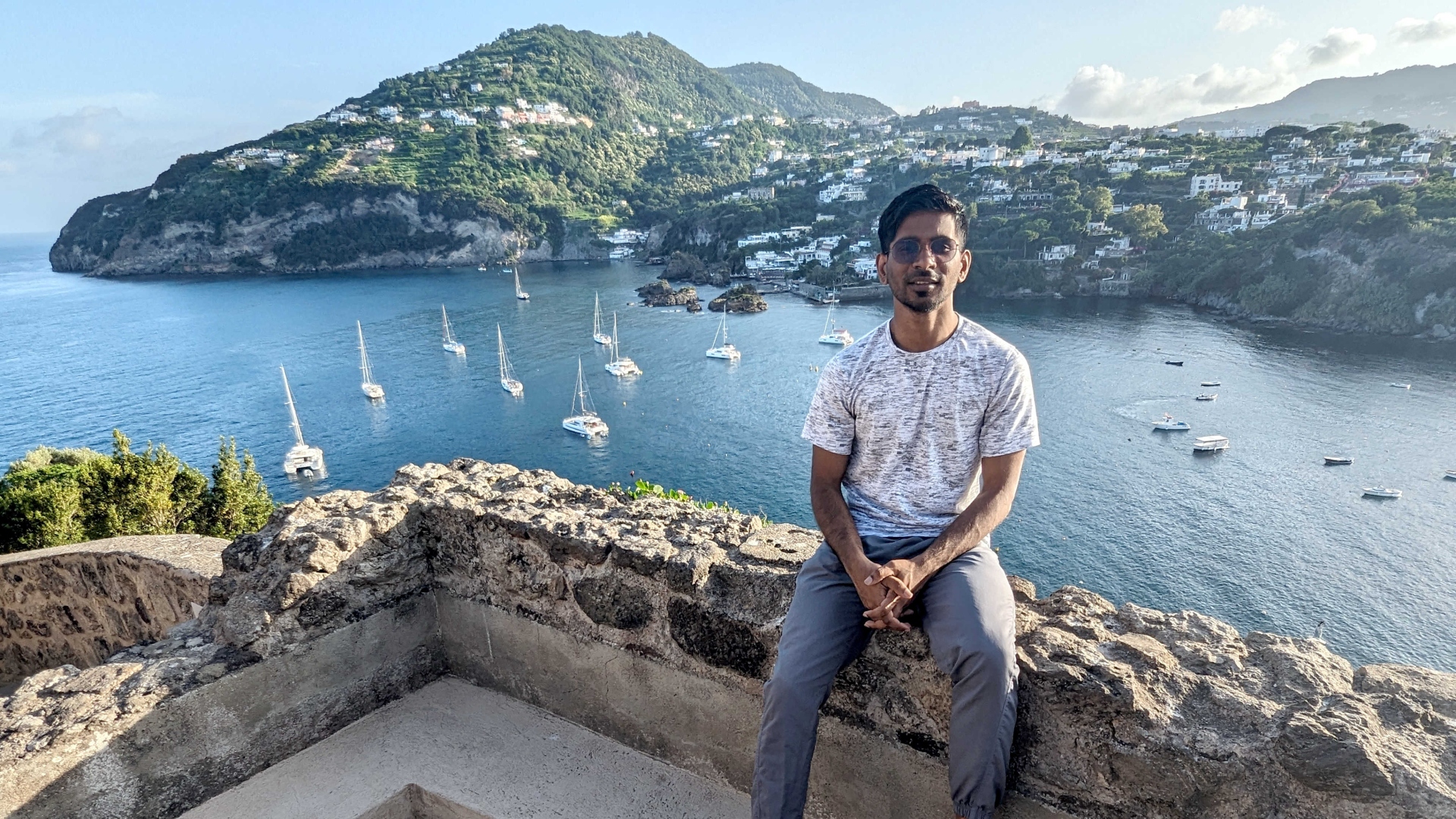
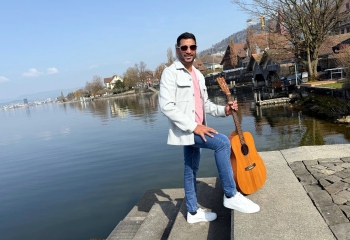
Hailing from Chandel in Pernem-Goa, the writer completed his M.Tech from the IIT Bombay and a PhD in Applied Mathematics and Operations Research at Polytechnique Montréal, Canada. He is currently a post-doctoral researcher at GERAD, a research lab in Montreal.
When I left Goa in 2020 to begin my PhD in Montréal, I thought the journey would be mostly about research — solving mathematical problems and developing new ideas. While that is certainly a big part of it, I soon realised that doing a PhD here is as much about learning how to live as it is about learning how to research.
Montréal is a unique place to pursue a PhD. I was based at Université de Montréal, working in applied mathematics and optimisation — specifically, developing algorithms to help businesses make smarter decisions in real time. Many leading researchers in the field are active here, and being surrounded by that level of expertise is both motivating and demanding.
SETTLING INTO NEW LIFE
One of the first things you notice as a PhD student is the level of independence. There is no fixed schedule, no attendance to mark, no one checking whether you showed up. Coming from India, where being physically present and punctual is expected, this freedom felt both exciting and a little unsettling. Over time, you realise that staying consistent without external pressure is not easy — and that self-discipline is perhaps the most important skill a PhD teaches you.
A typical week is difficult to define. Some days are productive, filled with reading, coding, or writing. On other days, nothing seems to work. You can spend hours on a problem without making visible progress. Unlike coursework, research does not provide quick answers or immediate feedback. Nobody prepares you for that feeling — and learning to sit with it, without losing confidence, is one of the most difficult things about a PhD.
Living in Montréal also brings its own adjustments. It was my first time living away from home, and the city felt vast and unfamiliar at the start. The language can be a barrier, as French is widely spoken. Over time, I picked up some basic French, which helped me manage everyday interactions. Another adjustment was food. The Xit (rice), curry, Viswan (Kingfish), and Aambo (Mango) I grew up with in Goa were gradually — and sometimes reluctantly — substituted by pasta, cheese, salmon, and blueberries. Over time, I came to enjoy both worlds, but nothing quite replaces a good Goan meal.
And then there is winter. The cold drops to around -20°C, which sounds extreme — and at first, it is. But the city is extraordinarily well prepared, and daily life continues smoothly even through the harshest months. That quiet resilience was something I came to admire deeply.
LIFE BEYOND RESEARCH
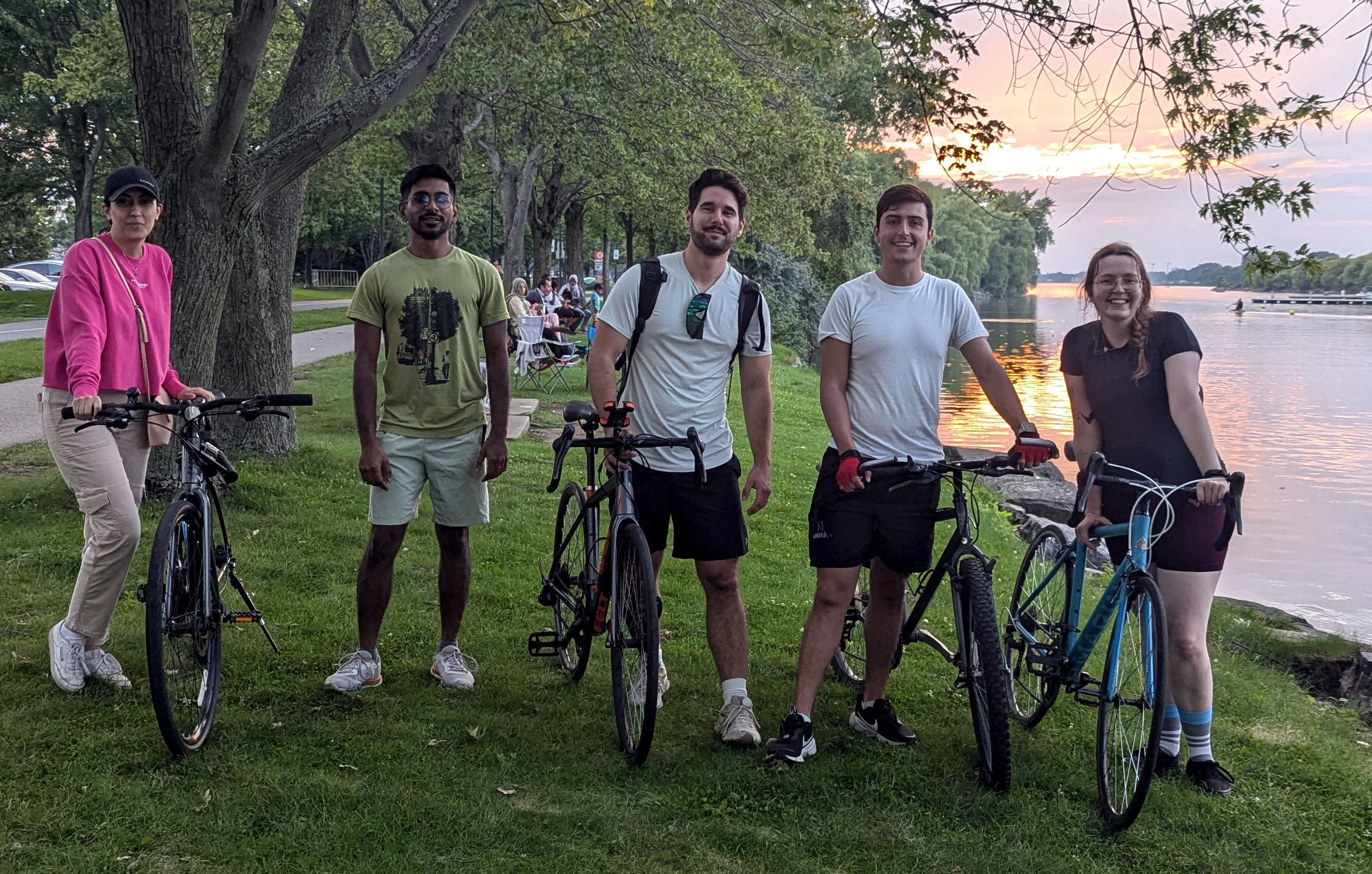
At the same time, Montréal offers a quality of life that makes it easier to find balance. Parks, cycling paths, and public spaces are alive with people, especially in summer. Mont Royal sits right in the heart of the city, and on good days I would cycle up to the top just to clear my head. The city almost nudges you to step outside — and for a PhD student, that nudge can make all the difference. During my PhD, I developed habits outside work that became essential. When COVID brought everything to a halt, I bought a bicycle — one of the best decisions I made in Montréal. I cycled everywhere, exploring the city street by street, and at one point completed a 90-km ride entirely alone, just to prove to myself that I still could. Running and the gym followed.
I also picked up ice skating, which became something I genuinely looked forward to during winters, and climbing, which offered a different kind of challenge. Cooking became another passion — I started with familiar dishes like biryani, butter chicken, but gradually began experimenting with other cuisines too. After hours spent on abstract mathematical problems, making something real and edible was deeply satisfying. On days when research felt stuck, stepping away almost always helped more than trying to force progress.
BUILDING FRIENDSHIPS
A PhD can be lonely — but Montréal made sure mine was not. The city brought together students and researchers from across the world, and over the years I built friendships that became a second family. We celebrated Diwali together in my apartment — I cooked, others brought jalebi and samosas, and for an evening it genuinely felt like a little piece of home. Those friendships, built over shared meals, late night conversations, and countless cups of coffee, made all the difference during the harder phases.
LESSONS FROM LIFE
Beyond the city itself, the academic environment opened up the world. There are regular seminars, conferences, and opportunities to interact with researchers from around the world. During my PhD, I had the chance to present my work at conferences across different countries — from Canada to Sweden to Italy to the UK — each trip bringing new perspectives and new connections. These experiences pushed me to grow not just as a researcher, but as a person.
Of course, the journey is not always smooth. There were paper rejections, failed experiments, and months spent on a single proof that refused to come together. But those difficult phases, as frustrating as they were, shaped me more than the easy ones ever could. Montréal shaped my routine, my habits, and my mindset in ways I did not expect when I first arrived. For me, this has been about far more than a degree — it has been about learning to live independently, handle failure without giving up, and find balance between ambition and rest. From Mapusa to Mumbai to Montréal — wherever the next destination may be, the research journey is far from over. [To be continued]