In a state shaped by monsoon abundance, water is becoming scarce where it matters most
GLOBAL GOENKARS SPEAK
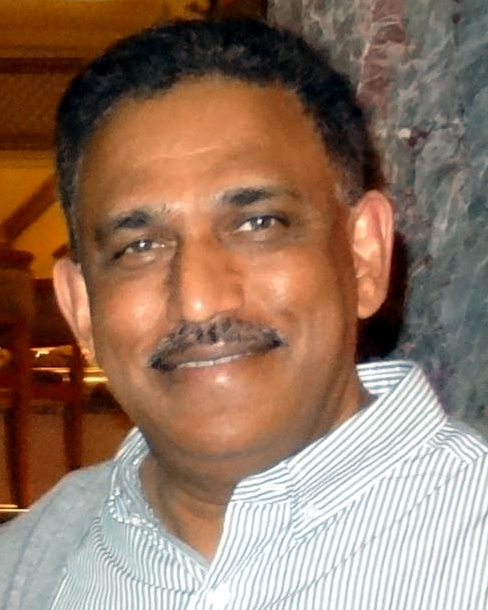 The writer is professor at Columbia University in the USA who hails from Cortalim
During our school summer holidays, life in Goa slowed just enough for us to follow the land and the tide. My friends and I walked the hills of Cortalim and Sancoale, picking cashew fruit, gathering nuts and wild berries, returning home with hands stained and pockets full.
It was also the season of spring tides, when the pull of the sun and the moon would draw Zuari River down to its lowest levels, exposing its sandy bed filled with clams. Along with schoolmates and families, we waded through knee-deep water near Sancoale and St Jacinto Island, reaching sandbars to pick clams. Small, quiet markers of a coastline that felt abundant and alive.
Life then was shaped by a quiet understanding of water. After the rice harvest, families practised crop rotation, cultivating chillies, brinjals, tomatoes, onions, and legumes on communidade land, drawing from shallow aquifers that sustained both farms and households.
This was part of preparing for the monsoon. Chillies were dried; onions braided and hung over fireplaces; and produce like raw mangoes and brinjals pickled and stored. Water was never plentiful, but it was understood. It was shared, respected, and never taken for granted.
Moving toward water bankruptcy
That memory makes what is unfolding in Goa today difficult to reconcile.
Across Goa, landscapes are being reshaped at a pace that outstrips planning and accountability. Policies have accelerated this shift, loosening safeguards that once aligned development with ecological limits.
In Sancoale, that change has come home. A large residential project is proposed across roughly 35,000 sq. mtrs of hilly land we once gathered our summer bounty. Nearly 700 villas and apartments, many with private swimming pools, are planned for a beautiful riverside village that still receives water for only a few hours a day. The contradiction is stark: scarcity for residents, abundance for development.
Sancoale is not an isolated case. Across Goa, villages are witnessing a surge of large-scale projects approved without an assessment of water availability or groundwater stress. Extraction is increasing even as recharge remains uncertain, and water is being allocated in ways that favour high-consumption uses over local need. We are drawing down a resource faster than it can replenish. We are, in effect, moving toward water bankruptcy.
The consequences are already visible. Borewells at Verna plateau over the years have steadily lowered groundwater levels. The Kesarval Spring has been reduced to a trickle. The traditional cycle of post-harvest cultivation is no longer assured as aquifers recede and wells grow uncertain.
Failures lead to health risks
At the same time, contamination is spreading through the system. Untreated or poorly treated sewage from mega projects continues to seep into groundwater, flow into lakes, and reach rivers and coastal waters.
In Dabolim, failure in a sewage treatment system led to widespread illness in a residential complex, a reminder of how quickly infrastructure failures translate into health risks.
For a State that takes pride in its benchmarks and comparisons with the rest of the country, this is not an easy reality to absorb. Goa has repeatedly highlighted its achievements: 100 per cent sanitation coverage under Swachh Bharat and universal household tap connections under the Jal Jeevan Mission.
But these metrics say little about the quality, safety, or sustainability of the water itself. Coverage is not the same as security. Access is not the same as assurance. The gap between what is claimed and what is experienced is where the crisis becomes visible.
By the time this water reaches the coast, it carries everything with it, sewage laden with coliform bacteria, chemical residues, and industrial pollutants. Studies by world-renowned scientists at the National Institute of Oceanography have shown that microplastics along Goa’s coastline bind toxic hydrocarbons. Evidence elsewhere suggests these particles also host bacteria and pharmaceutical residues linked to sewage contamination and overprescribed medications.
The implications are immediate. The staple of Goan tables, clams, mussels, and oysters, are filter feeders; they accumulate what is in the water. Fish, in turn, absorb contaminants through the food web. The shellfish we once gathered with confidence are now part of a system carrying invisible risks. What enters the water, enters us.
The implications are not abstract. Long-term exposure to such contaminants has been associated with serious health risks. In Goa, where concerns about rising cancer cases are increasingly being voiced, the absence of systematic monitoring of water quality and exposure pathways is difficult to justify.
Making progress viable
This crisis is unfolding in a State that receives some of the highest rainfall in the country. Scarcity here is not inevitable; it is the result of choices. It is worth recalling that late Manohar Parrikar recognised this challenge as Goa’s CM and encouraged open, informal dialogues on how Goa could better capture, store, and use its monsoon bounty. Those after him have yet to translate his vision into sustained action.
This is the reality of our governance today. There has been little investment in harvesting and storing monsoon water at scale. Traditional systems, village lakes, wetlands, and catchments have been neglected. Instead, development continues to expand into and around water bodies, weakening the very systems that sustain the State. Villages contend with unreliable supply even as high-consumption projects, private pools, landscaped estates, and large-scale infrastructure continue to receive approvals without transparent assessment of long-term impacts.
This raises a fundamental question, one that was asked by Aldona MLA Carlos Ferreira in the recent Legislative Assembly: how are approvals being granted without assessing carrying capacity?
Development is moving ahead without strengthening systems that sustain it. Water connects all of these concerns, scarcity, contamination, health, and livelihoods, and reveals the cost of decisions made without regard for limits.
The challenge is not to halt progress, but to make it viable. Development that ignores water availability, allows contamination to persist, and neglects long-term resilience ultimately undermines itself. We are not facing a distant problem. We are living through the early stages of it. If this trajectory continues, water bankruptcy will not remain a warning. It will become Goa’s reality.