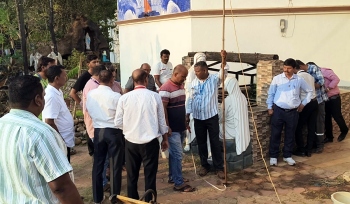
The Moti Dongor area, which belongs to the Aquem Comunidade.
MARGAO
As the Margao Municipal Council begins the process of assigning house numbers to the illegal hutments atop Moti Dongor, the Comunidade of Aquem is closely monitoring the unfolding developments at the migrant-inhabited area it owns.
With the Lok Sabha election approaching, the Aquem Comunidade appears to have taken a wait-and-watch approach, awaiting the compilation of a list of dwelling units by the civic body for the purpose of house tax and sanitation fees.
Aquem Comunidade attorney Celestin Norohna informed 'The Goan' that the Comunidade body is closely observing the situation at Moti Dongor. "We have heard and read that the Margao Municipal Council is allocating house numbers for the illegal structures at Moti Dongor. We are closely monitoring the developments. We are uncertain about the exact motive behind the sudden initiative undertaken by the civic body. If the purpose of the exercise is to generate revenue from the inhabitants and benefit the civic body, we have no major objection," he stated.
However, Norohna emphasised that if any further encroachments are discovered at Moti Dongor, the Comunidade will not hesitate to present the facts before the High Court for further action.
In 2013, the Administrator of South Goa Comunidades had ordered the demolition of the illegal structures atop Moti Dongor, citing that they had all been unlawfully constructed on Comunidade land. The Administrator had rejected the claim made by the migrant inhabitants that Moti Dongor had been declared a slum, asserting that the Slums Act was never applicable to Goa. Consequently, the Administrator ruled that the migrant inhabitants could not use the Act to prevent the issuance of an order for the demolition of the houses.
The appeal filed by the Moti Dongor inhabitants is currently pending in the High Court.