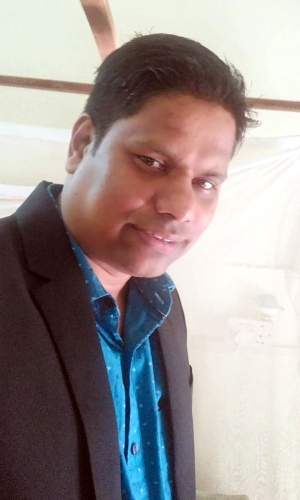
Fr Jose Silveira SJ
Why is there such an aversion to an inclusive spirit which in reality reflects the true fabric of our nation? Why are religious elements brought to the fore when we deliberate on most secular issues of our nation? Why are we being enslaved to an unreflective praxis of division?
Language is a vital element for unity amidst such diverse cultural plurality. It is through this medium that we dialogue and thus understand each other. Language helps us appreciate the richness of the diversity we live in.
The Goan ethos has always reflected an exemplary confluence of the parochial, colonial and post-colonial/independent India. Its uniqueness unlike any other state in India lies in this convergence of cultures, traditions and mannerisms of these three periods and people’s. So is the case of the local language that is spoken in our land, Konkani.
It is an undeniable fact that in Goa, Konkani is written extensively in Nagri (Devanagiri) and the Romi scripts. Unfortunately, Konkani in the Romi script has been associated only with the Christian faithful and Christian religious practices. This has resulted in a narrow association of Romi script with the Christian religion exclusively.
But, we all know the extensive use of the Romi script. We are all aware of the richness in which this script has contributed to the language itself. We have extensive literature written in the Romi script right from the 16th century. There was a deep study of the Konkani language wherein Konkani grammar, dictionaries and various facets of the language was explored.
Fr Thomas Stephens made an extensive contribution to the development of Romi-Konkani orthography. In 1889, the first Roman Konkani monthly titled Udentichem Salok (the lotus of the east) was written by Fr Eduardo Bruno de Souza. He is also the author of the first Konkani novel, Kristanv Ghorabo. Shennoi Goembab translated 11 Konkani plays of William Shakespeare in the Romi script. We are all aware that Roman script dominated Konkani literature until 1961. Reginaldo Fernandes (1914-1994) has authored over 200 Konkani novels called Romanxis.
There are a huge number of people who solely or primarily use the Roman script. Unfortunately, as a result of the recognition of only Devanagiri script, the massive and rich resource of Konkani literature written in the Romi script goes unrecognised, unpromoted and unrewarded.
In 1975, Sahitya Akademi recognized Konkani as an independent and literary language. One salient feature then was the well-preserved literary heritage of Romi-Konkani. But since 1987, when Konkani in the Devanagari script was made the official language of Goa, the Akademi began to support only writers in the Devanagari script, while writers in Roman script are not eligible for the Sahitya Akademi awards and assistance.
The clause restricts the growth of the language. Intellectuals in other fields recognise and look only at the official script and therefore volumes of works written in the Romi-script goes unexplored and so does the richness of Konkani literature. We need to remove this clause and let Konkani flourish to its fullness.
Former chief minister late Manohar Parrikar, who is still fondly remembered for his progressive works and views, announced that his government would fulfil four demands of the DKA in August 2012:
1. The Goa Kala Academy would introduce Romi-Konkani as a separate category in its book publishing scheme with a yearly prize for best literature in Romi- Konkani at par with Devanagari.
2. Romi-Konkani to be introduced in schools from Stds 1-12.
3. A theatre in Panjim exclusively for staging tiatrs.
4. Office space for Dalgado Konknni Akademi.
I would not want to reason out about the concrete expression of these proclamations. But it is good for us to reason out and see that he did see the need to bring Romi script to the fore. He desired to bring it to power with the Devanagari script. Why is then, the present team in governance not able to see and execute the dream of their inspiration?
When Konkani lovers fought for Konkani to be made as the official language of the state, did they ever have any division with regards to the script? It was devoid of scripts, religion, cultures, identities that separated the sole purpose of the fight. They fought for the glory of Konkani. Why don’t we see the same inclusive spirit now?
The only contention of two scripts being used for a language seems to be the fear of fragmentation of the language. But, in the case of the Konkani has this been the experience until now? On the contrary, the Romi script has contributed extensively to the propagation of the richness of the Konkani language. Its audience is wide and far spread. Its reach is beyond the boundaries of the state and the nation. Is this not a boon for the language we love so dearly?
Nobody has demanded that Konkani expressed in Devanagari be stopped. Nobody has ever derided or looked down upon the works done in the Devanagari script. The Dalgado Academy as well as the Thomas Stephens Konkani Kendr, have always supported and encouraged works in Devanagari.
Recent remarks made by the president of the Konkani Basha Mandal are deplorable. They certainly reflect the parochial mindset of a fundamentalist attitude. Let me quote her remarks, “The Official Language Act should not be altered or tampered with in any regard. This act was brought into action after enough discussion and debate and it was arrived at after great thought and conviction for the cause of protecting the State language, therefore it would not be advisable to tamper with the existing law.”
This attitude has only brought in divisions. Such statements do not come from a person who loves the growth and honour of a language. These are narrow utterances that are aimed at nothing else but discord, disharmony, partition and dissonance.
We need to move ahead with Konkani as one unit and one community that’s the goal.
Romi script will only enhance the growth of the language. To bring Romi on par with Devanagiri will only help greater unity and harmony among Konkani lovers and help the language to flourish to its fullness.
Let us keep aside religion, let us look at the language. Let us do everything we can for the growth of the language. Let us respect the sentiment of the Romi script lovers. Let us work together for the progress and advancement of Konkani.
(The writer is Director at Thomas Stephens Konknni Kendr in Alto-Porvorim.)