


As the coastal city of Mangaluru emerges as a key pillar in Karnataka’s ambition to transition from India’s IT capital to a global hub for artificial intelligence, hyperscale data centres and electronics system design and manufacturing, a critical infrastructure gap is coming into sharp focus. Experts warn that the success of this transformation will depend heavily on the strength and resilience of high-voltage transmission networks powering this new digital economy.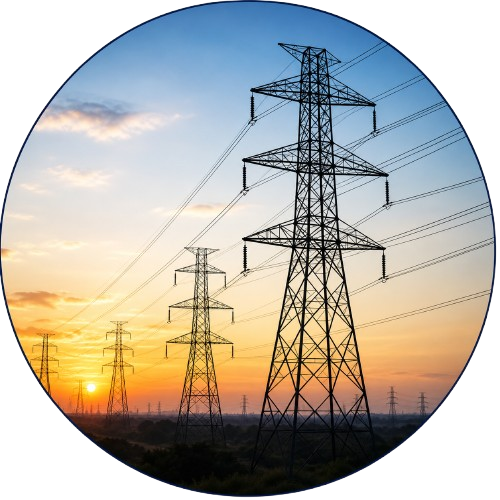 The shift towards AI and ESDM marks a fundamental change in electricity demand. Unlike conventional IT parks, AI clusters and semiconductor facilities are energy-intensive operations that run round the clock and operate with near-zero tolerance for power fluctuations. For a state targeting large-scale investments in data centres and chip manufacturing, transmission reliability is no longer just a utility concern. It is emerging as a core economic risk.
Data centres require uninterrupted and high-quality power supply with minimal transmission losses. These facilities operate massive server loads and cooling systems continuously. Even a brief voltage fluctuation can disrupt operations and lead to significant financial losses. In AI workloads, even a momentary disruption can impact long-running processes.
Karnataka’s challenge is two-fold. First is the scale of future demand. Second is the geographical imbalance between generation and consumption. A large share of the state’s renewable energy capacity is concentrated in northern districts, while emerging demand hubs such as Bengaluru, Mysuru and the coastal belt including Mangaluru are located in the south.
This mismatch increases dependence on long-distance transmission corridors, which must be both high-capacity and resilient. Any weakness in these links can create bottlenecks, particularly as demand rises sharply with the addition of data centres and electronics manufacturing units.
Transmission infrastructure often becomes the limiting factor in delivering reliable power to high-growth clusters. While generation capacity can be added relatively quickly, transmission systems take longer due to land acquisition challenges and regulatory approvals. If planning does not keep pace with demand, it can delay industrial expansion.
Reliability is especially critical for global investors. Large technology firms evaluate grid stability, redundancy and outage history before committing capital. In a competitive landscape, states that can guarantee stable power supply have a clear advantage.
Investors today look beyond incentives and focus on infrastructure readiness. States such as Tamil Nadu and Telangana are strengthening their transmission networks to attract similar investments. Karnataka’s strength has been its talent pool, but in the AI era, infrastructure reliability will play an equally decisive role.
The financial implications of power disruptions are substantial. Industry estimates suggest that outages in large data centres can result in losses of several crores per hour. For AI-driven operations, which involve continuous data processing and training cycles, such disruptions can lead to both operational and reputational damage.
There are also emerging complexities linked to sustainability commitments. Many global firms are aligning with renewable energy targets and expect round-the-clock green power. Delivering this requires a flexible transmission system that can integrate solar, wind and storage solutions seamlessly across regions.
Without adequate transmission capacity, even surplus renewable energy cannot be effectively utilised. This creates a paradox where generation exists, but supply remains constrained due to grid limitations.
As Karnataka advances its digital and manufacturing ambitions, the need for proactive investment in transmission infrastructure is becoming increasingly evident. Strengthening high-voltage corridors, upgrading substations and building redundancy into the network will be essential to support future demand.
The message from experts is clear. For Karnataka to sustain its leadership in technology and emerge as a preferred destination for AI and ESDM investments, the grid must be ready ahead of demand. In the race to build the digital economy, it is the invisible network of transmission lines that will determine how far and how fast the state can go.
(The writer is an energy sector expert)
Mapusa river works progress, but will Guirim stay dry this monsoon?

MAPUSAA chief minister in a boat, cameras in tow, gliding over a river that has long refused to stay within its banks “ on the surface, it looked like progress in motion.As Chief Minister Pramod Sawant reviewed the Rs 46-crore Mapusa river rejuvenation project at Guirim, there was movement, messaging and measured optimism. But beneath the optics, a stubborn question refused to drift away: when the monsoon arrives, will Guirim stay dry?Because here, the story of the rains is…


